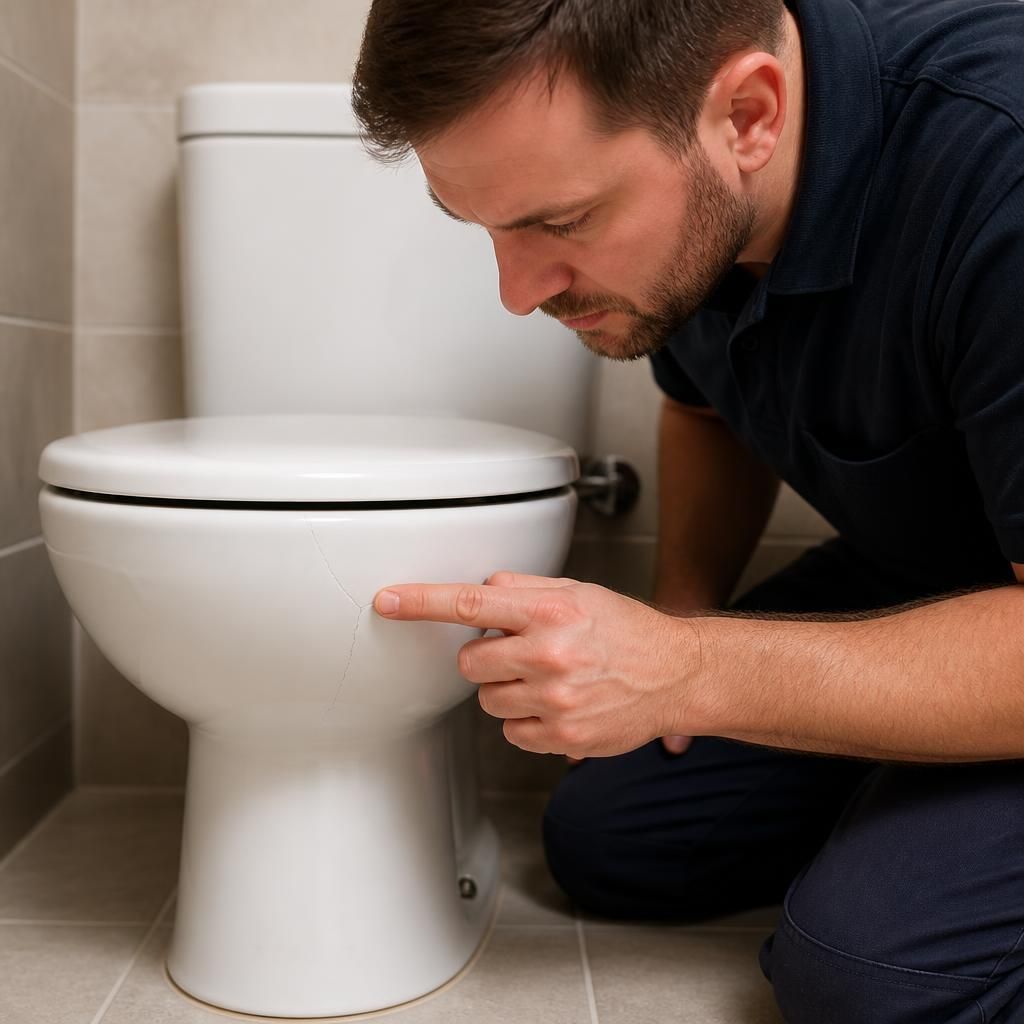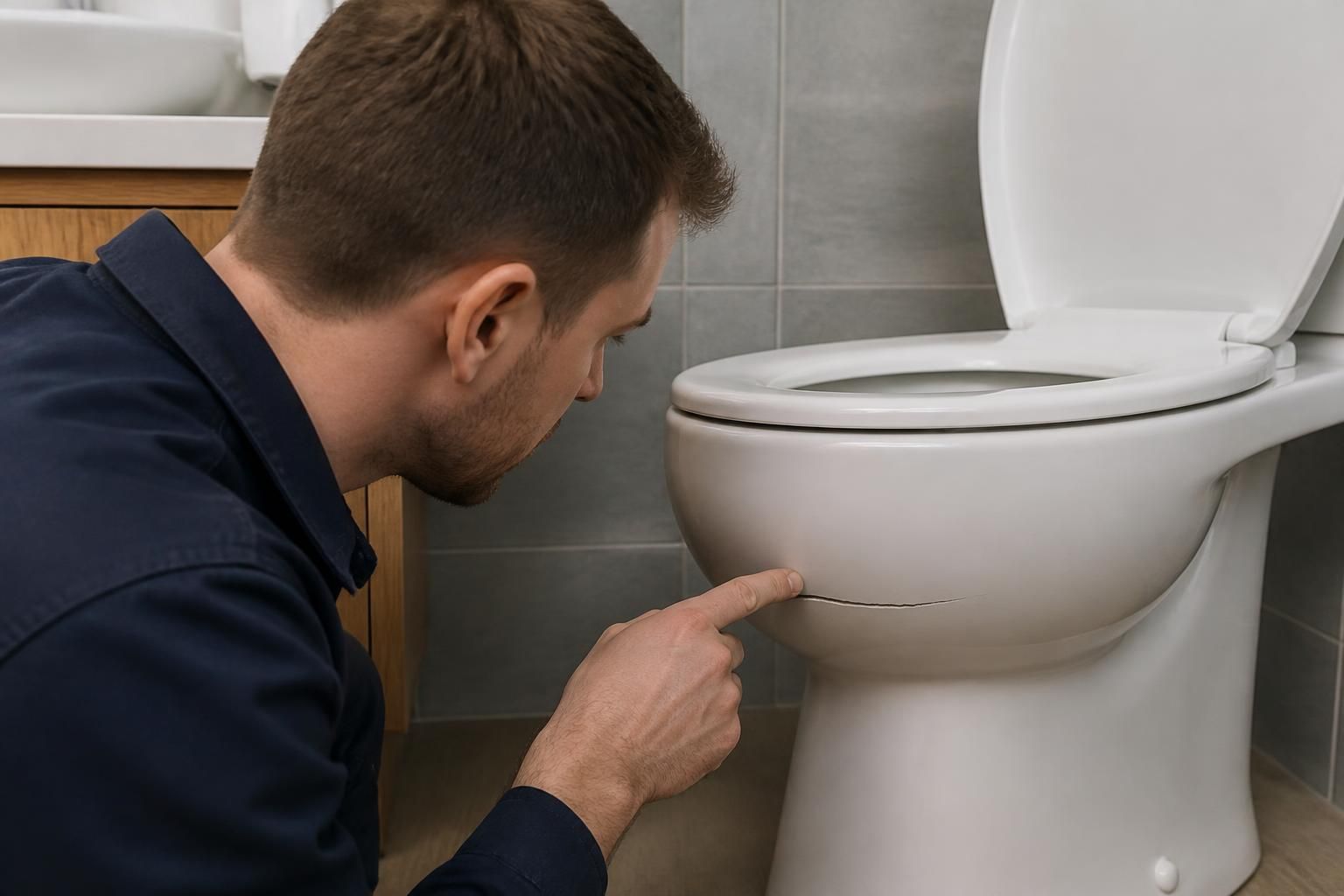
A cracked ceramic toilet bowl is rarely a suitable candidate for a permanent repair. Minor, stable hairline damage above the waterline may sometimes be sealed, but a crack that allows water through, reaches the rim or base, or continues to spread normally calls for replacement rather than patching.
Why the type and position of the crack matter
- Hairline surface marks: Fine marks in the glaze may be cosmetic, particularly if they do not catch a fingernail and have not changed over time. They should still be checked, as a glaze mark can conceal a deeper fracture.
- Cracks inside the bowl: Damage on the internal surface can allow water to seep into the ceramic and may worsen through repeated filling, flushing and cleaning.
- Cracks near the rim: The rim supports the upper part of the bowl, so damage in this area can affect its strength and stability.
- Cracks around the base or fixing points: These are more serious because they can allow water onto the floor and may indicate that the bowl is no longer securely supported.
- Leaking or spreading cracks: A visible leak, damp flooring, movement or a crack that becomes longer means a sealant-only repair should not be relied upon.
How a repair may be attempted
Where a repair is considered appropriate, the affected area must be clean, dry and free from movement. A suitable ceramic repair compound or waterproof sealant may be applied to a small, stable defect. The product must be compatible with glazed sanitaryware and allowed to cure fully before the toilet is used. Surface preparation is important; applying sealant over dirt, moisture or an unstable crack can leave water trapped behind the repair and make failure more likely.
These products can improve water resistance or appearance, but they do not restore the original strength of the porcelain. A repaired bowl may therefore remain vulnerable to impact, movement and repeated loading. Ordinary household adhesive, grout or general-purpose filler is not a dependable substitute for a product intended for sanitary ceramics.
When replacement is the safer option
Replacement is generally advised if the bowl rocks, the crack is open or deep, water is escaping, the damage reaches the trap or fixing area, or the bowl has suffered an impact. A repair that fails after the toilet is refitted can damage flooring and surrounding fittings, while an unstable bowl can become a safety risk. Repairs are also unsuitable where the ceramic has fragmented, where several cracks are present or where the original cause of the damage has not been addressed.
What an inspection involves
- The water supply is checked and the bowl is examined from inside and outside.
- The crack is assessed for depth, movement, staining and signs of active leakage.
- The plumber checks the pan connections, floor fixings, surrounding seal and waste connection, since movement in these areas can contribute to further damage.
- The options are compared: monitor a cosmetic mark, carry out a limited seal, or replace the damaged bowl.
- If replacement is needed, the new pan must match the existing cistern connection, waste outlet and floor arrangement, or additional adaptation may be required.
Until the damage has been assessed, avoid leaning on the bowl, tightening fixings excessively or using the toilet if water is reaching the floor. Wipe away visible water and keep the surrounding area dry so that a leak does not damage flooring or conceal the source of the problem. A qualified plumber can determine whether the mark is cosmetic or whether replacing the bowl is the more reliable repair.