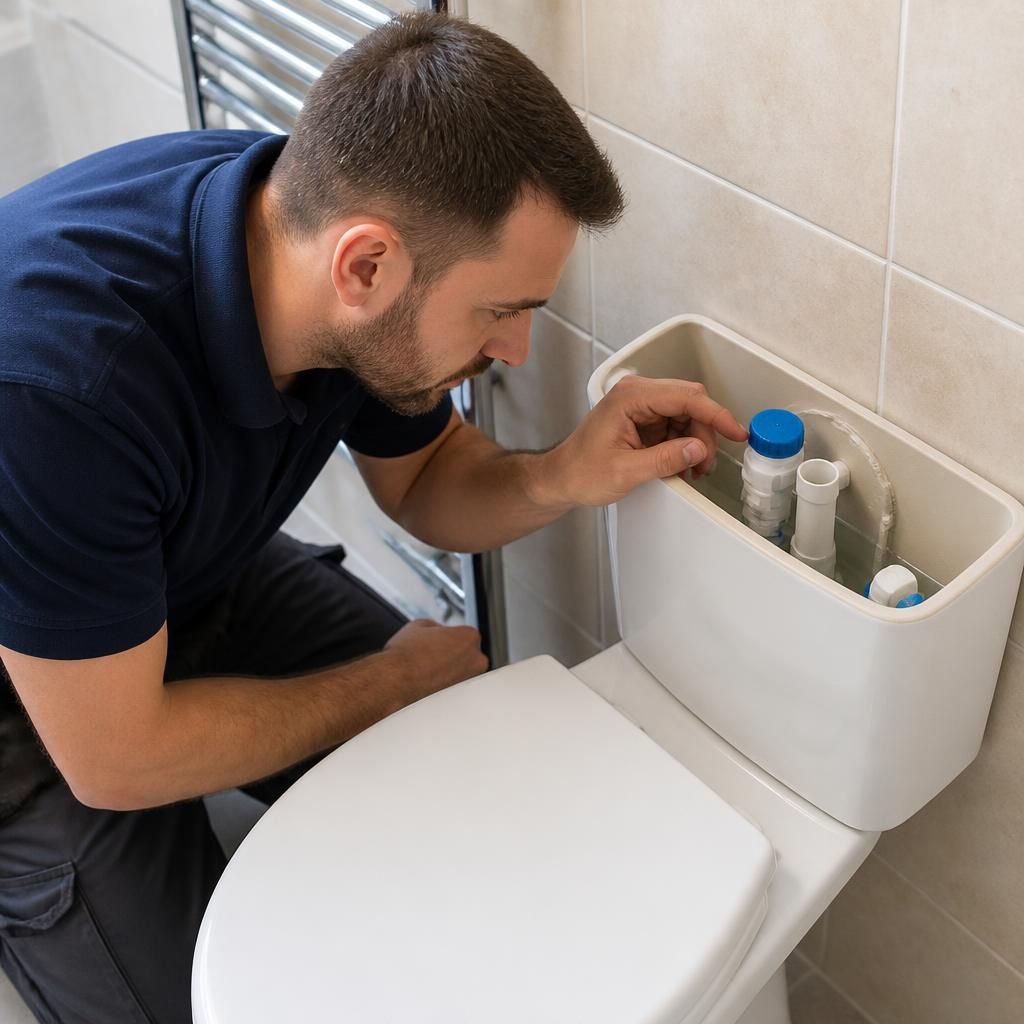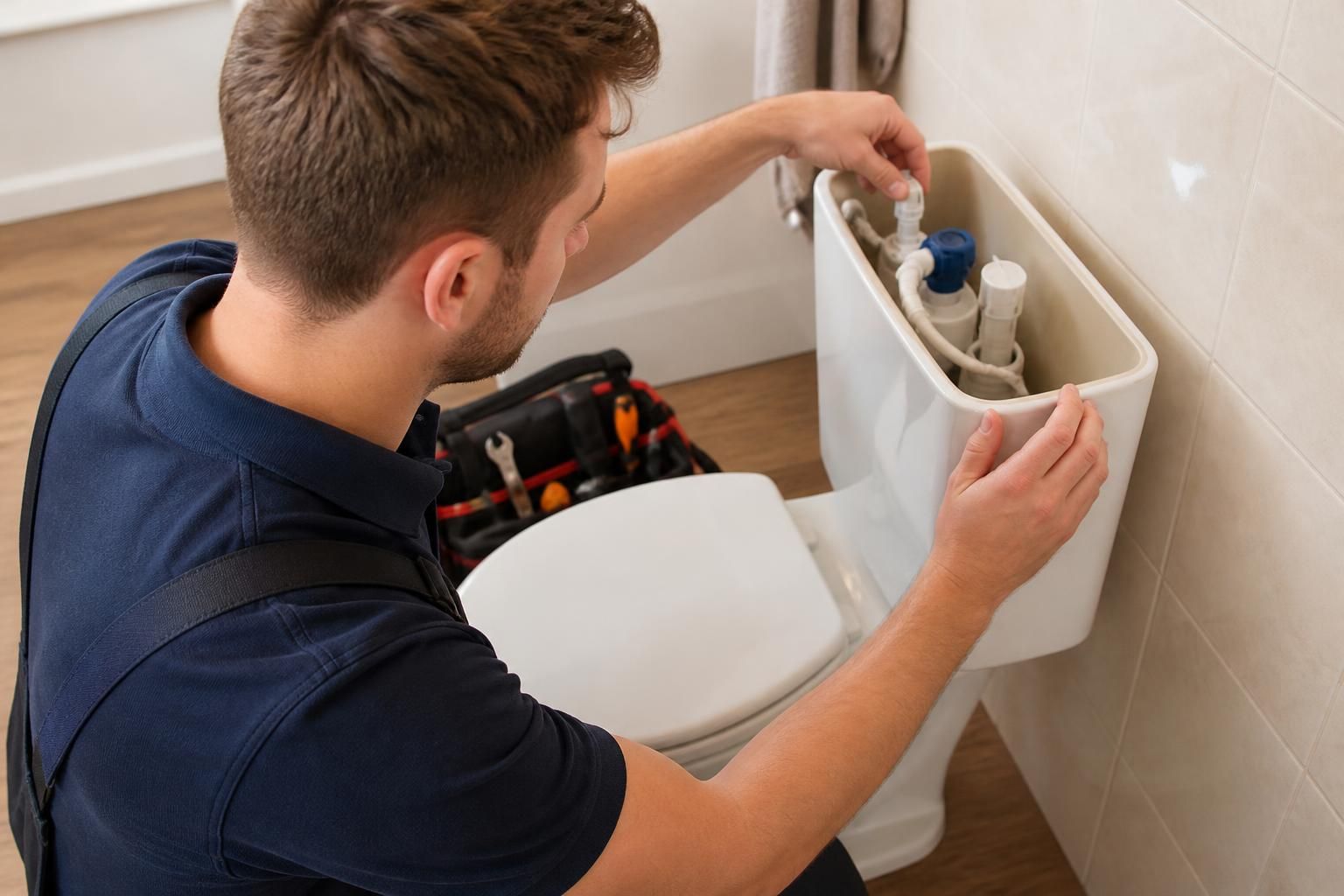
The cost of an emergency toilet repair is assessed by identifying the immediate fault, considering the condition of the toilet and determining what work is needed to restore safe, proper operation. The assessment should separate the cost of diagnosis, labour, replacement parts and any additional work made necessary by access or damage.
A plumber will usually begin by checking the symptoms and testing the toilet where it is safe to do so. This helps establish whether the problem is caused by a blocked waste outlet, a leaking seal, a faulty flush mechanism, a damaged cistern component or a crack in the pan or cistern. Similar symptoms can have different causes, so replacing a visible component without checking the wider assembly may not provide an accurate assessment.
The main points considered when working out the cost include:
- Type of fault: A simple adjustment or replacement of an accessible internal component is generally assessed differently from a leak involving concealed pipework, a damaged connection or a cracked ceramic part.
- Extent of the damage: A minor leak may involve one seal or washer, while water damage, corrosion or a failed connection can increase the amount of work required.
- Access: Components that can be reached without removing surrounding fittings are usually more straightforward to inspect and work on. Restricted access may make the repair more involved.
- Parts required: The estimate depends on which parts are suitable, whether a compatible replacement is available and whether more than one worn component needs attention.
- Labour: Labour reflects the time needed to isolate the water supply, remove faulty parts, install replacements, test the repair and leave the installation working correctly.
- Further remedial work: If the toilet has damaged flooring, surrounding fittings or pipework, those issues may need to be considered separately from the original toilet fault.
The condition of the toilet also affects whether repair or replacement is the more sensible option. Repair may be appropriate where the ceramic body is sound and the fault is limited to a replaceable component. Replacement may be considered where the pan or cistern is cracked, several parts have failed, compatible components are difficult to obtain or the cost of repeated repairs is disproportionate to the condition of the fitting. This decision should be based on the inspection rather than on the age or appearance of the toilet alone.
Emergency work can require a different assessment from planned maintenance because the immediate priority may be to stop escaping water, prevent further use of a defective toilet or deal with an overflowing cistern. Temporary isolation may control the immediate risk, but it is not necessarily the same as completing the permanent repair. The estimate should make clear whether it covers a temporary measure, the final repair or both.
Before work begins, ask for the proposed repair to be explained in plain language. A useful estimate should identify:
- the fault that has been found;
- the repair or replacement work proposed;
- the parts expected to be used;
- whether any additional damage is outside the original assessment;
- what is included in the labour charge; and
- whether the price is fixed or may change if further defects are uncovered.
Costs can change if the initial inspection reveals a concealed leak, a seized connection, damaged pipework or a second fault that was not responsible for the original symptom. In that situation, the additional work should be explained and agreed before it is carried out. Keeping the failed part or taking photographs can also help clarify what was found, particularly where the repair involves a concealed connection.
For homeowners, landlords and tenants, recording when the problem began, where water is visible and whether the toilet still flushes can help the plumber assess the issue more efficiently. If water is escaping, turn off the toilet’s isolation valve if it can be reached safely, avoid using the fitting and protect nearby flooring from further damage. The final cost should reflect the actual fault and work required, rather than an assumed price based only on the word “emergency”.