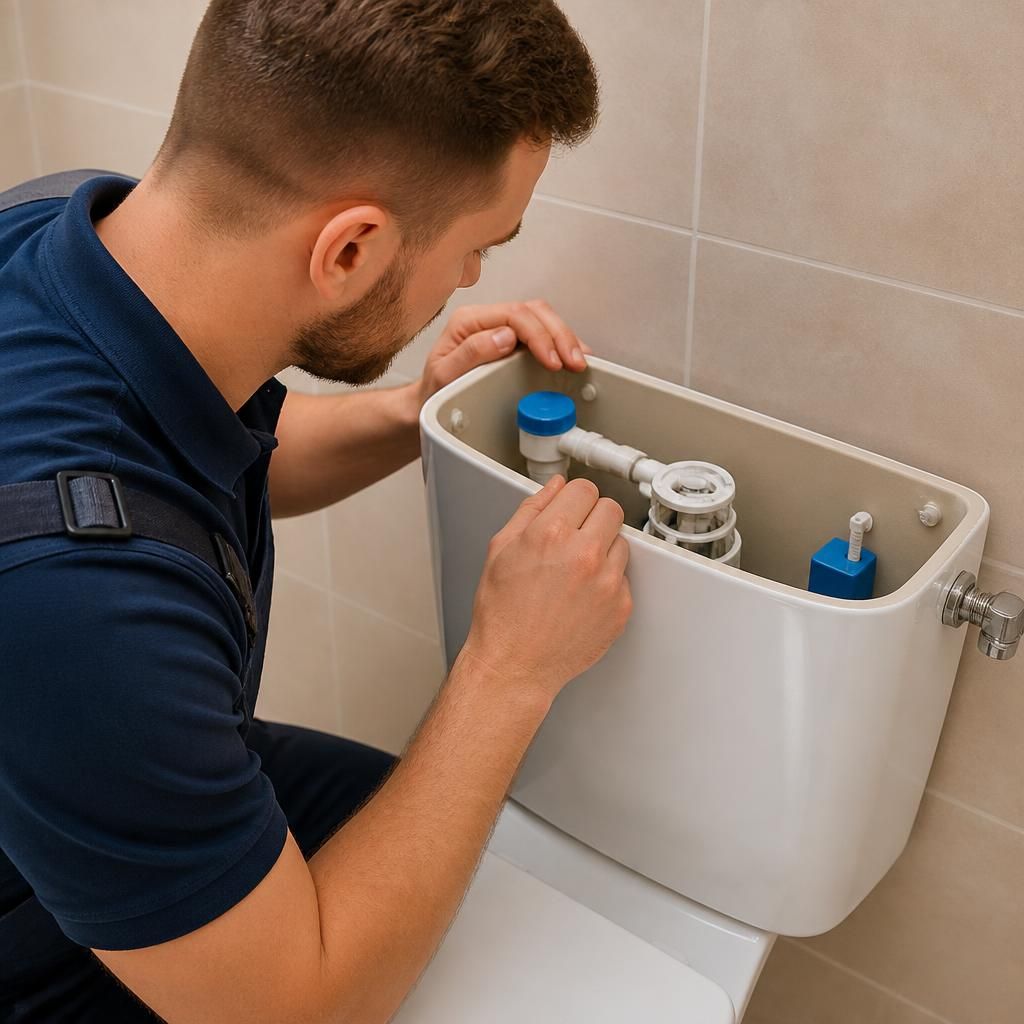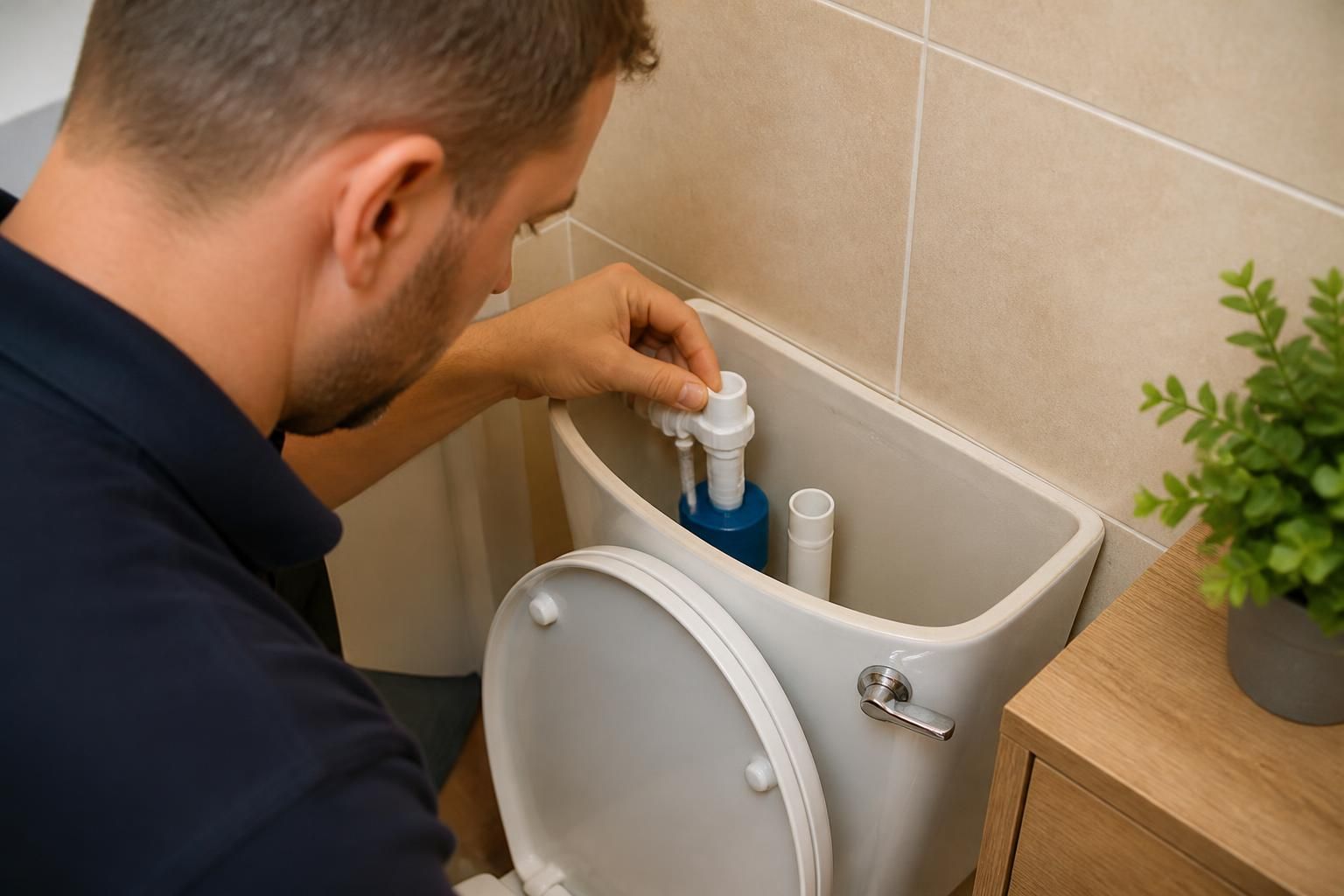
Whether a toilet cistern can be repaired depends on the type of fault, the condition of the cistern body and how easily its internal components can be reached. A leaking or poorly flushing cistern is often repairable when the problem is limited to a replaceable mechanism, but damage to the cistern itself can make replacement the more suitable option.
Faults that are usually repairable
- Inlet valve problems: A worn or incorrectly adjusted inlet valve may cause the cistern to fill continuously, fill slowly or make a humming sound. Cleaning the valve may help in some cases, although replacement is more dependable where the diaphragm or internal seal has deteriorated.
- Flush valve faults: A damaged flush valve, worn seal or poorly seated mechanism can allow water to pass into the toilet pan. The valve or its sealing washer can often be changed without replacing the cistern.
- Handle, button or cable failures: A loose handle, broken push button or disconnected operating cable can usually be replaced or adjusted. Dual-flush mechanisms may need more careful checking because one faulty section can affect either the reduced or full flush.
- Overflow problems: If the water level rises too far, the inlet valve, float or adjustment may be at fault. Correcting the water level and replacing the relevant valve can resolve the issue.
- Minor leaks at connections: Leaks around the supply pipe, flush pipe or fixing points may result from a worn seal, loose nut or damaged washer rather than a failed cistern.
When repair may not be appropriate
A ceramic cistern with a structural crack should normally be replaced rather than patched. Water pressure can cause a repaired crack to open again, and a failure could release a substantial volume of water into the bathroom. Replacement is also more appropriate where the cistern has severe corrosion, distorted fixing points or damage around the inlet or outlet openings.
Some older plastic cisterns can become brittle, particularly around threaded connections. If the material flexes, splits or no longer holds a seal securely, fitting new internal parts may only provide a temporary solution. The same applies where several mechanisms have failed at once and compatible replacement parts are difficult to obtain.
Concealed and unusual cisterns
A concealed cistern is not automatically beyond repair. Its inlet valve, flush valve and operating mechanism may still be serviceable through the access opening behind the flush plate or button. However, limited access can make diagnosis and removal more involved. If the access panel is too small, the mechanism is obsolete or the cistern body is damaged, the repair may require additional work or partial access to the surrounding fittings.
Low-level, high-level and close-coupled toilets also differ in their connections and mechanism layout. Parts should not be selected solely because they look similar; the fixing arrangement, inlet position, flush capacity and available space all need to be checked. Using an unsuitable valve or seal can leave the cistern leaking or prevent the flush from operating correctly.
How a repair assessment works
- The water supply is isolated and the remaining water is removed from the cistern.
- The symptoms are checked, including the fill cycle, water level, flush action and any signs of leakage.
- The internal mechanism, seals, fixings and cistern body are inspected for wear, cracks or distortion.
- The repairable component is identified and checked for compatibility with the existing toilet.
- After the work, the cistern is refilled and tested for proper operation and continued leaks.
Replacing one failed component is generally preferable when the cistern body is sound and compatible parts are available. A complete replacement becomes more sensible when the body is unsafe, the fittings are extensively worn or the cost and disruption of repeated repairs would outweigh fitting a new cistern.
Ideal Plumbing Services can assess toilet cistern faults and advise homeowners, landlords and tenants on the appropriate repair or replacement option in Birmingham and the wider West Midlands. A proper inspection helps distinguish a straightforward mechanism fault from damage that requires a new cistern.