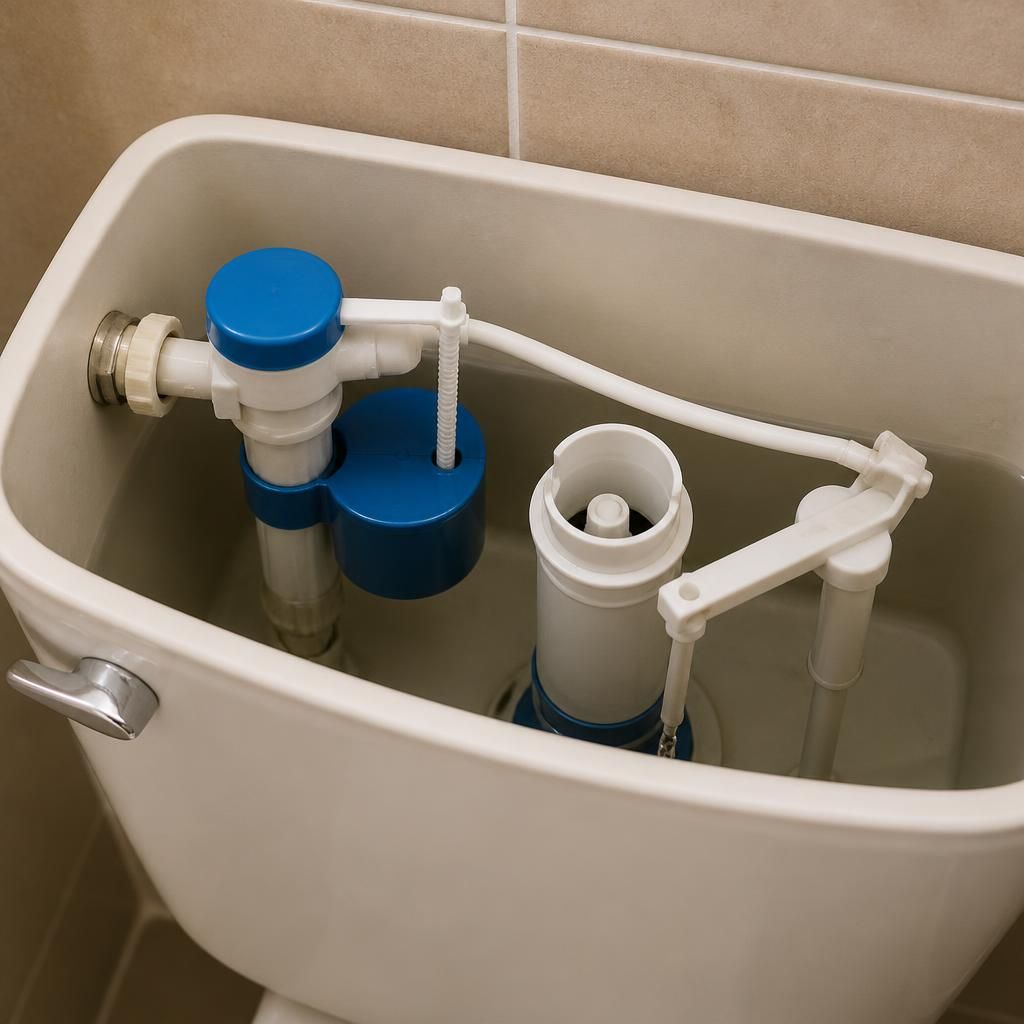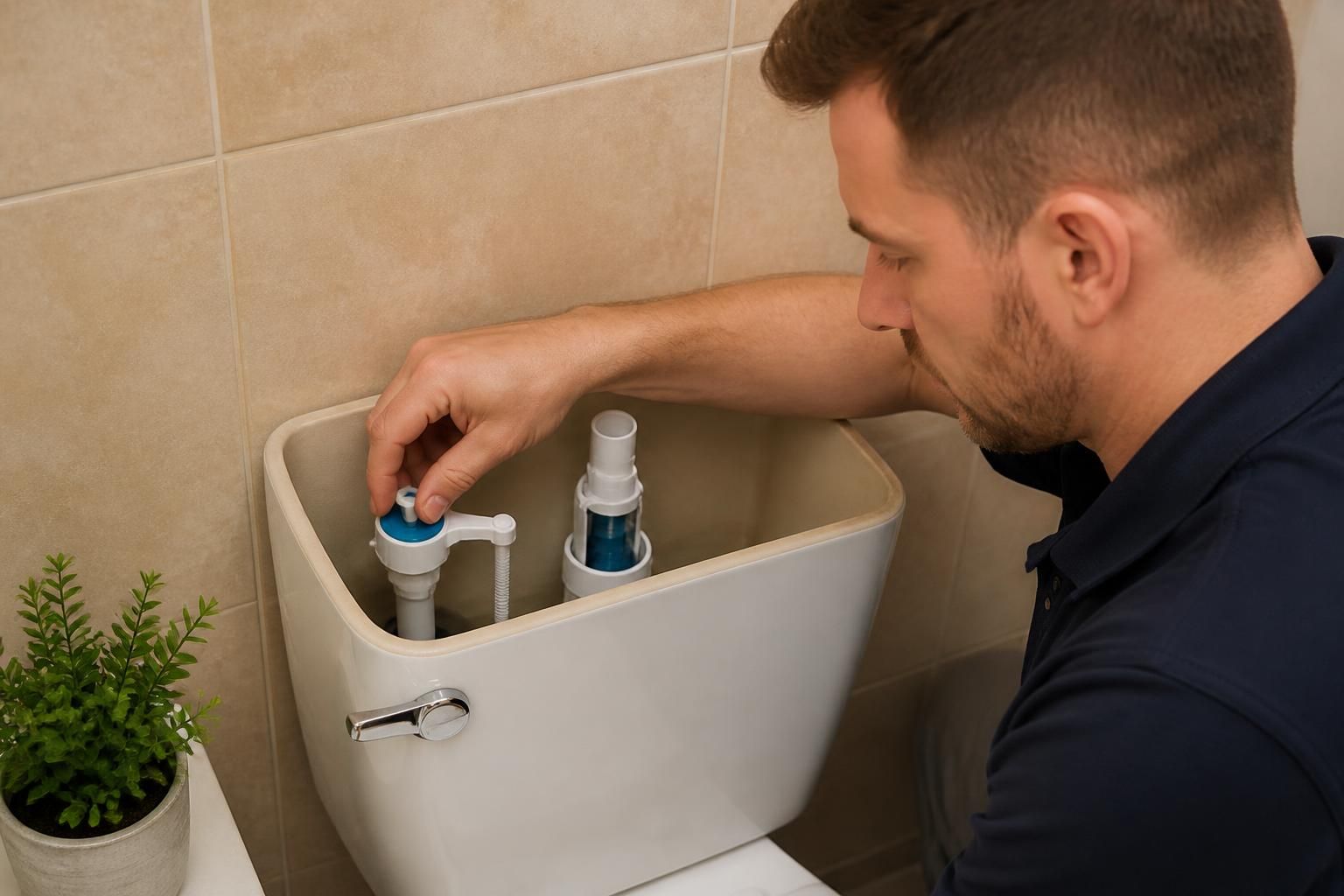
In many cases, a toilet cistern can be repaired in place without removing the toilet. The repairer may only need to lift the cistern lid and work through the opening, particularly when the problem concerns an accessible flushing or filling component. Whether this is practical depends on the cistern design, the position of the faulty part and the space available around the toilet.
Repairs commonly completed in place
- Inlet valve problems: A faulty inlet valve can often be adjusted, cleaned or replaced from inside the cistern. This may resolve a cistern that continues to fill, fills slowly or fails to refill correctly.
- Flush mechanism faults: A damaged button, lever, siphon or flush valve may be accessible from above. The repairer can usually isolate the water supply, empty the cistern and remove the internal mechanism without disturbing the pan.
- Worn washers and seals: Some leaks are caused by replaceable seals within the inlet or flush assembly. These can often be changed while the cistern remains attached.
- Adjustment issues: Incorrect float settings, a loose operating rod or a poorly positioned button may require adjustment rather than removal of the toilet.
Access is the main factor. A close-coupled toilet normally has a cistern sitting directly on the pan, with its working parts reached from the top. However, the lid may be difficult to remove, especially if a push button has become stuck or the surrounding fittings leave little room for manoeuvre. Some toilets also have narrow openings that make it difficult to remove or fit replacement parts safely.
A repair may be more involved where the cistern is concealed behind a tiled panel, furniture unit or wall. In this arrangement, access panels may need to be removed before the internal components can be inspected. If there is no suitable access panel, opening the surrounding finish may be necessary. A concealed cistern does not automatically mean the toilet must be removed, but the repairer will need to establish how the mechanism can be reached without causing unnecessary damage.
Removal may be required when the fault is outside the cistern. For example, a leak at the joint between the cistern and pan can involve fixing bolts, a doughnut washer or the connecting flush pipe. These parts may not be accessible while the cistern is mounted. Corroded fixings, a cracked ceramic cistern or a damaged pan connection can also make partial dismantling the safer option. In some cases, the cistern alone can be detached; in others, the toilet pan must also be moved to inspect the connection properly.
A professional assessment should consider more than whether a component can technically be reached. Forcing a seized button, bolt or cover can crack ceramic, damage the flush assembly or create a larger leak. The water supply should be isolated before work begins, and the cistern should be emptied to prevent water escaping into the surrounding flooring or furniture. Replacement parts must also match the cistern's dimensions and fixing arrangement.
Before attending to the repair, it is useful to note where water is appearing, whether the toilet is constantly running and whether the problem changes after flushing. Photographs of the cistern, access panel and surrounding fittings may also help a Birmingham plumbing professional judge the likely access requirements. The final method can then be selected to provide a sound repair while avoiding removal where the existing access makes that safe and practical.