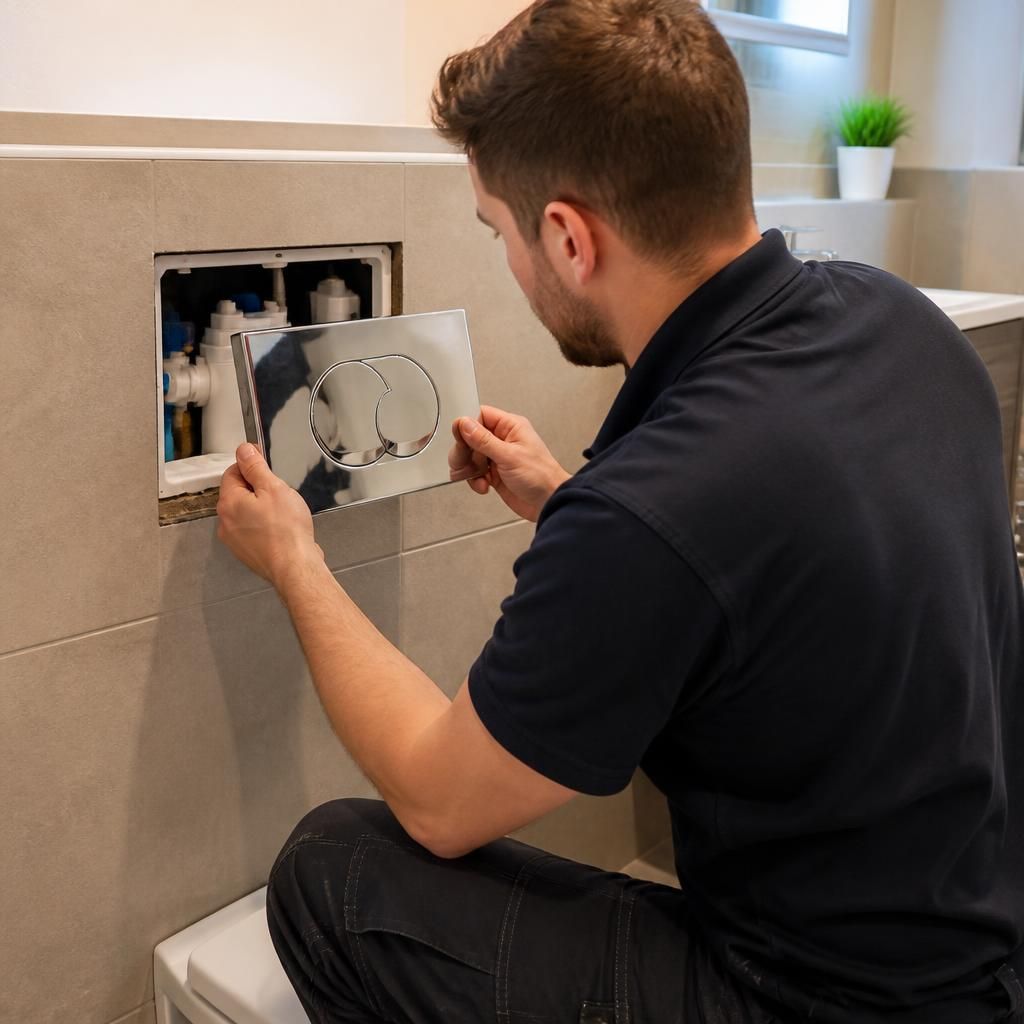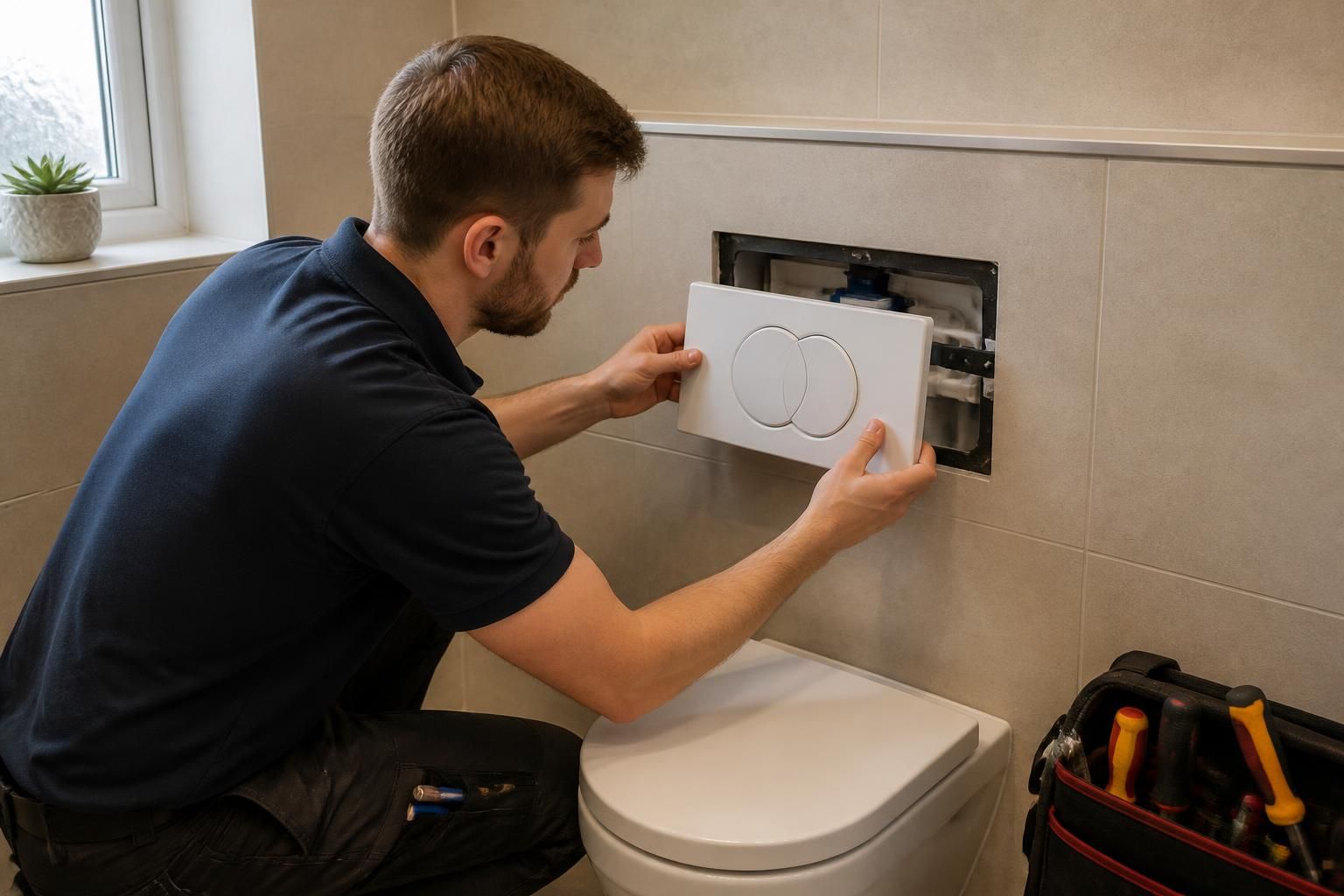
An emergency toilet cistern repair is normally a focused plumbing job, but the level of disruption depends on where the cistern is situated, how accessible its components are and whether the fault can be repaired or requires a replacement part. In most cases, the main inconvenience is temporary loss of use of that toilet while the water supply is isolated, the fault is corrected and the system is tested.
What the repair usually involves
The plumber will first identify the source of the problem, such as a continuously running toilet, a failure to refill, a weak flush, a leaking inlet valve or water escaping from the cistern. The supply to the cistern is then isolated before the cover or access panel is removed. This prevents further water entering the tank while the internal mechanism is inspected.
For a straightforward fault, the work may involve adjusting the float, replacing a washer or changing an inlet, flush or overflow component. These repairs generally require access around the toilet rather than work throughout the bathroom. Once the component has been repaired or replaced, the cistern is refilled and flushed repeatedly to check that it operates correctly and does not continue to leak.
Situations that can make the work more disruptive
- Concealed cisterns: A cistern behind a furniture panel, tiled wall or removable access hatch may take longer to reach. In some cases, part of the surrounding boxing must be opened carefully to expose the mechanism.
- Wall-hung toilets: These can have internal parts positioned behind the flush plate or within the wall, making diagnosis and access more involved than with a standard exposed cistern.
- Damaged or seized components: Older valves, fixings and plastic connections can be difficult to remove without causing further damage. A repair may therefore require more careful dismantling or replacement parts.
- Persistent leaks: Water that has reached flooring, cabinetry or adjoining areas may require additional checks and drying after the cistern itself has been repaired.
- Limited space: A cramped bathroom or furniture positioned close to the toilet can restrict working room. Clearing toiletries, cleaning products and removable items beforehand can make access easier.
How the bathroom is protected
Repair work should be carried out with suitable protection for the floor and nearby fixtures. The plumber may need a small working area beside or behind the toilet, but extensive removal of bathroom fittings is not normally necessary for an exposed cistern. Any removed cover, panel or flush plate should be refitted after testing, with attention paid to seals and connections.
Will the toilet be usable during the repair?
The affected toilet should be treated as unavailable while the cistern is isolated or dismantled. If there is another toilet in the property, disruption is limited to the bathroom containing the faulty unit. Where it is the only toilet, the repair should be planned around restoring safe operation before the work is considered complete. Do not continue flushing a cistern that is overflowing or leaking into the room, as this can increase water damage.
When replacement is needed
A repair can become more involved when the cistern body is cracked, the internal mechanism is obsolete or the unit cannot be reached without removing surrounding panels. A replacement may require compatibility checks for the flush button, inlet position, flush pipe, pan and available space. Concealed or close-coupled arrangements need particular care because an unsuitable part can create alignment or sealing problems.
After the work, the toilet should be flushed several times and checked while filling, flushing and standing unused. The area around the cistern, pipe connections and floor should also be inspected for drips. These checks help distinguish a completed repair from a temporary reduction in the visible symptoms.
For homeowners, landlords and tenants, it is useful to explain whether the cistern is exposed or concealed, describe when the fault occurs and report any water damage before the plumber attends. Photographs of the cistern and access panel can also help establish the type of installation. A Birmingham plumbing professional can then assess whether the issue is likely to be a contained component repair or a more involved access and replacement job.