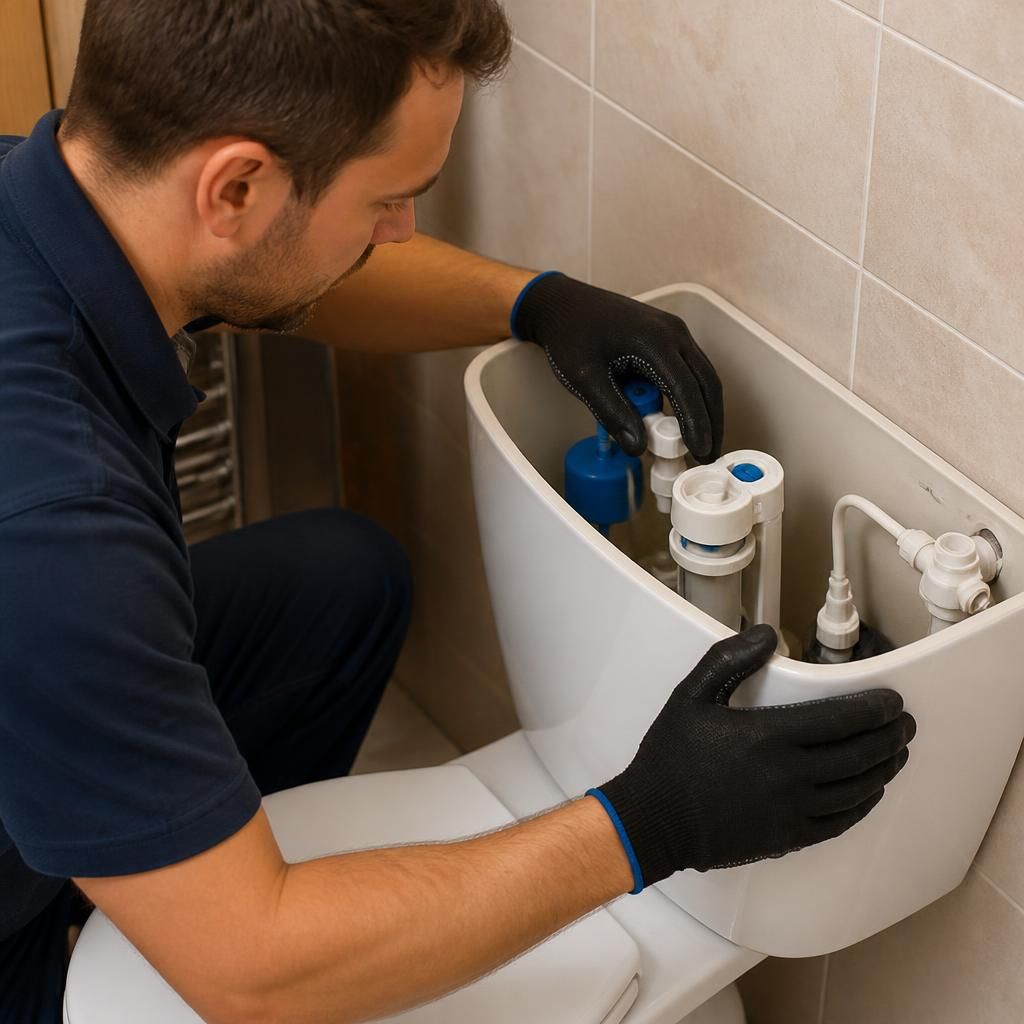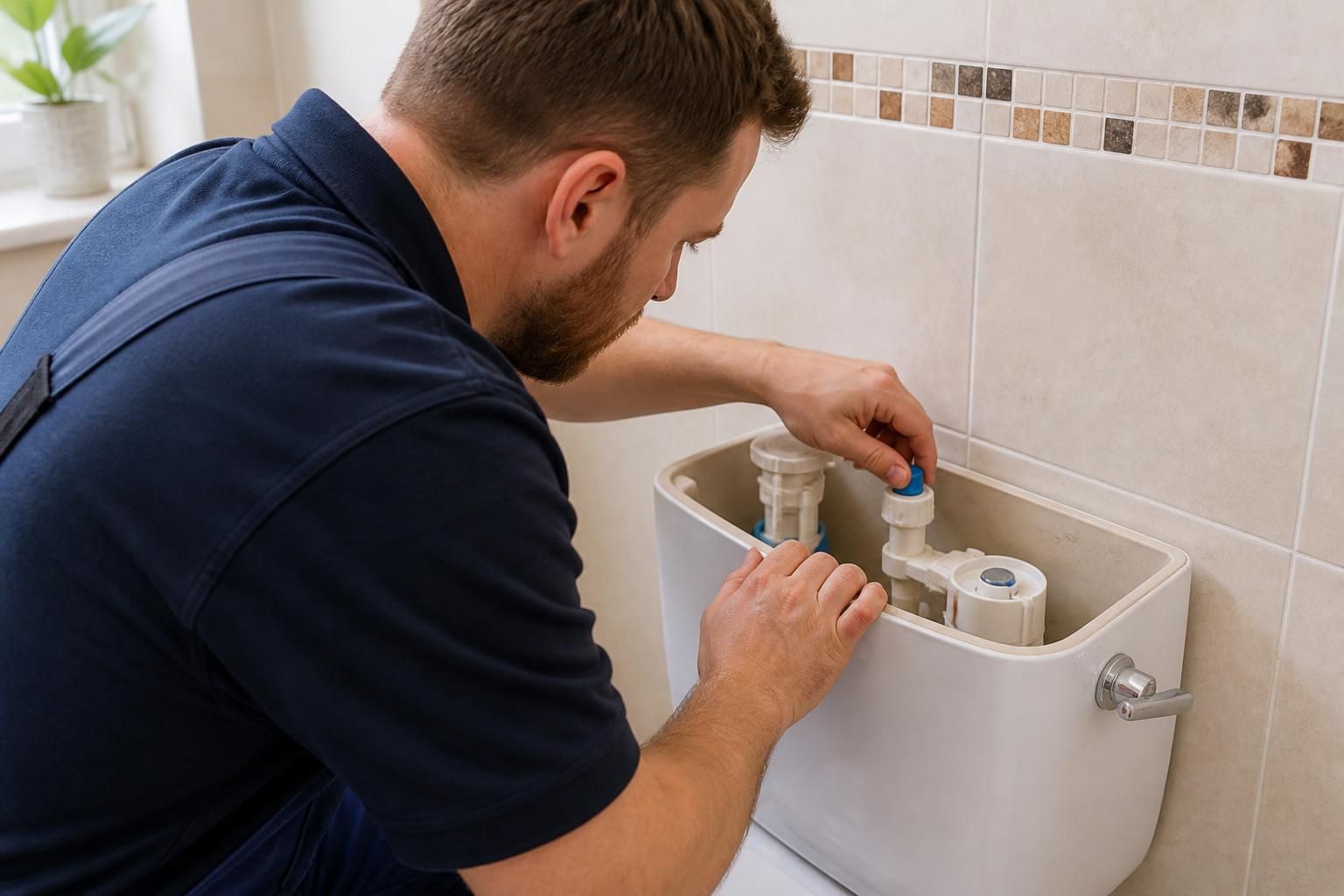
The cost of an emergency toilet cistern repair cannot be stated accurately until the fault has been identified. A minor adjustment or replacement of an accessible internal component will usually involve less work than repairing a cracked cistern, dealing with a concealed leak or replacing the complete mechanism. The final price reflects the parts required, the labour involved and the conditions found at the property.
Common faults include a constantly running toilet, a cistern that will not fill, weak flushing, water escaping around the inlet valve or a failed flush button. Some problems are caused by a worn washer, diaphragm, seal, float or valve. These components can often be replaced individually, although the correct part must be compatible with the cistern. Older or unusual fittings may require additional investigation before a suitable replacement can be selected.
A plumber will normally assess several points before confirming the charge:
- The type of fault: a faulty fill valve, flush valve, seal or button can require different parts and levels of labour.
- The condition of the cistern: corrosion, limescale, brittle plastic or damage to the ceramic may affect whether a component can be removed safely.
- Accessibility: a standard exposed cistern is generally simpler to work on than a close-coupled, concealed or boxed-in installation.
- Whether water has caused secondary damage: a leak may have affected flooring, cabinetry or nearby fittings, requiring the source to be isolated before the cistern repair is completed.
- Parts availability: if the existing mechanism is obsolete or non-standard, more extensive work may be needed than for a commonly available replacement.
In many cases, repairing one failed component is more economical than replacing the whole cistern. Full replacement may be considered when the ceramic is cracked, several internal parts have failed, the fitting is badly deteriorated or compatible components are no longer practical to source. A professional should explain why replacement is being recommended rather than assuming that a complete installation is necessary.
The quoted cost should be clear about what is included. Ask whether it covers inspection, labour, replacement parts, removal of damaged components and testing after the repair. It is also sensible to establish whether any additional work would be discussed before it is carried out. This makes it easier to compare quotations based on the same scope of work rather than comparing a basic labour charge with a complete repair.
If the cistern is leaking, turn off its isolation valve if it can be reached safely and avoid repeatedly flushing the toilet. Where there is no accessible valve, the property's main water supply may need to be isolated until the fault is assessed. Taking these steps can limit water loss and reduce the risk of further damage, but they do not determine the repair cost.
Ideal Plumbing Services provides a fault assessment for domestic toilet cistern problems in Birmingham and the wider West Midlands, allowing the required repair and associated charge to be explained before the work proceeds.