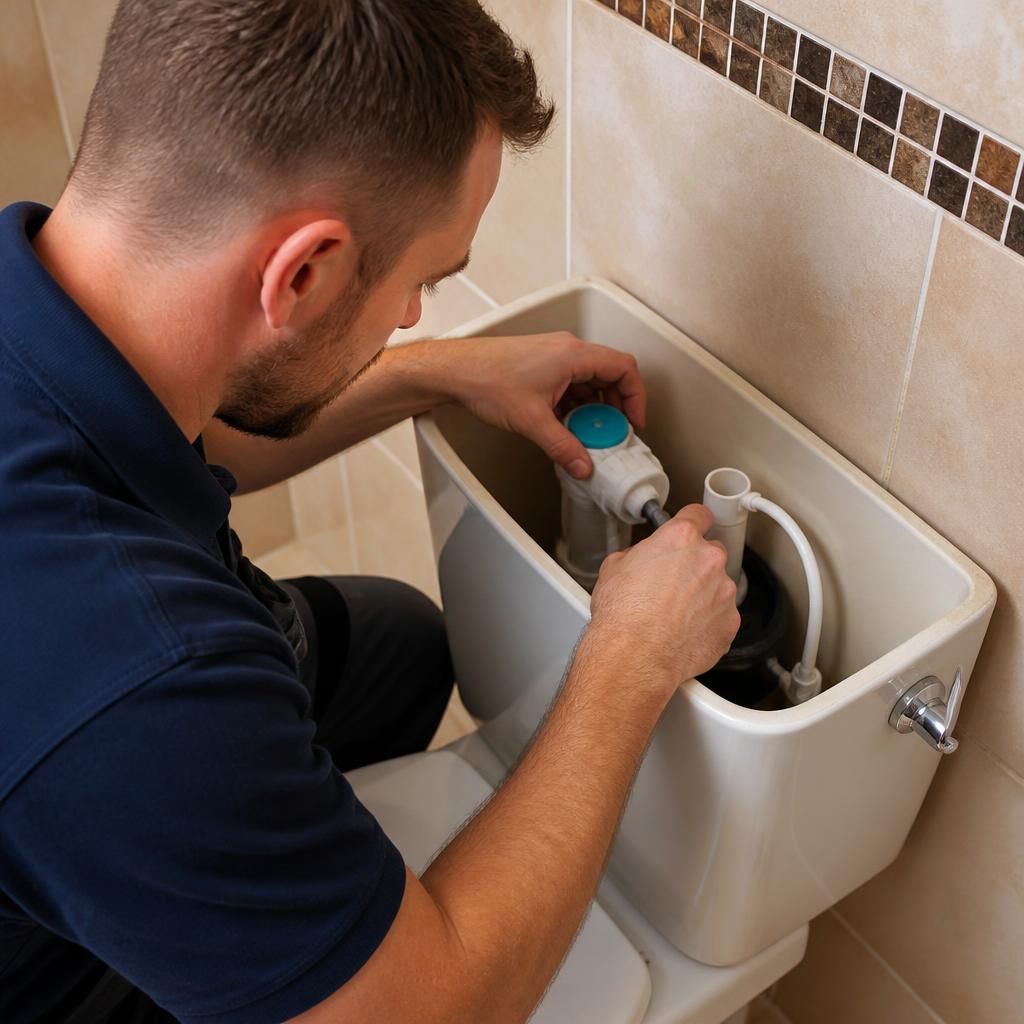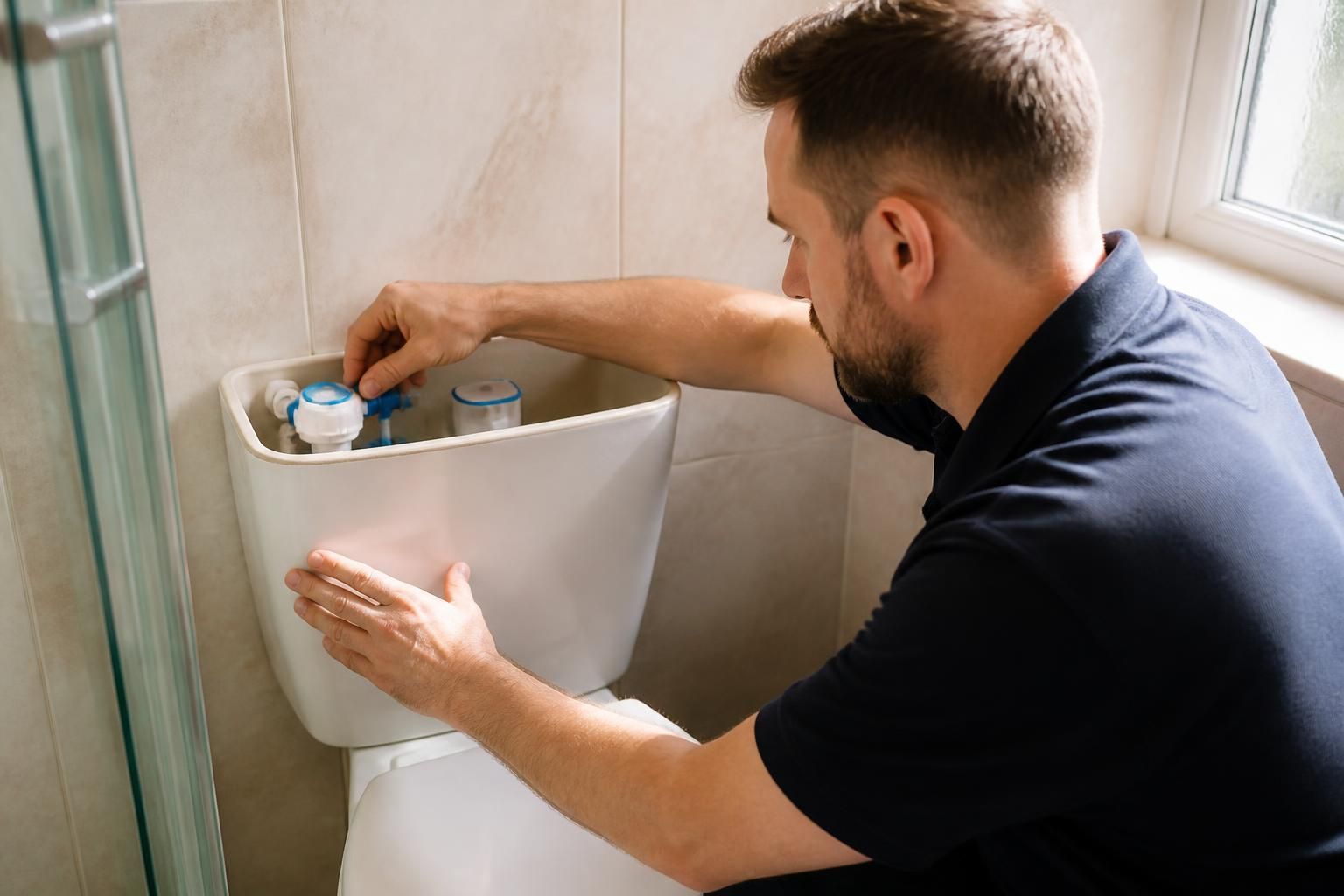
In most cases, the toilet pan can remain fixed to the floor while the flush fault is investigated and repaired. A plumber will normally work through the cistern opening, beneath the flush button or handle, or through an accessible inspection area. This avoids disturbing the pan, waste connection and floor seal unless the problem cannot be resolved safely from above.
The main factor is not how urgent the repair is, but where the failed component is located and how the toilet has been constructed. Traditional close-coupled toilets generally provide reasonable access once the cistern lid has been removed. Concealed-cistern toilets, fully enclosed designs and some wall-hung installations may require access through a removable panel rather than through the visible cistern.
A typical assessment involves:
- isolating the water supply to prevent the cistern from refilling during the repair;
- removing the flush button, handle or cistern lid without damaging the surrounding ceramic;
- checking the operating mechanism, seals, linkage and inlet water level;
- identifying whether the fault is caused by a broken part, a worn seal, misalignment, restricted movement or damage to the cistern itself; and
- testing the flush and checking for leaks after the repair.
Where a component can be detached from inside the cistern, it can often be replaced in situ. This may apply to an operating button, handle linkage, seal or other accessible mechanism. The pan does not usually need to be disconnected for this type of work, so the existing waste connection and floor fixing remain undisturbed.
There are situations where removing the toilet, or at least separating the cistern from the pan, may be necessary. These include a concealed failure beneath the cistern, a damaged fixing that cannot be reached, a cracked ceramic section, seized connections, or a design where the relevant component can only be removed from the underside. A cistern may also need to be detached if its base connection prevents access to the flush assembly.
It is important to distinguish between removing the pan and removing the cistern. Detaching the cistern from a close-coupled pan is a more limited operation and does not always mean that the toilet’s floor seal or waste pipe has been disturbed. Removing the pan is more involved because the water connection, fixings and waste seal may all need to be disconnected and refitted. The condition of the existing seal should be considered before any such work begins.
A plumber should also check whether the cistern is stable and whether its fixings can be released without putting stress on the ceramic. Forcing a corroded nut or twisting a seized fitting can turn a minor flush fault into a cracked cistern or a leak at the base. If the water cannot be isolated, the cistern is already leaking, or the ceramic is damaged, a controlled shut-off and wider repair may be required before the flush mechanism can be addressed.
Access can sometimes be improved without removing the toilet. For example, a removable flush plate, service panel or carefully designed cistern lid may provide enough room to inspect and change the internal parts. In a concealed installation, the visible toilet pan may remain untouched while the plumber works through the access opening. The available space, rather than the appearance of the toilet, determines whether this is practical.
Homeowners should avoid repeatedly operating a stiff button or handle, pouring aggressive chemicals into the cistern, or attempting to force ceramic covers loose. These actions are unlikely to correct a mechanical flush fault and may damage seals, fittings or the finish. If the toilet is still usable, limiting unnecessary flushing and checking for water running into the bowl can help prevent additional water loss while the repair is arranged.
Ideal Plumbing Services can assess the installation before deciding whether removal is justified. The appropriate method should balance access, the risk of damaging connected fittings, the condition of the existing components and the need to leave the toilet watertight after testing. A repair carried out without removing the pan is often less disruptive, but removal is preferable when it is the only safe way to reach or replace the defective part.