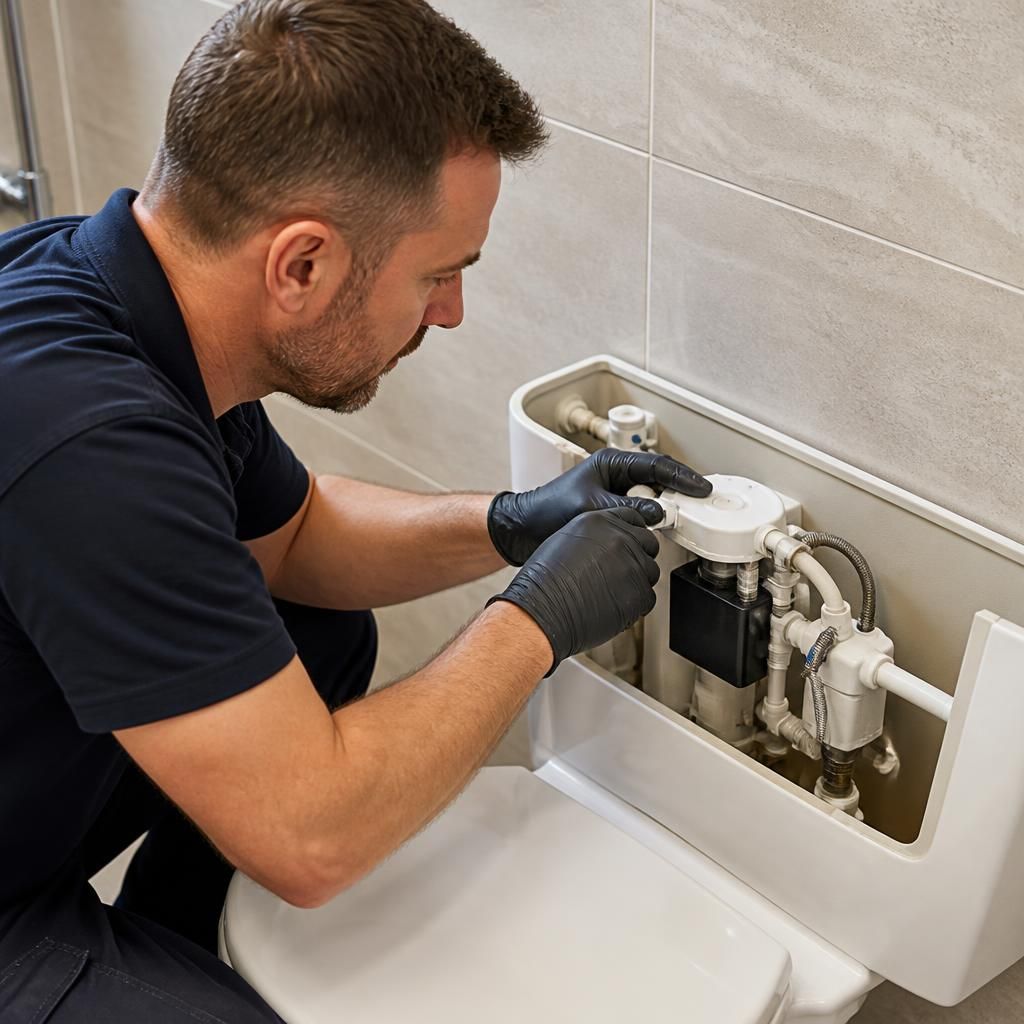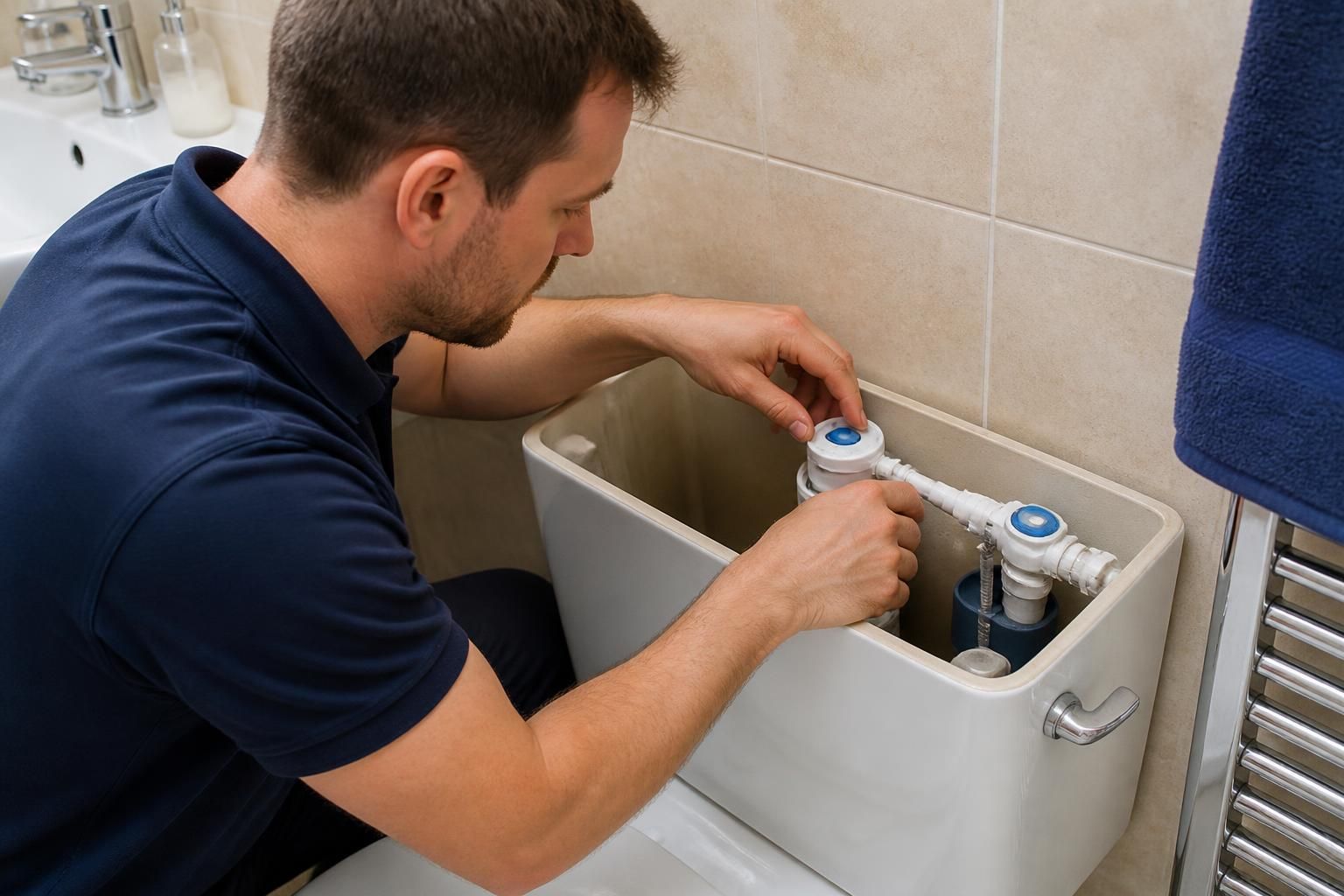
There is no single fixed price for an emergency toilet flush repair. The final cost is usually determined by the time needed to diagnose the fault, the complexity of the cistern, the condition of the existing fittings and the scope of work agreed before the repair begins.
The diagnostic work can affect the total. A toilet that continuously runs may have a faulty inlet valve, flush valve, seal, button or lever, while a weak flush may involve an incorrectly adjusted mechanism, restricted water entry or a problem inside a concealed cistern. Identifying the actual cause prevents unnecessary replacement of parts that are still serviceable. Ask whether the initial assessment is included in the quoted work or charged separately.
The type and age of the toilet are also relevant. A standard exposed cistern may be relatively straightforward to access, whereas a concealed or close-coupled design can require the removal of panels, the cistern lid or surrounding fittings. Older toilets may have worn fixings or components that are difficult to separate without damaging seals or connections. These access and condition issues can increase labour even when the original fault appears minor.
Parts pricing varies according to what is needed. Replacing a single washer, seal, lever or valve is different from replacing several internal components. If the flush mechanism is damaged or incompatible with the existing cistern, a larger component may be required. A plumber should identify the parts being proposed and explain whether a repair, a partial replacement or a complete mechanism change is the most appropriate option.
Additional work may be needed if the fault has caused related problems. For example, a leaking connection may require new seals or isolation fittings, while a damaged supply connection may need attention before the flush can be tested safely. Repairing the toilet does not necessarily include making good damaged flooring, plaster, decoration or a ceiling below it. Those items should be separated clearly from the plumbing work in any estimate.
Urgent plumbing work can also be priced differently from a planned repair because the job may need to be assessed and completed as a priority. The important point is to confirm the charging basis before work starts, including labour, parts, assessment costs and any additional work that could reasonably arise once the cistern is opened.
To compare estimates accurately, check that they state:
- the diagnosed fault and the proposed remedy;
- whether labour and the initial assessment are included;
- which parts are included and whether replacement of further worn components requires approval;
- whether removal and disposal of old parts is covered;
- what work is excluded, such as decorating or repairing water damage; and
- how you will be informed if the actual repair differs from the original assessment.
A clear written explanation is particularly useful where the choice is between repairing an internal mechanism and replacing a larger section of the toilet. The lower-cost option is not always the most suitable if other components are already deteriorated, but unnecessary replacement should also be avoided. A professional assessment should set out the options and let the property owner, landlord or responsible occupier make an informed decision.