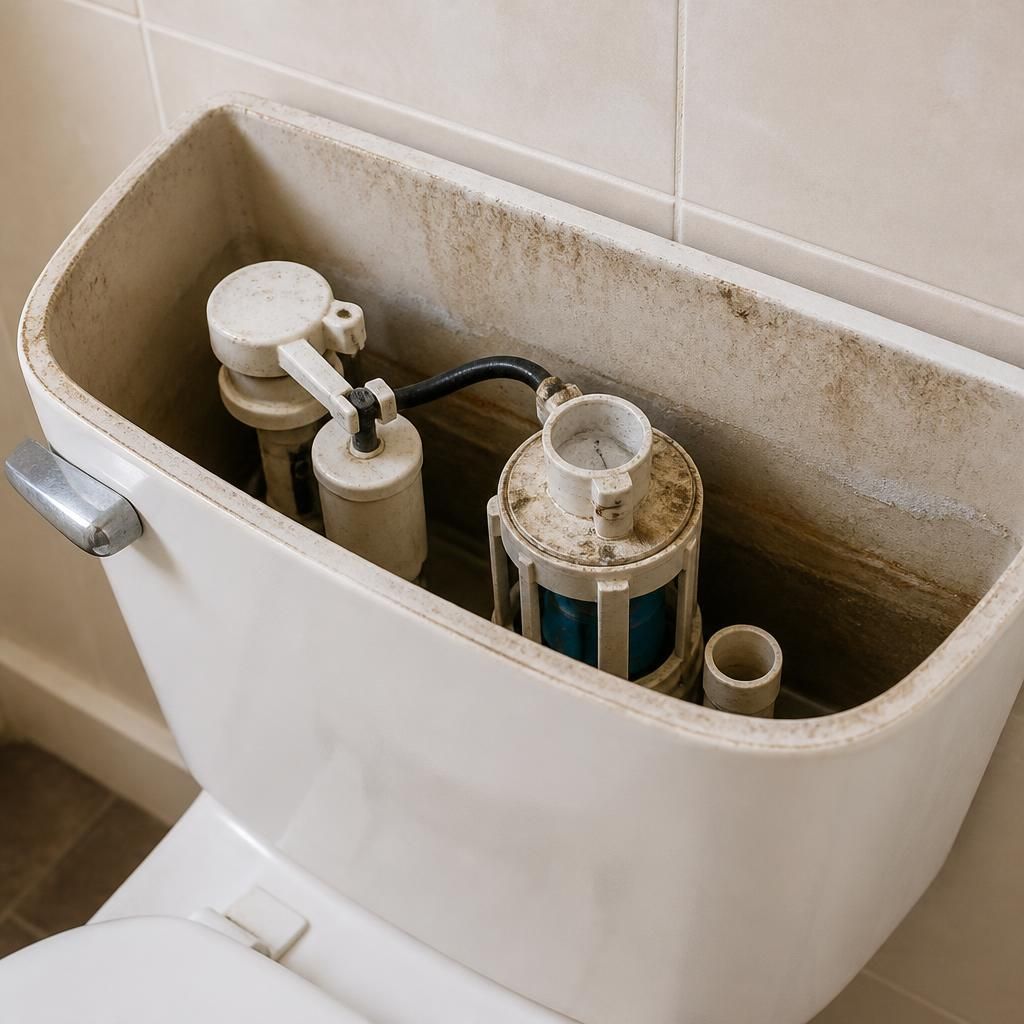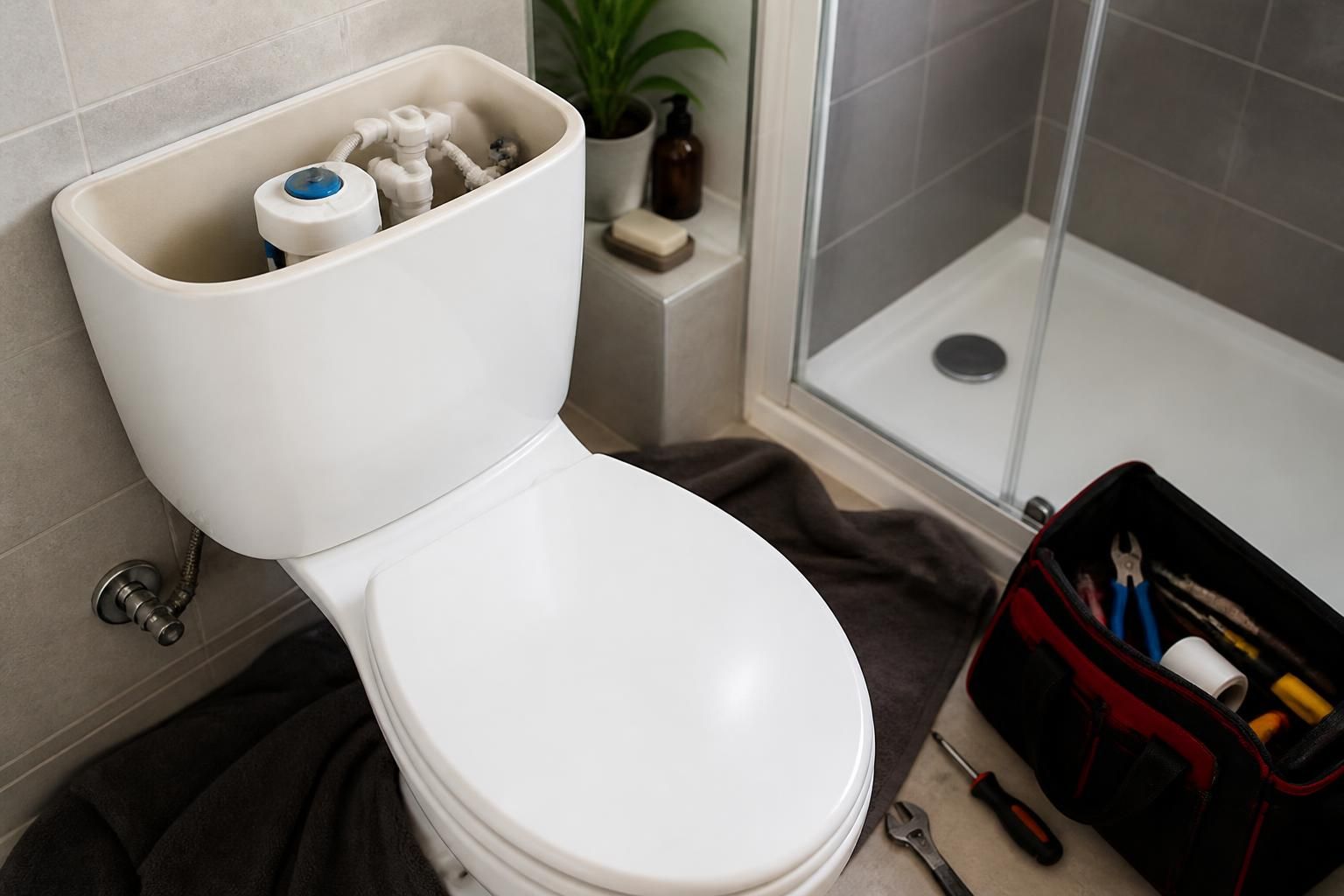
The best preparation for emergency toilet flush repair is to make the toilet safe to inspect, preserve any useful information about the fault and provide clear access to the cistern, pan and surrounding pipework. This helps the plumber identify whether the problem is with the handle, push button, siphon, flush valve, fill valve, linkage or internal seal without creating further damage.
Before the plumber arrives, take the following steps:
- Keep people away from the affected toilet. Children and pets should not use or approach it while the fault is being assessed, particularly if the cistern is cracked, the flush button is loose or water is escaping near electrical equipment.
- Make the route to the bathroom clear. Remove obstacles from hallways, doorways and the area immediately outside the room. This gives the plumber safe access to the toilet and avoids damage to household items during the inspection.
- Leave the cistern cover in a safe place if it has already been removed. Do not force a stuck lid, button or flush handle. Ceramic covers can crack if they are twisted or lifted against a damaged internal component.
- Keep any detached parts together. If a button, handle, chain, screw or plastic component has come loose, place it in a container rather than throwing it away. Even a broken part can help identify the type of repair needed.
- Record what happened. Note whether the toilet is constantly running, will not flush, flushes weakly, needs repeated operation or makes an unusual noise. If the fault changes, a photograph or short video can show the plumber the original behaviour without requiring the toilet to be operated again.
- Protect important belongings elsewhere in the room. Move bathroom storage, cleaning products and electrical items away from the toilet and from any area that may become wet. Do not use electrical appliances in standing water.
Do not pour drain unblocker, descaling chemicals or boiling water into the toilet in an attempt to restore the flush. These products may damage seals and plastic components, obscure the original fault or create a handling risk during the repair. Avoid repeatedly pressing a stuck button or forcing a handle, as this can break the linkage or damage the flush valve.
If the toilet is in a rented property, the tenant should report the fault to the landlord or managing agent in line with the tenancy arrangements and keep a record of the report. The toilet should still be left unused while the repair is organised. Tenants should not remove the cistern or attempt an internal repair unless they have been authorised and are competent to do so.
When the plumber arrives, explain what the toilet was doing before it stopped working, whether the issue followed cleaning or other bathroom work, and whether there has been any previous repair. Mention any visible crack, leak, staining or dampness around the cistern, pan or nearby flooring. This information, together with unobstructed access, allows the flush mechanism and connected components to be assessed before the appropriate repair is carried out.