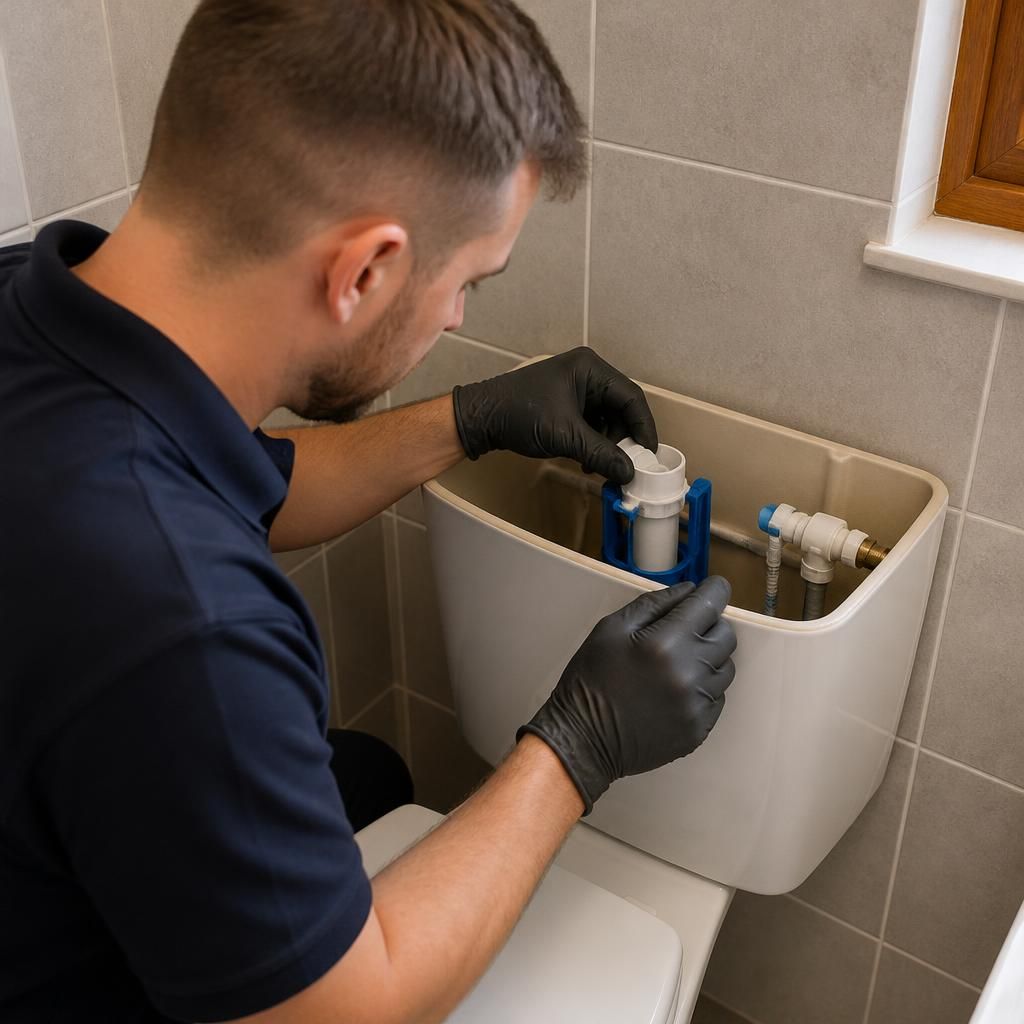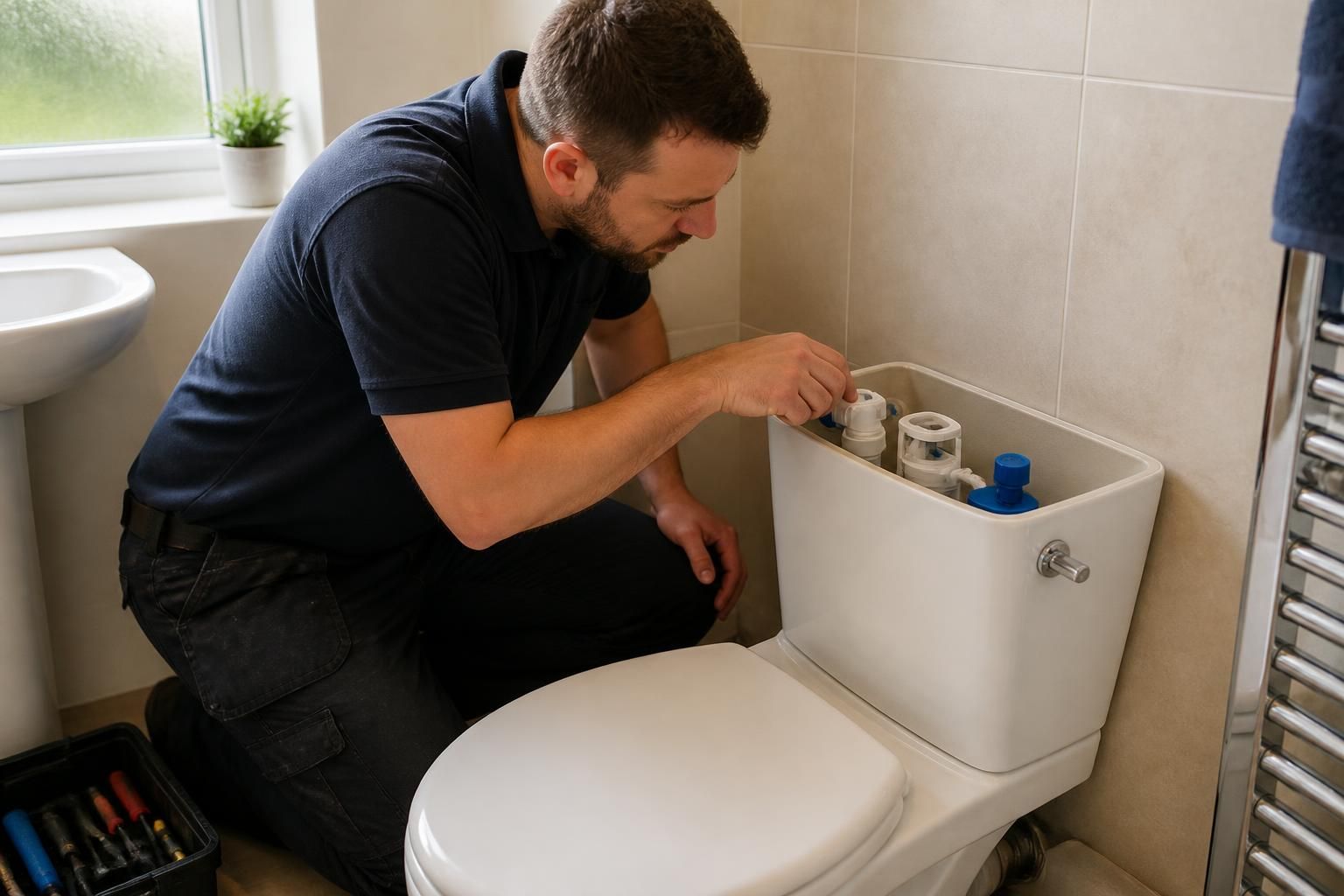
Emergency toilet flush repair is generally a low-disruption plumbing job because the fault is usually confined to the cistern, flush valve, button, handle or connecting parts. Most work takes place around the toilet itself, although access, the type of flush system and the condition of existing components can affect how much of the bathroom needs to be disturbed.
Before starting, the plumber will normally identify the symptom and inspect the cistern and flush controls. Common faults include a handle that no longer operates the mechanism, a button that has become disconnected, a flush valve that will not lift or close properly, and a filling problem that leaves the cistern empty or constantly running. This initial inspection is usually carried out without moving the pan or removing surrounding bathroom fittings.
The most noticeable disruption is often the temporary loss of use of the toilet while the fault is diagnosed and repaired. The water supply may need to be isolated, and the cistern may be emptied before components are removed. Where the problem is limited to an accessible mechanism, the work normally involves taking off the cistern lid, disconnecting the faulty part and fitting or adjusting its replacement. The toilet can then be tested with several flushes to check that it fills, operates and shuts off correctly.
Some installations require more care:
- Close-coupled toilets: The cistern sits directly on the pan, so internal access may be restricted by the design of the lid, buttons or fixing arrangement.
- Concealed cisterns: The flush mechanism may be behind a removable panel, furniture or a wall access plate. The visible flush button may need to be removed before the internal parts can be reached.
- Older or corroded fittings: Seized screws, brittle plastic and worn seals can make removal slower and increase the risk of damaging a component that must be replaced rather than adjusted.
- Leaks around the cistern or pan: Water may need to be cleared and the surrounding area checked for dampness before the repair is completed.
- Restricted access: Cabinets, stored items, shower screens or nearby furniture can limit working space and may need to be moved temporarily.
Removing the toilet is not normally the first step for a flush fault. It may become necessary if the mechanism cannot be reached through the cistern, if the cistern is fixed in a way that prevents safe access, or if the repair involves a pan connector, fixing, seal or other part beneath the toilet. In those circumstances, the disruption is greater because the water connection must be disconnected and the pan may need to be lifted. The plumber should explain this change in scope before proceeding where practical.
Bathroom surfaces can usually remain in place during a standard flush repair. A protective covering may be used around the working area, and any water released from the cistern should be contained and wiped away. If water has reached flooring, cabinetry or the wall behind a concealed cistern, the area may need additional inspection after the plumbing fault has been corrected. Repairing the flush mechanism does not automatically resolve damage caused by a prolonged leak.
The condition of the replacement part also affects disruption. A commonly available, compatible component may allow the repair to remain focused on the cistern. If the existing toilet uses an unusual or obsolete mechanism, further investigation may be needed to identify a suitable replacement. A temporary adjustment may sometimes restore operation, but a worn valve, seal or linkage is more reliably dealt with by replacing the defective part.
To reduce avoidable disturbance, clear toiletries and stored items from around the toilet before the plumber arrives, keep the cistern and isolation valve accessible, and mention any previous leaks or attempted repairs. If the toilet is in a rented property, the tenant should also follow the landlord or managing agent's repair procedure where one applies. Do not force a stuck flush handle or button, as this can break the linkage or leave the valve open and increase water loss.
For homeowners, landlords and tenants in Birmingham and the West Midlands, Ideal Plumbing Services assesses the fault first and explains whether the repair can be completed through the cistern or whether additional access is required. This helps distinguish a contained mechanism repair from a job that may involve lifting the toilet or investigating associated water damage.