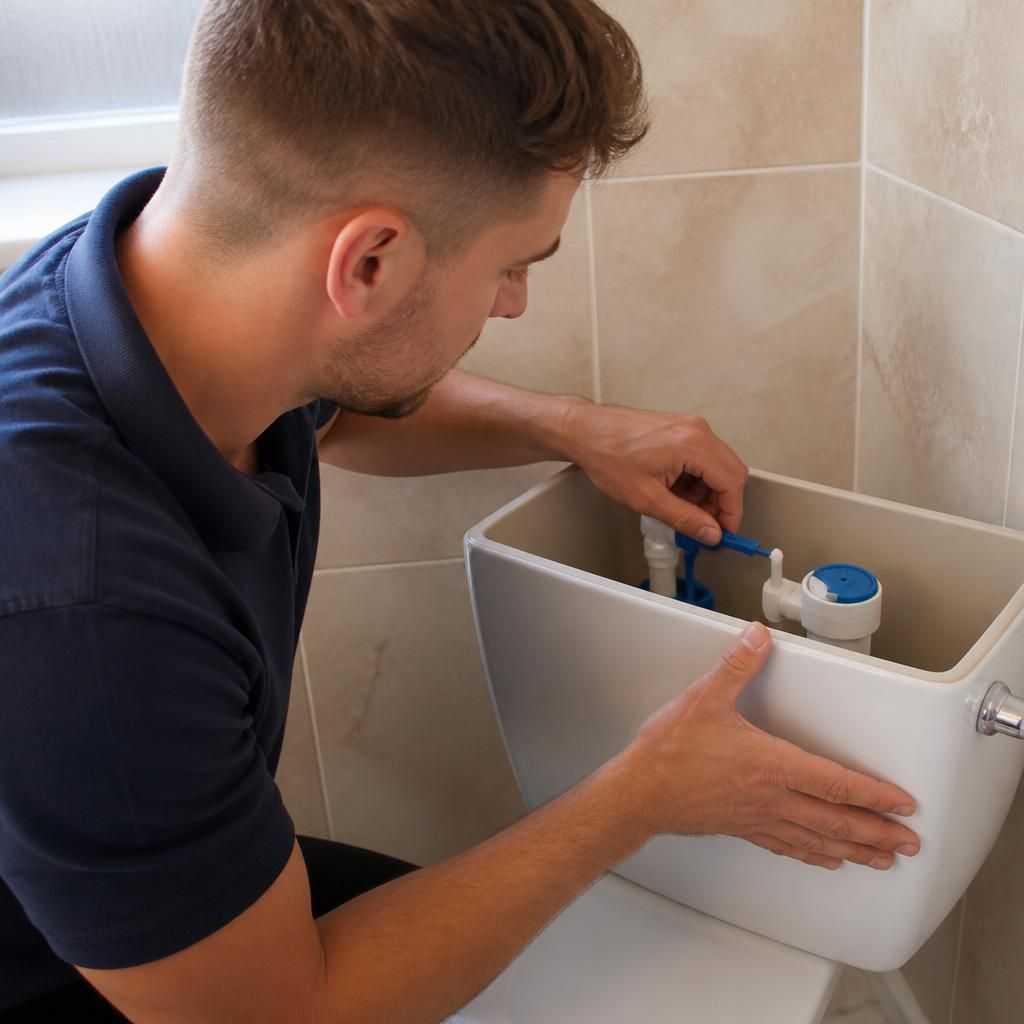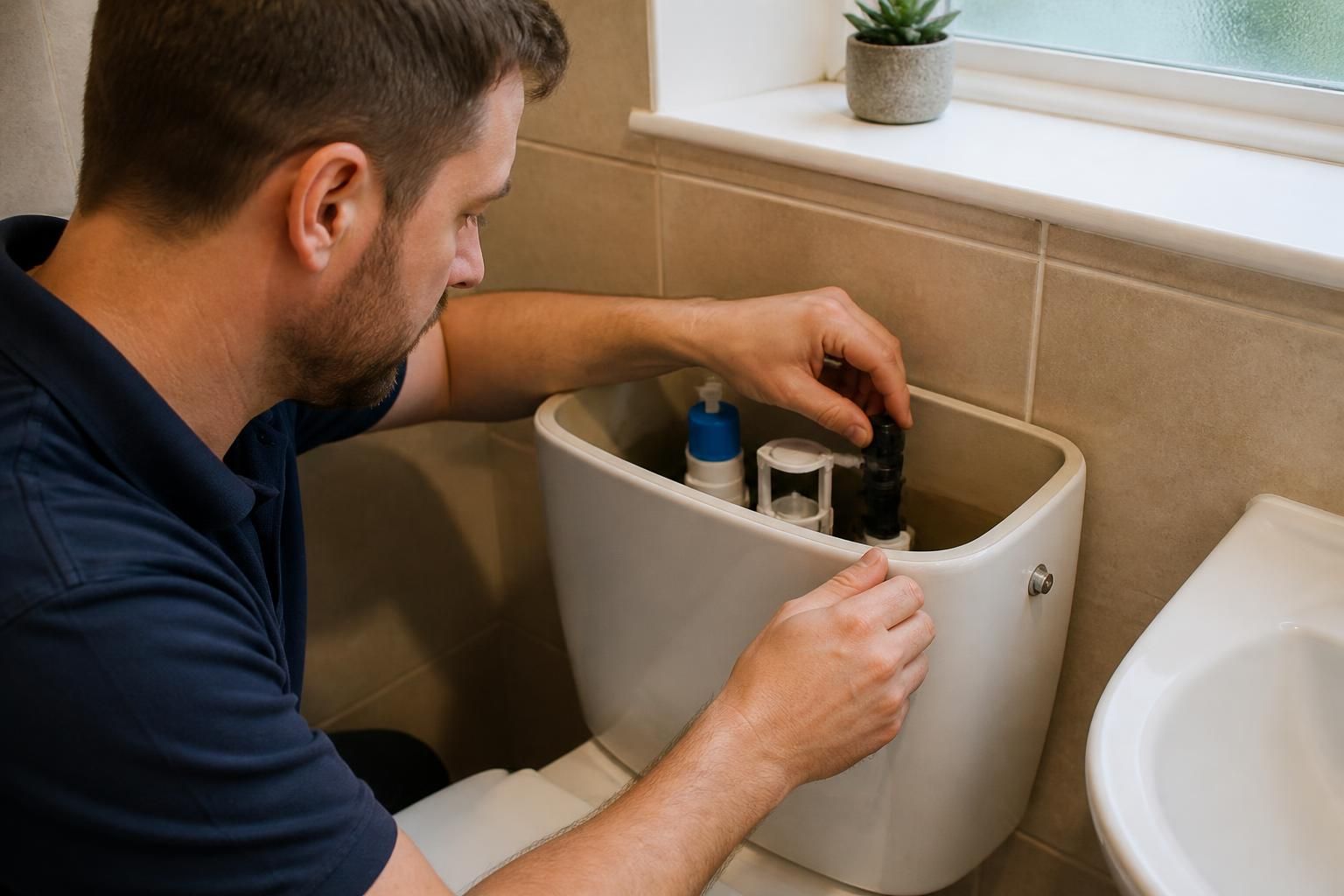
In most cases, a dripping toilet can be repaired without replacing the complete toilet suite. The appropriate repair depends on whether water is escaping into the pan, leaking from the cistern or becoming visible around the base. A plumber can identify the failed component and replace only that part where the ceramic and main connections remain sound.
When a repair is usually suitable
A toilet is generally repairable when the problem is caused by a worn internal mechanism rather than damaged ceramic. For example, a cistern may continue passing water because a valve is not closing properly, a flush mechanism is not reseating, or a washer has hardened with age. A loose connection, perished flexible hose or deteriorated joint can also often be renewed without removing the toilet.
The type of drip provides useful information:
- Water heard or seen moving into the pan when the toilet has not been flushed commonly points to an internal cistern mechanism that is allowing water through.
- Water around the cistern may come from a connection, washer, inlet assembly or flush fitting.
- A drip at the base may indicate a failed pan connector, seal or another joint, although water from higher up can run down and appear to come from the floor.
- Moisture appearing only after flushing can suggest a problem with a flush connection, cistern seal or waste connection.
How the repair is assessed
The water supply is normally isolated before the cistern and surrounding area are inspected. The plumber can then flush the toilet, check where water reappears and examine the condition of the fittings. Where the issue is internal, the mechanism may be adjusted if it is serviceable or removed and replaced if it is worn. The replacement part must be compatible with the cistern and fitted so that the float, flush control and water level operate correctly.
After the work, the toilet should be refilled and flushed several times while the connections are checked. This helps confirm that the original drip has stopped and that the cistern is not overfilling or allowing water to pass into the pan. If water has reached flooring, the surrounding area should also be dried and monitored, as concealed moisture can cause further damage.
When replacement may be necessary
Replacing the whole toilet becomes more likely if the pan or cistern is cracked, the ceramic is unstable, or a connection cannot form a reliable seal because the surrounding material is damaged. A severely corroded or obsolete internal assembly may also make a component-only repair impractical, particularly if several parts are failing at the same time. In these circumstances, the condition of the existing toilet, the location of the damage and the suitability of available parts should be considered before deciding between repair and replacement.
A cracked ceramic component should not be treated as an ordinary dripping fault. Continuing to use it can allow a small leak to become a larger one, particularly if the crack affects the cistern or the base of the pan. If the toilet is leaking onto the floor, isolate its water supply if it is safe to do so, avoid forcing the flush control and arrange a professional inspection.
Can a dripping toilet be repaired by a homeowner?
Simple adjustments may be possible for someone familiar with toilet mechanisms, but dismantling the cistern can create additional leaks if washers are disturbed or fittings are overtightened. A repair also needs to address the cause rather than merely reducing the visible drip. If the source is unclear, the leak is at the base, or water is affecting flooring or nearby fixtures, a qualified plumber can diagnose the fault and advise whether a component repair is appropriate.
Ideal Plumbing Services provides toilet leak diagnosis and repair for homeowners, landlords and tenants in Birmingham and across the West Midlands. The condition of the existing toilet can be assessed before any recommendation is made, helping distinguish a replaceable internal fault from damage that requires a new toilet.