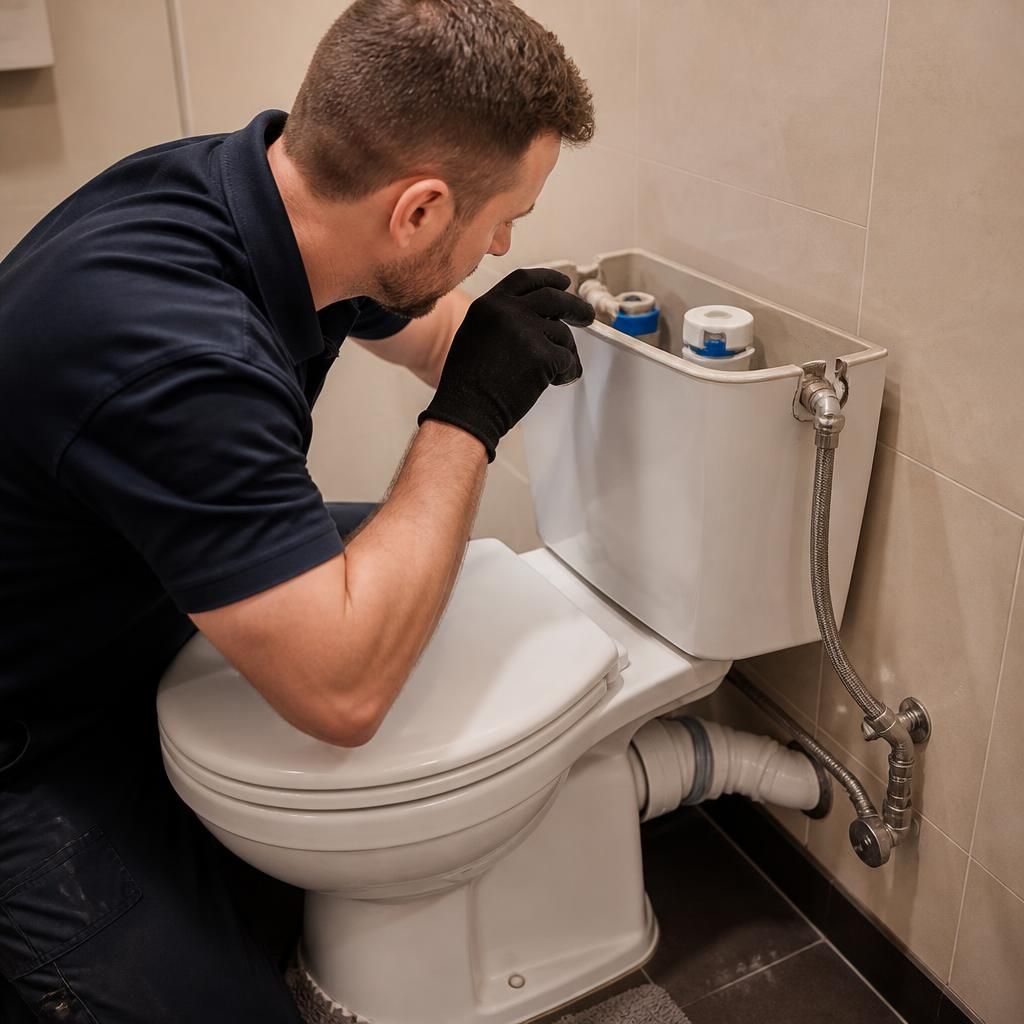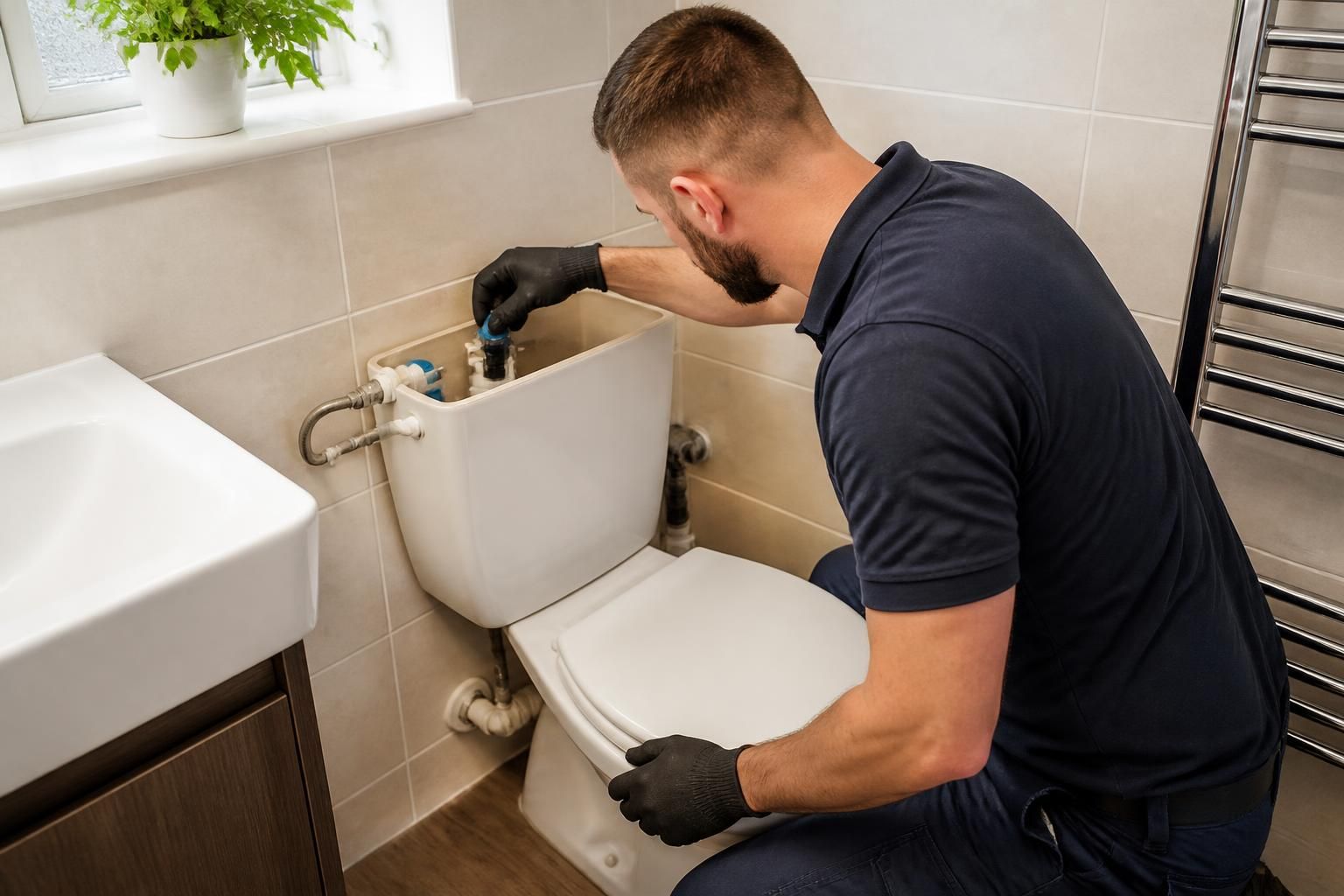
Emergency toilet leak detection is generally a targeted inspection rather than a destructive job. The amount of disruption depends on where water is escaping, whether the source is visible, and whether the toilet or surrounding finishes prevent direct access. In many cases, the inspection can be completed without removing the toilet or opening walls and floors.
The process normally begins with a visual assessment of the toilet, cistern, flush mechanism, supply connection, isolation valve, pan connector and nearby pipework. The surrounding floor, skirting board and accessible surfaces may also be checked for signs of moisture. This helps distinguish between a leak from the toilet itself and water coming from an adjacent fitting or concealed pipe.
Where the source is not immediately apparent, controlled checks may be used. These can include observing the cistern during filling and flushing, checking whether water is passing continuously into the pan, examining joints while the toilet is in use, or using a suitable dye test. Moisture-detection equipment may help identify dampness beneath flooring or behind accessible surfaces without unnecessary lifting or removal.
Disruption is more likely to increase when the leak is concealed or has affected the surrounding building materials. For example, a failed pan connector may require careful access around the base of the toilet, while moisture beneath tiled flooring could require a more detailed investigation. A toilet that has been sealed, boxed in or fitted tightly against surrounding units can also make inspection more involved.
Detection and repair are separate stages. Finding the source does not automatically mean that the toilet must be replaced. A loose connection, worn washer, faulty inlet valve or damaged flush component may be repairable once the cause has been confirmed. If a seal, connector or section of pipework cannot be reached without dismantling part of the installation, the options should be explained before further work begins.
During the inspection, the water supply may need to be isolated to prevent additional leakage while checks are carried out. This affects the use of the toilet, but it is a controlled precaution rather than a sign that extensive work is required. Once the source has been identified, the condition of the fittings and any visible water damage can be assessed before deciding whether a repair, replacement component or more extensive access is appropriate.
To help keep the visit orderly, remove toiletries, cleaning products and loose items from around the toilet. Clear access to the isolation valve and any nearby inspection panels, and point out any areas where flooring, plaster or skirting feels damp. If water has reached electrical equipment, do not handle the equipment; explain the location to the plumber instead.
After detection or repair, the area should be checked again while the toilet is filled and flushed. This confirms whether the suspected joint or component remains dry under normal use. It is also sensible to monitor nearby flooring and walls afterwards, because residual moisture can remain even after the active leak has stopped.
For homeowners, landlords and tenants, a useful record should include when the leak was first noticed, whether it occurs during flushing or continuously, and any changes in the surrounding floor or ceiling. Photographs can also help document visible damage. These details can make it easier to identify the likely source and determine the least disruptive way to investigate it.
Ideal Plumbing Services provides toilet leak detection and plumbing repairs for residential properties in Birmingham and the wider West Midlands. The appropriate approach depends on the installation and the evidence found during inspection, with access limited to what is needed to establish the source accurately.