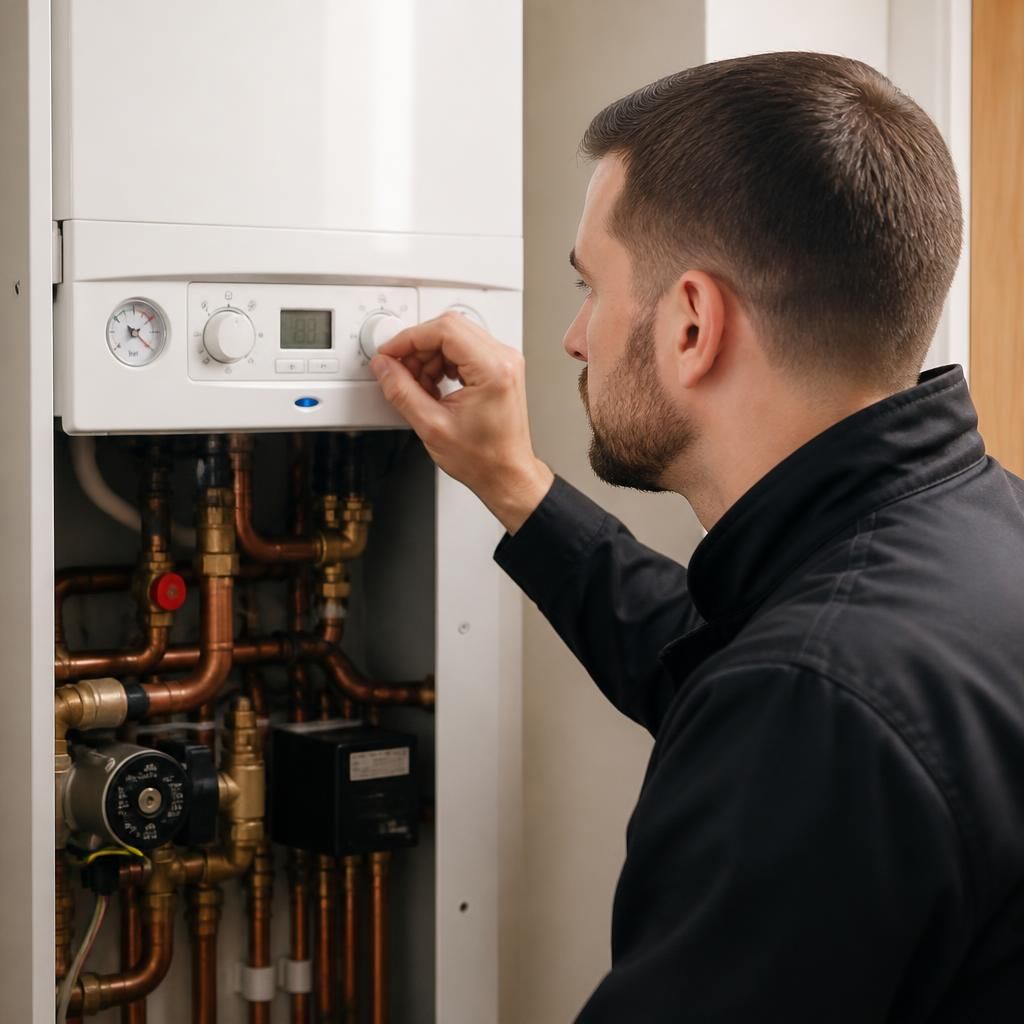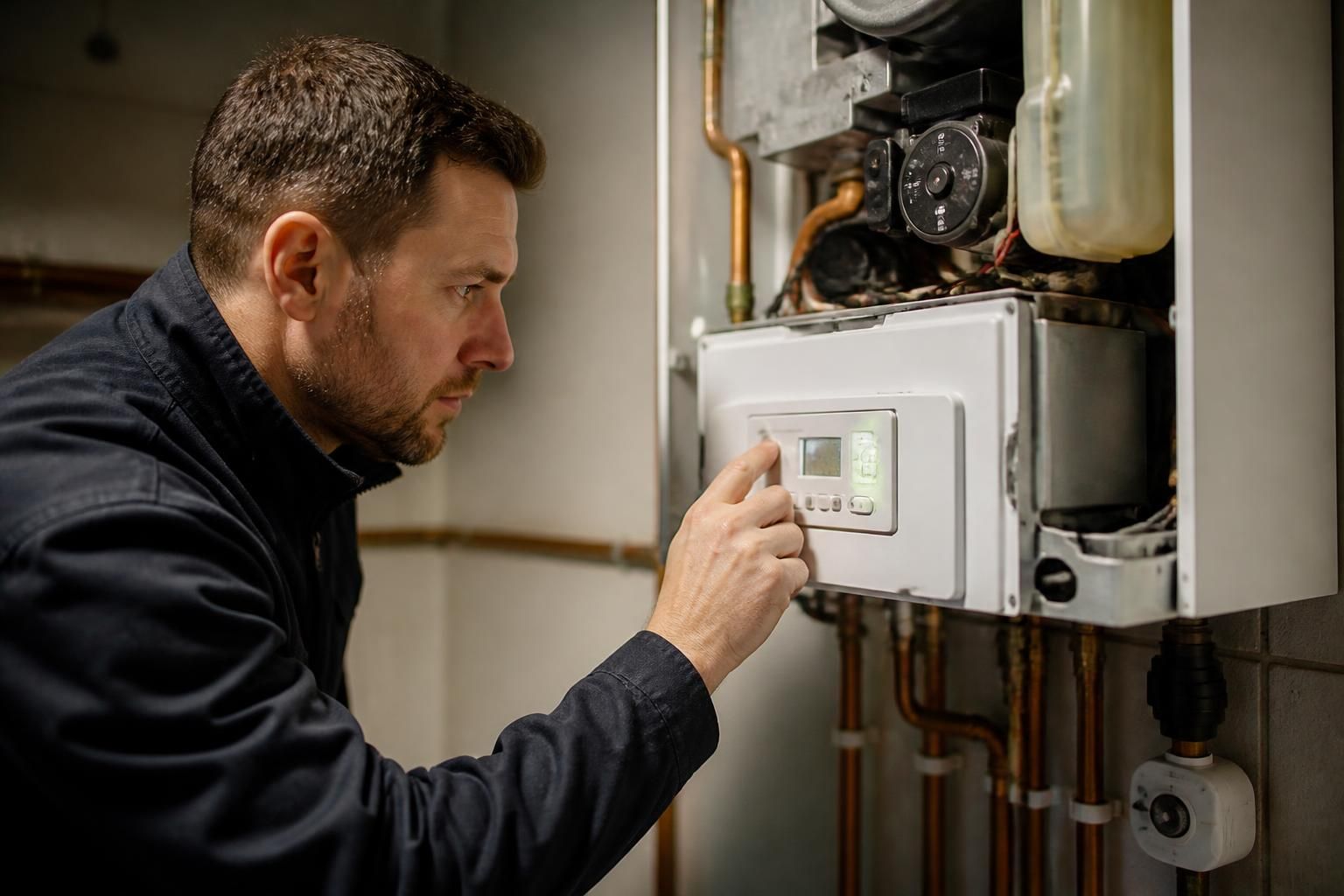
Whether an emergency heater repair can avoid replacing the whole boiler depends on the location, cause and extent of the fault. If the boiler casing, heat exchanger and main structure remain sound, repairing or replacing the failed part may restore heating without installing a new appliance. A proper diagnosis is therefore more useful than judging the situation from symptoms alone.
Faults that may be repairable include:
- Blocked or restricted condensate drainage, where the boiler has shut down because waste water cannot discharge correctly.
- Low system pressure caused by a minor issue within the heating circuit, provided there is no significant leak or damaged component.
- Ignition, flame-sensing or control-board faults where the affected part can be safely tested and replaced.
- A failed diverter valve or circulation-related component on a system that otherwise remains in good condition.
- Worn seals, connections or other individual components that are causing a manageable water leak.
These faults can produce similar symptoms to more serious failures. For example, no heating may result from a control problem, a circulation fault, an ignition issue or damage to a major internal component. Resetting the boiler repeatedly can hide useful fault information and may be unsafe if the underlying cause has not been identified.
A qualified engineer should inspect the fault codes, system pressure, electrical supply, controls, pipework and relevant internal components. Gas appliances must be assessed and repaired by an appropriately registered gas engineer. The engineer should explain the diagnosis, identify the part or parts involved and distinguish between a temporary reset and a lasting repair.
Replacement becomes more likely when:
- The primary heat exchanger or other major internal assembly is cracked, badly corroded or leaking.
- There is extensive damage rather than one isolated failed component.
- Suitable replacement parts are no longer available or cannot be fitted safely.
- The appliance repeatedly develops different faults despite previous repairs.
- The cost and disruption of repairing an unreliable appliance are disproportionate to its remaining serviceable life.
- The boiler cannot be made safe, efficient or compliant with current installation requirements.
The age of the boiler is relevant, but it does not by itself prove that replacement is necessary. A relatively old appliance with one straightforward fault may be repairable, while a newer boiler with serious structural damage may not be. The decision should consider safety, parts availability, reliability, repair cost and the likely condition of the rest of the system.
Before authorising work, ask for a clear explanation of the fault and whether the proposed repair is expected to address the cause or only the immediate symptom. It is also reasonable to request separate costs for the repair and for replacement, particularly where a major component is involved. A written breakdown helps you compare the options without committing to a new boiler before the diagnosis is complete.
Do not remove the boiler casing or attempt to work on gas components yourself. If you smell gas, avoid operating electrical switches or naked flames, leave the property and contact the appropriate gas emergency service. For other heating failures, switch the appliance off if it is leaking, making unusual noises or showing signs of overheating, and arrange a professional assessment.
In practice, emergency heater repair is most likely to avoid full boiler replacement when the defect is isolated, the appliance is structurally sound and the repair can be completed safely with suitable parts. A replacement is more appropriate where the boiler has major damage, repeated failures or no safe, reliable repair option.