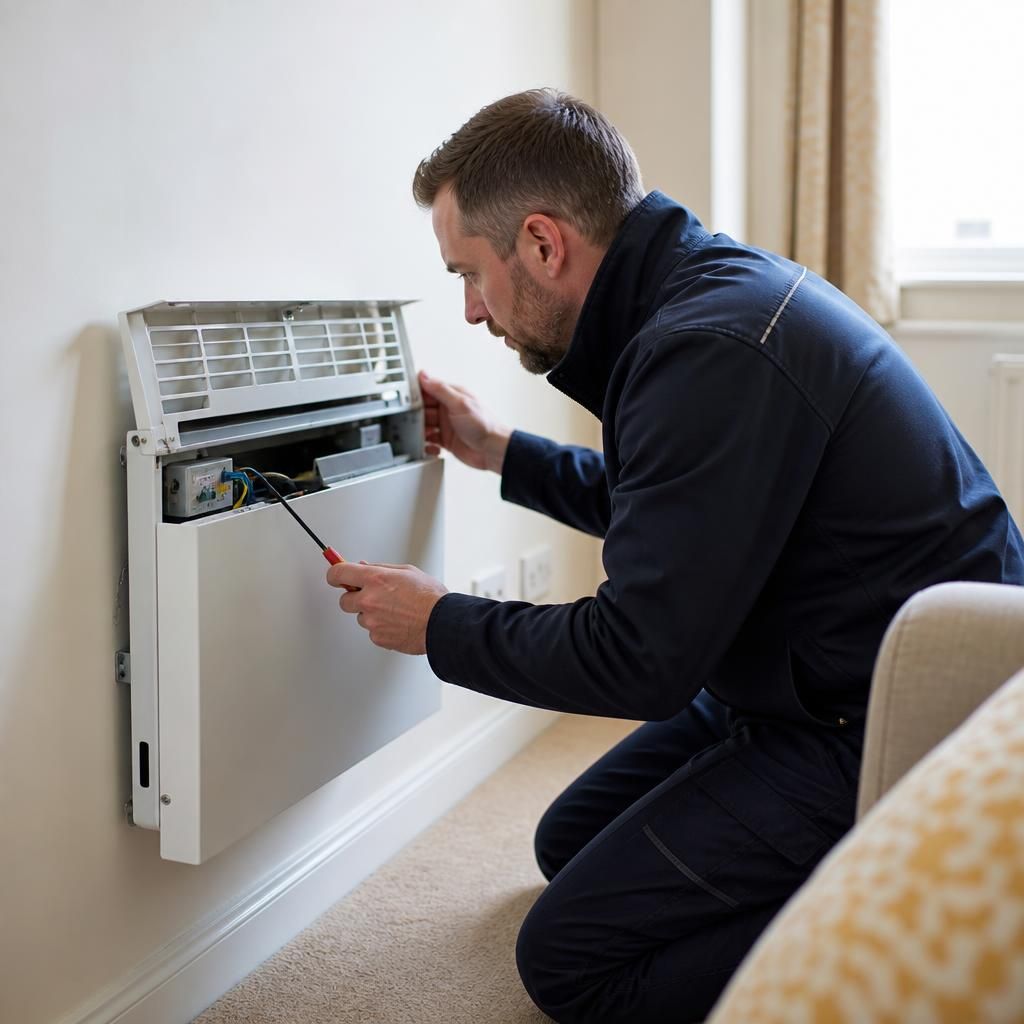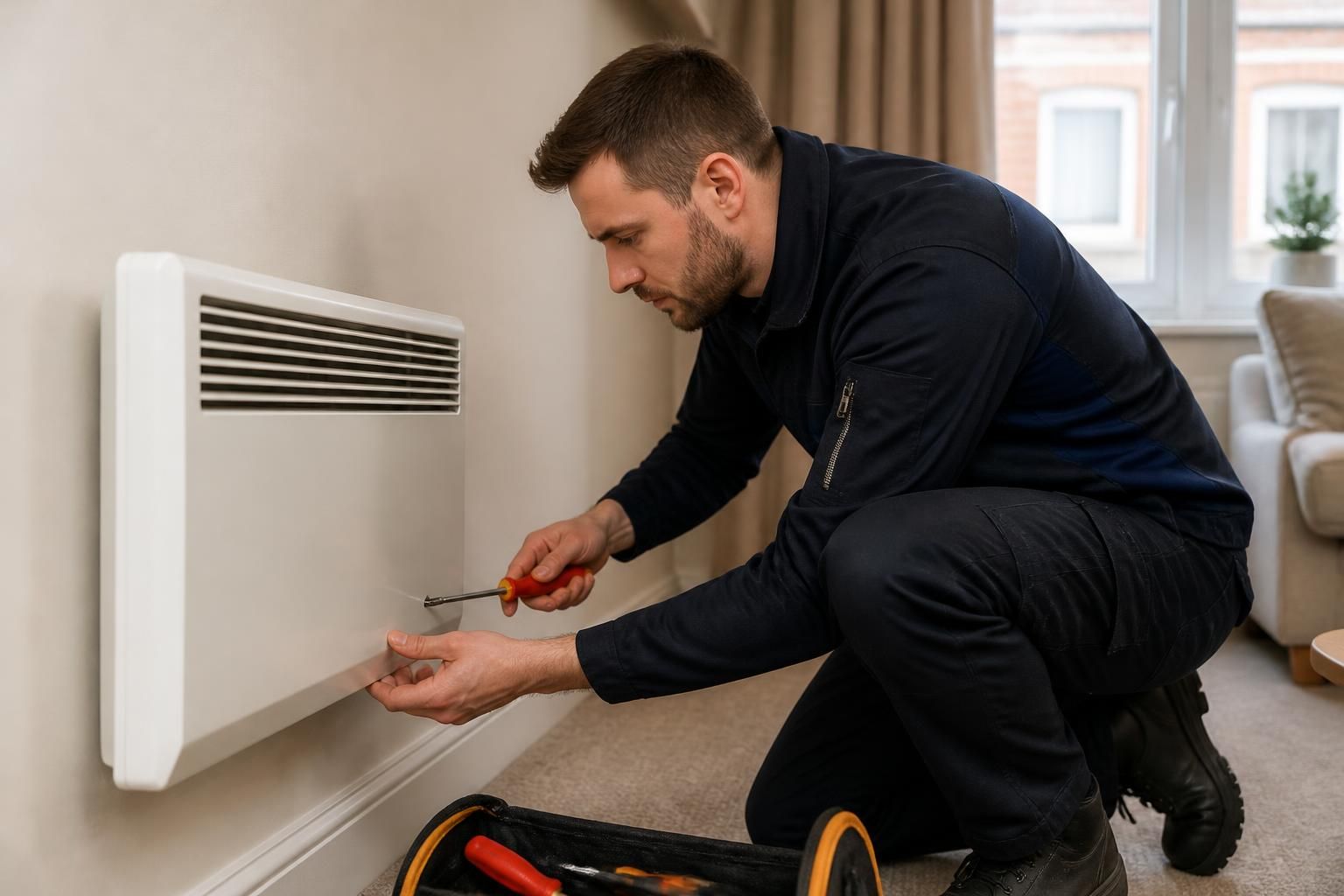
Heaters in rented homes can usually be repaired rather than replaced, provided the fault is suitable for repair and the work is authorised by the responsible party. The correct process depends on the type of heater, the cause of the fault and whether the property is privately rented or managed through an agent.
Who is normally responsible?
For a fixed heating system supplied with the property, the landlord will generally be responsible for keeping the installation in working order. This commonly includes a boiler, radiators, fixed electric heaters, controls, pipework and other equipment forming part of the accommodation. A managing agent may arrange the appointment, but the landlord usually remains responsible for ensuring that necessary repairs are dealt with.
A tenant may be responsible where the problem resulted from accidental damage, misuse or failure to carry out a straightforward tenant obligation. The tenancy agreement may also explain how faults should be reported and whether the tenant must complete basic checks, such as replacing batteries in a thermostat or keeping access clear. It should not, however, be assumed that a tenant must pay for normal wear and tear or for the failure of an ageing fixed appliance.
What tenants should do before arranging work
- Report the fault to the landlord or managing agent using the method set out in the tenancy agreement.
- Describe the symptoms accurately, such as no heat, intermittent heating, unusual noises, a fault display or a leaking appliance.
- Keep a record of the report, including dates, messages and any photographs that help explain the problem.
- Ask for confirmation before instructing a contractor, particularly where the repair is not an immediate safety issue.
- Request details of who will pay and whether any access arrangements are required.
Arranging private work without permission can create a dispute over reimbursement, even if the repair itself was reasonable. A tenant should not dismantle a boiler, remove covers from a gas appliance or attempt an electrical repair.
When professional attention is required
A heating professional should assess a fixed heater when basic controls do not restore operation, the system repeatedly loses pressure, radiators remain cold, water is leaking, a fuse keeps blowing or the appliance is making abnormal sounds. A gas appliance must be inspected and repaired by an engineer qualified for the relevant gas work. Electrical heaters should be assessed by someone competent to work safely on the installation.
If there is a smell of gas, suspected carbon monoxide, scorching, smoke or exposed electrical wiring, the appliance should not be used. Leave the area if necessary, avoid operating electrical switches where gas may be present, and follow the appropriate emergency safety guidance before notifying the landlord or agent. Safety concerns should be described clearly when reporting the fault so that they are not treated as a routine maintenance request.
Repair or replacement?
An engineer should diagnose the cause before recommending a replacement. A failed control, valve, thermostat, pump, fuse or electrical component may be repairable, while a damaged heat exchanger, severe corrosion, unsafe combustion fault or obsolete part may make replacement more appropriate. The age and condition of the appliance, availability of parts, safety of continued use and likely future reliability are all relevant.
Landlords should receive a clear explanation of the fault, the proposed work and any limitations of the repair. Tenants can ask whether the heater will be tested after the work and whether any temporary instructions apply. Where a repair cannot be completed during the first visit, the engineer should explain what further work is required rather than leaving the cause unclear.
What information helps the engineer?
- The make and model of the heater, if safely visible.
- When the problem began and whether it is constant or intermittent.
- Any fault codes, warning lights or unusual smells and noises.
- Whether hot water, individual radiators or the entire heating system is affected.
- Details of previous repairs or changes to the controls.
For landlords and agents, arranging repairs through a suitably qualified Birmingham heating professional helps create a clear record of the diagnosis and work completed. For tenants, prompt reporting and written permission help prevent avoidable disputes about access, responsibility and payment. A professional assessment is the safest way to establish whether the rented property's heater can be repaired and what action is justified.