Before a heater repair plumber arrives, focus on safety, useful information and safe access to the appliance. Do not interfere with the heater itself; instead, make the surrounding area safe, record what has happened and prepare any documents or details that may help with the diagnosis.
Deal with immediate risks first:
- If water is actively escaping and you can reach the internal stopcock safely from a dry area, turn off the incoming water supply. Do not touch electrical switches, plugs or appliances if water has reached them.
- If you suspect a gas leak, avoid naked flames and electrical switches, leave the property and contact the appropriate gas emergency service. Do not return until it is considered safe.
- If a carbon monoxide alarm sounds or anyone develops symptoms such as dizziness, headache or nausea, leave the property and seek urgent assistance. Do not use the heater again until it has been checked.
- Keep children and pets away from the appliance, pipework, controls and any wet areas.
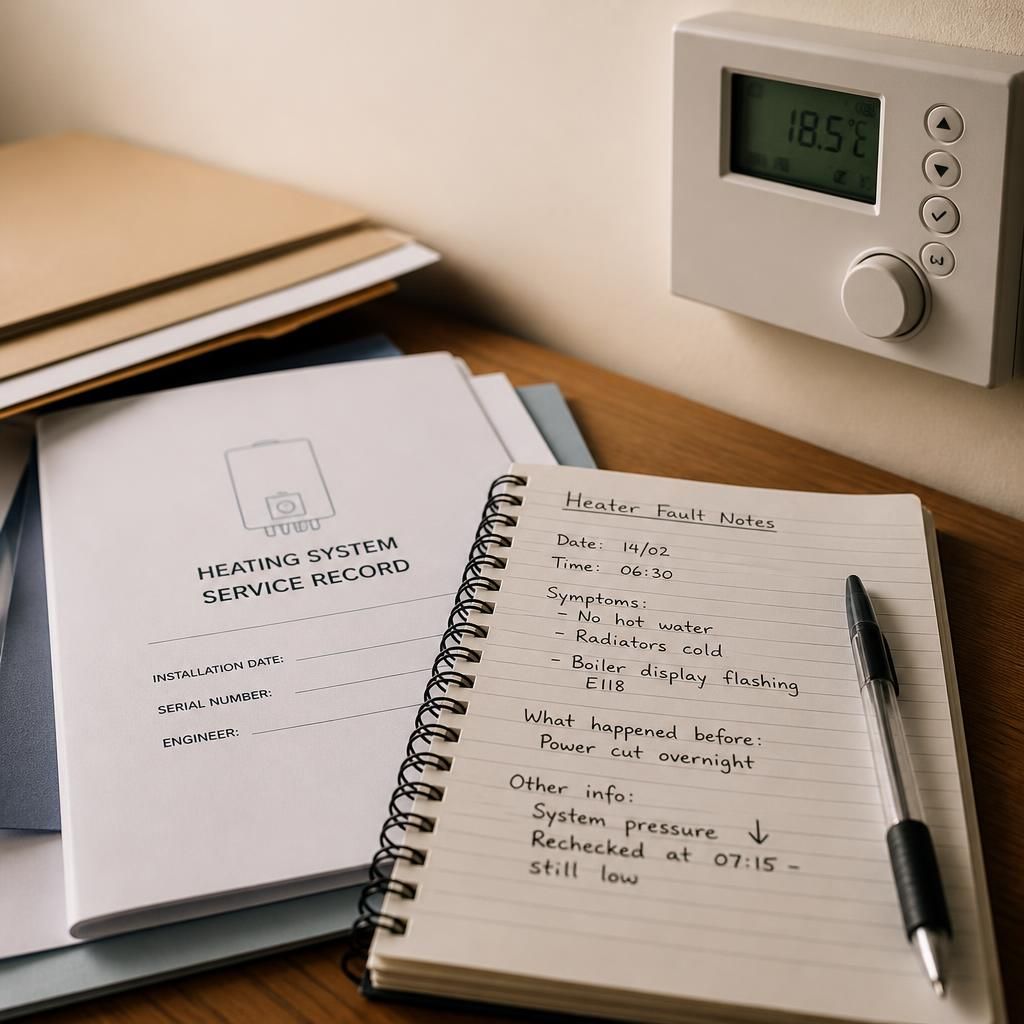
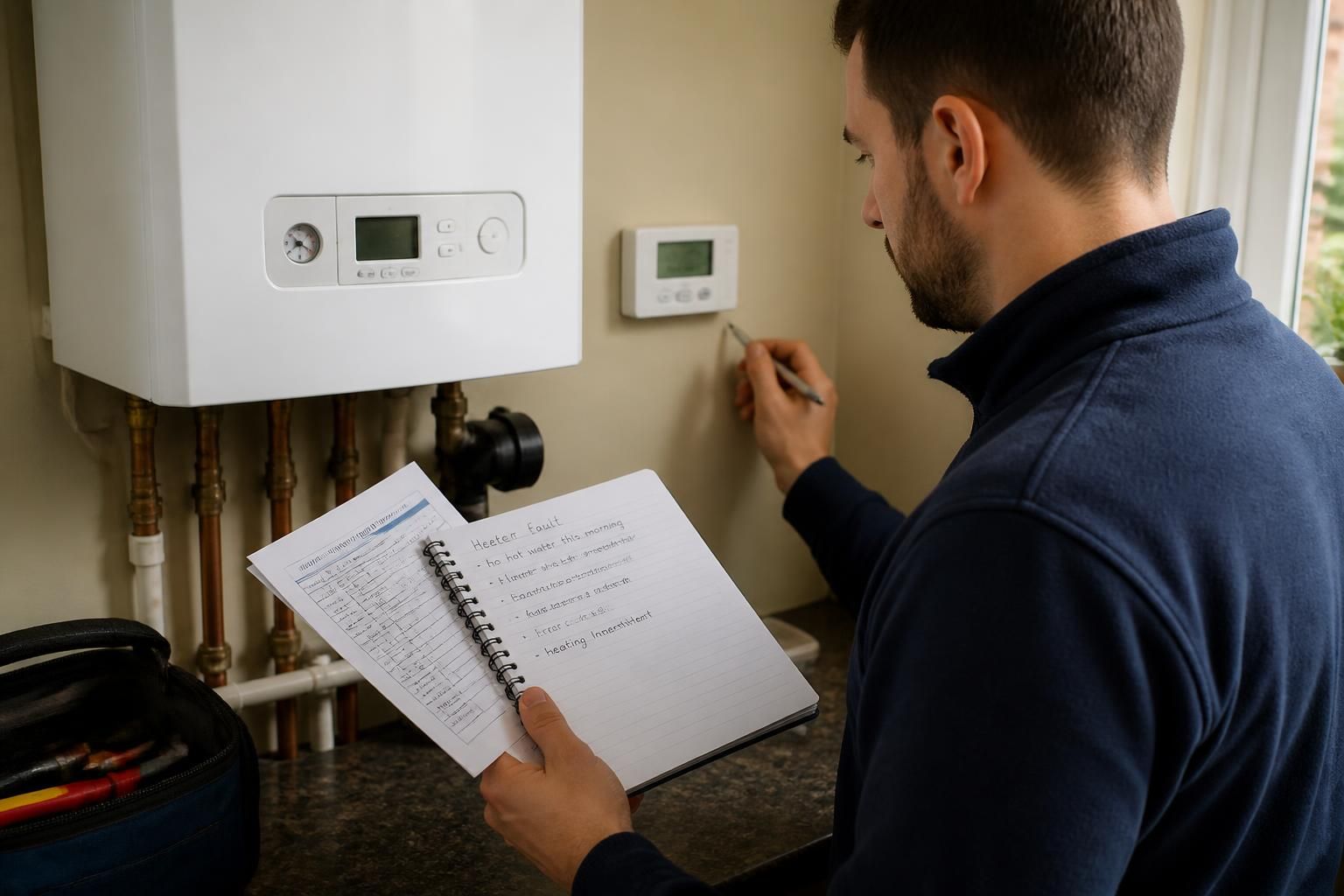
Collect information for the assessment. Write down when the problem began, whether it is constant or intermittent, and what happened immediately beforehand, such as a power cut, unusual noise, loss of pressure or a visible discharge. If the heater serves more than one part of the property, note which functions are affected, such as heating, hot water or both. A photograph of the exterior display, visible pipework or a leak can also be useful, provided it can be taken without touching the appliance or entering an unsafe area.
Have the appliance paperwork available if you have it. The installation or service record may show the model, previous work and maintenance history, helping the plumber understand the system. If the heater is in rented accommodation, prepare the landlord or managing agent’s contact details and check whether approval is needed for repair work. Tenants should avoid authorising additional work if their tenancy arrangements require the landlord to do so.
Make the route to the appliance straightforward by removing loose items from the immediate working area and ensuring the plumber can reach relevant radiators, cylinders, controls, meters or isolation points. If access is through a locked gate, communal entrance or another property, arrange for the necessary key or permission to be available. Do not move heavy equipment, disconnect pipework or dismantle panels to create access.
It is also helpful to prepare a clear account of anything you have already done. Tell the plumber whether the appliance has been reset, whether the pressure or temperature has changed, and whether any other plumbing or electrical work has recently taken place. This information can prevent unnecessary assumptions and helps distinguish a heater fault from a wider issue with the property’s power, gas, water or heating system.
During the visit, explain the symptoms rather than suggesting a particular repair. A heater that fails to ignite, loses pressure, produces unusual sounds or heats inconsistently may have several possible causes. The plumber should inspect and test the relevant components before recommending repair or replacement. Ask what has been found, which work is necessary, and whether the appliance can be left safely in service while parts or further work are arranged.
For gas or electrical heaters, only a suitably qualified professional should carry out testing, servicing or repairs. Avoid online reset instructions that require removing covers, bypassing safety controls or working on internal components. Preparing information and access is useful; attempting a repair yourself can create additional risks and may affect the eventual diagnosis.