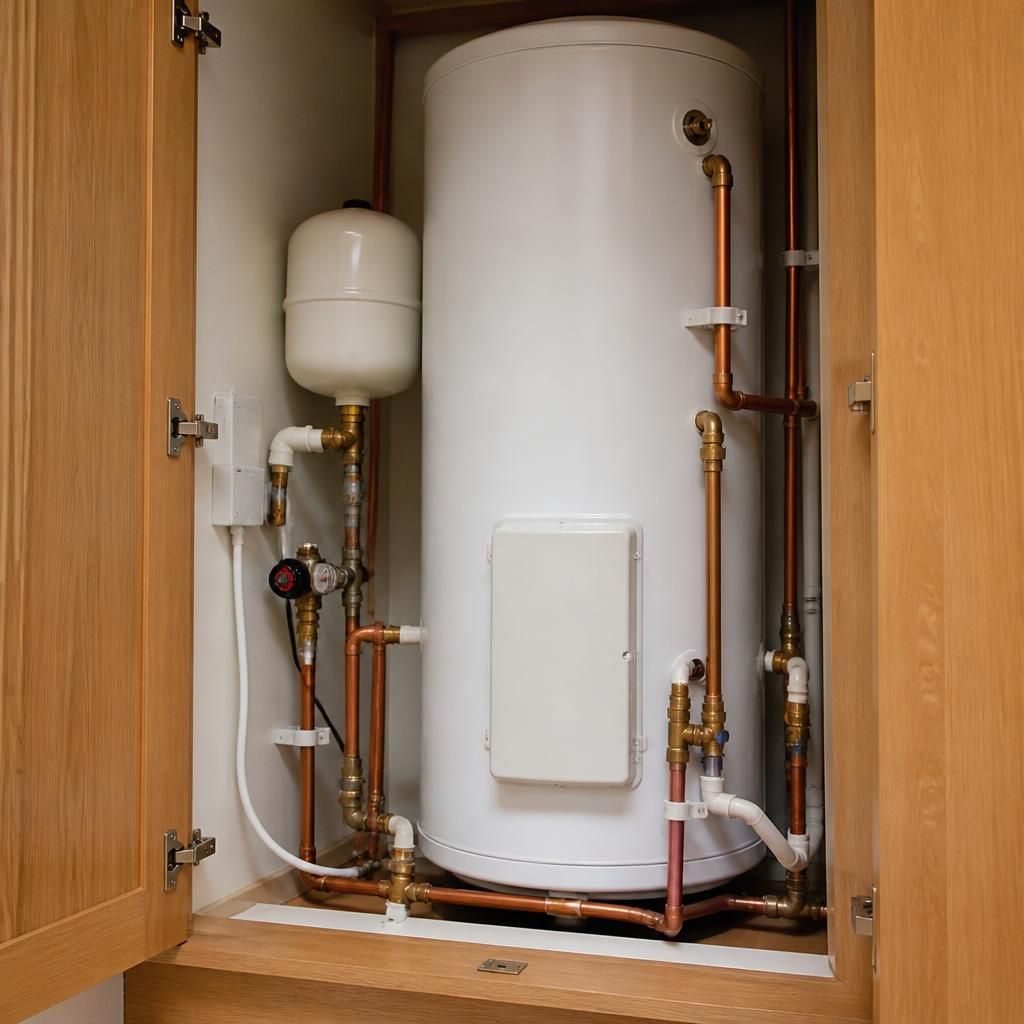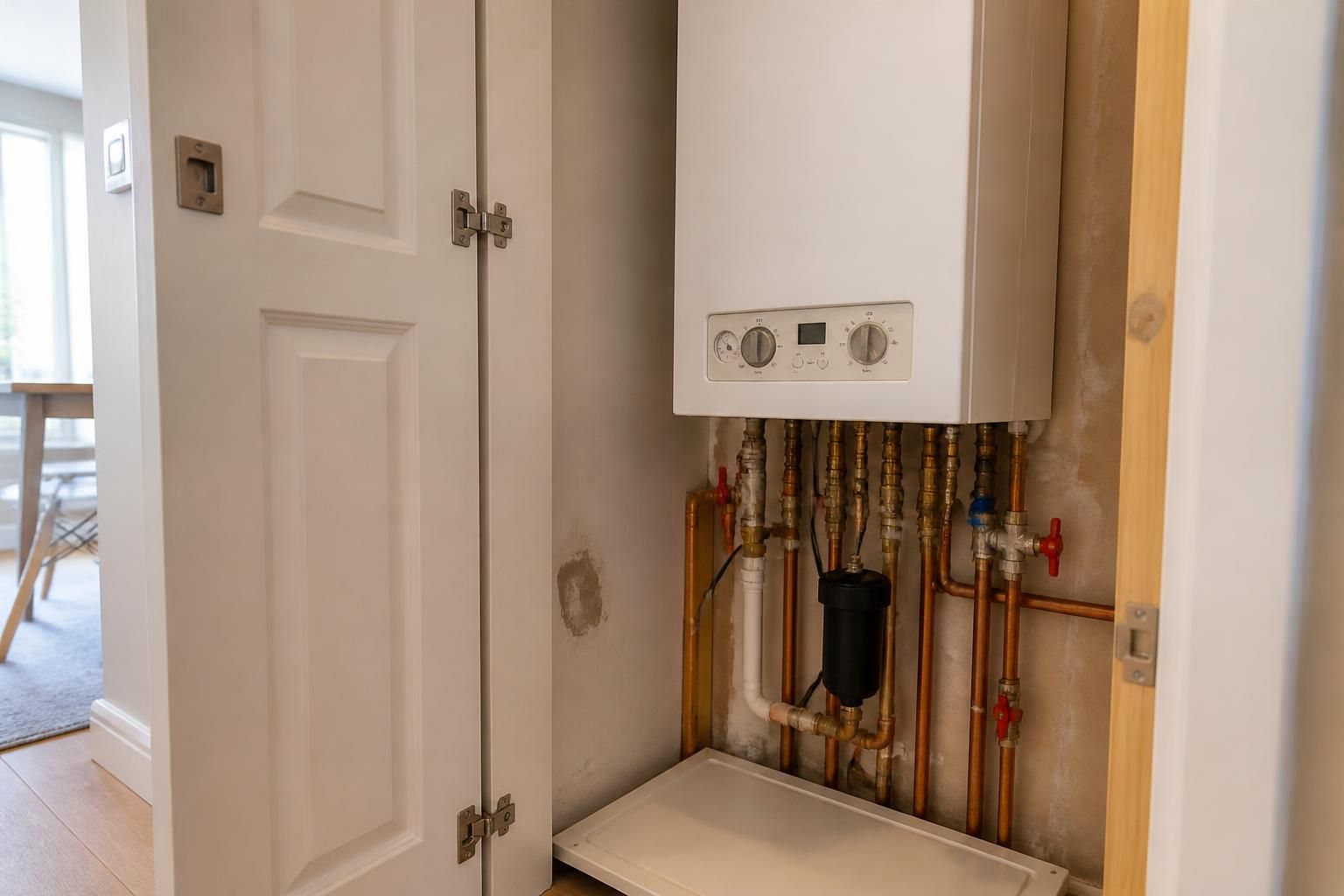
The access needed for water heater repair depends on the heater type and the fault, but the engineer must be able to inspect the installation, reach the relevant components and carry out tests without working in an unsafe or restricted position. Access may therefore be needed to the heater itself, connected controls and the nearby services that allow it to be isolated, drained or tested.
In addition to the main unit, the following areas may be relevant:
- Isolation points: The cold-water inlet, hot-water outlet and any additional valves may need to be operated during diagnosis or repair.
- Electrical connections: An engineer may need to inspect the fused spur, wiring, thermostat or other controls. These must remain safely accessible rather than buried behind stored items or fixed finishes.
- Gas and combustion components: For a gas-fired appliance, access may be required to the casing, flue connection and associated controls so that safety checks can be completed. The appliance casing should not be removed by the occupier.
- Drainage points: Some repairs require water to be released from the system. A suitable drain point and a safe route for discharge can make this work possible without unnecessary water damage.
- Connected equipment: Faults can involve expansion vessels, pumps, cylinders, tanks, pressure controls or pipework located beside or above the heater. Access may extend beyond the appliance that first appears to be faulty.
Where the heater is in a loft, under a worktop or within a tight utility area, the route to it also matters. There should be a stable, unobstructed approach and enough room for tools and removed components to be handled safely. Fragile flooring, inadequate lighting, standing water or a lack of suitable footing can prevent work from proceeding until the area is made safe.
Before the appointment, remove stored items from the working area and identify any panels, doors or fixed furniture that limit access. If a cupboard door or shelving cannot be removed without affecting the installation, do not force it; the engineer can advise whether it needs temporary removal. Keep details of any previous fault codes, unusual noises, leaks or pressure changes available, as this can help direct the inspection.
Do not attempt to open a sealed combustion chamber, alter gas connections, disconnect electrical wiring or drain the system yourself. If the heater is leaking, isolate the water supply where it is safe to do so and protect nearby belongings, but avoid touching hot surfaces or electrical equipment exposed to water.
If access is too restricted, the engineer may be able to identify the likely fault but may not be able to complete the repair safely. In some cases, a second visit or preparatory work is needed to move an obstruction, improve safe access or expose a hidden section of pipework. Ideal Plumbing Services can assess water heater access and repair requirements for residential properties across Birmingham and the West Midlands.