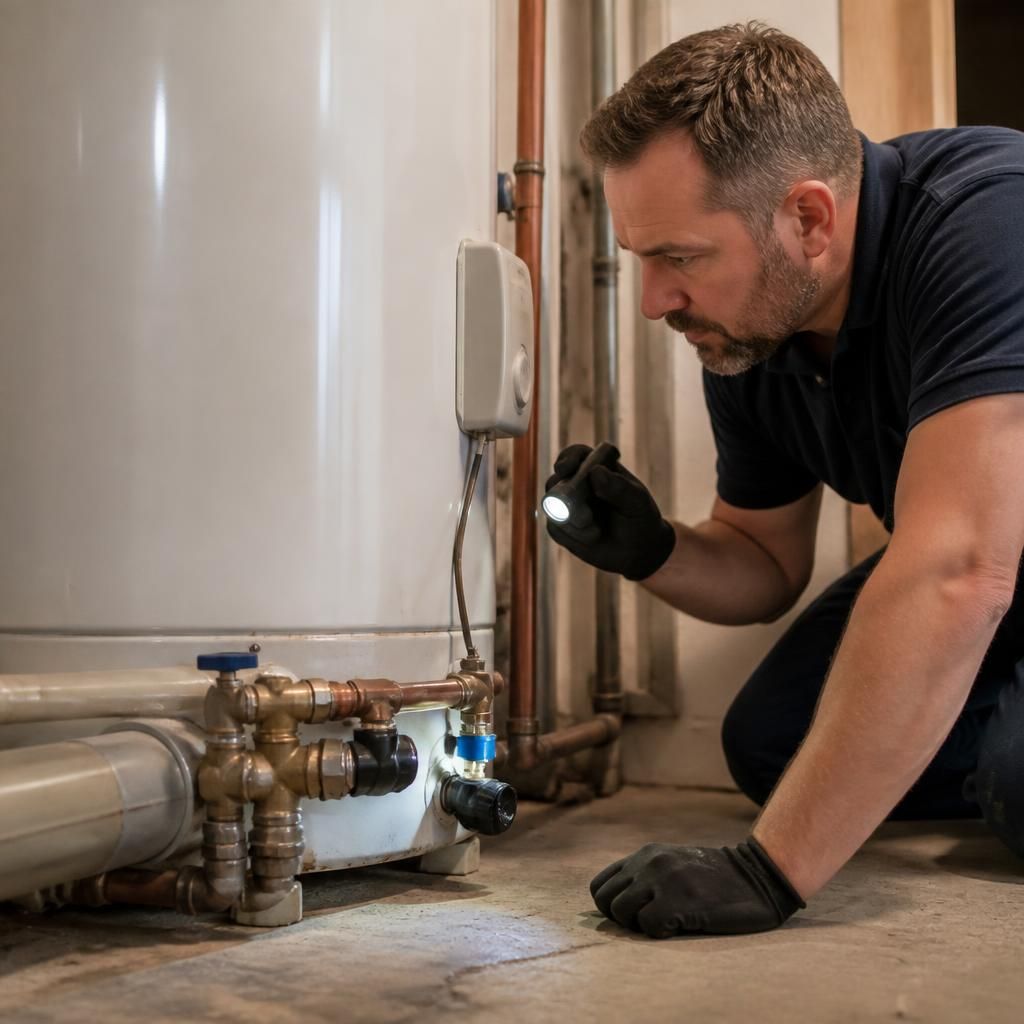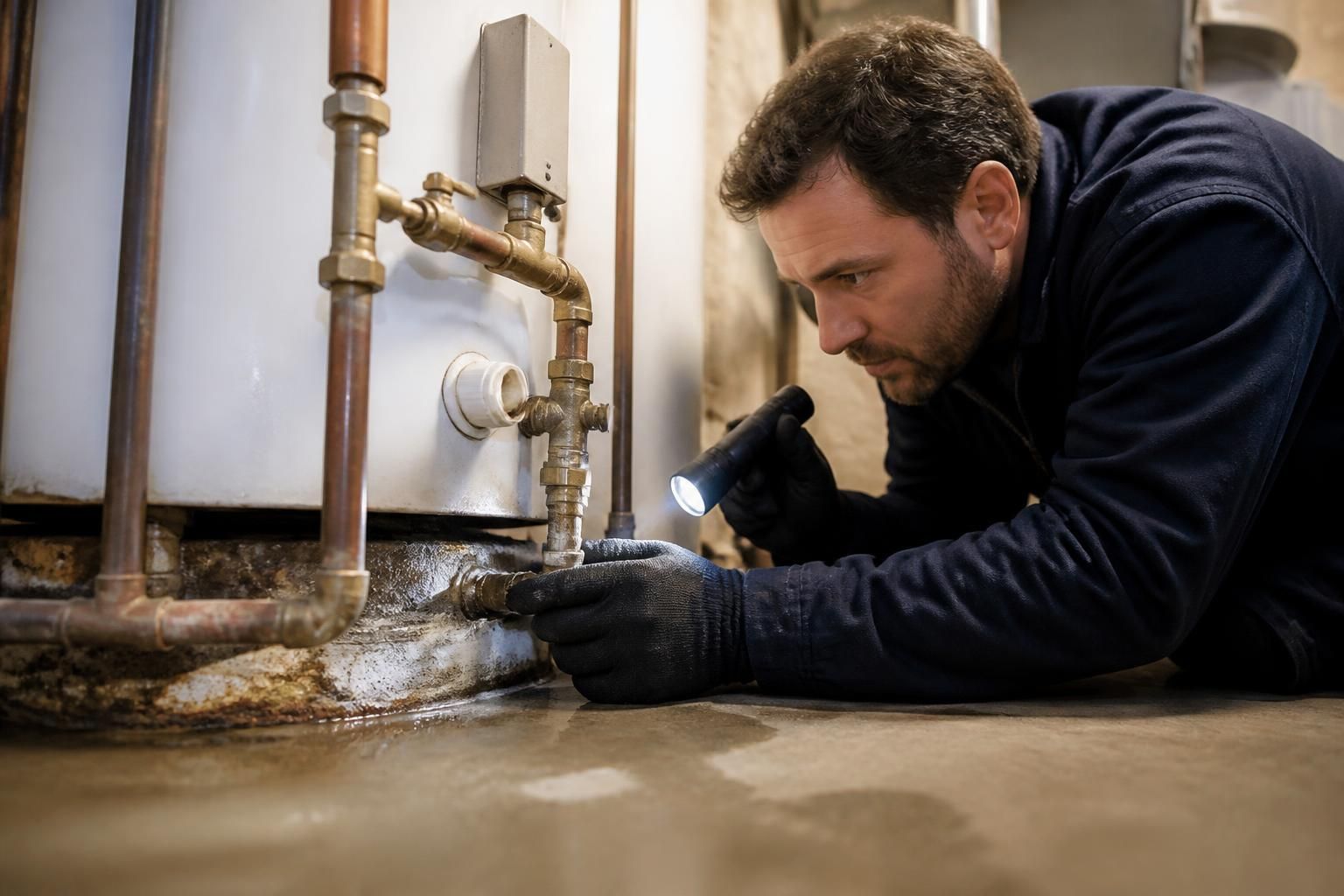
A water heater that appears to be leaking from the bottom may have a failed component at the base, or water may be running down from a connection higher up. The most serious possibility is a split or weakened cylinder, while other causes include a failed heating-element seal, a relief-valve discharge, excessive system pressure or condensation. Identifying the exact source is important because the appropriate fix ranges from replacing a seal to replacing the entire unit.
Common causes of a bottom leak
- Failed heating-element seal: On an electric water heater or hot water cylinder, the immersion heater is fitted through a flange and sealed against the tank. A deteriorated gasket or a loose flange can allow water to escape around the element and collect underneath the unit.
- A split cylinder or failed weld: Water escaping from the body, seam or base of the cylinder usually indicates an internal structural failure. This is not normally a lasting repair; once the tank itself can no longer contain pressure, replacement is generally considered instead of patching.
- Temperature and pressure relief discharge: A relief valve can release water when the temperature or pressure is too high. The discharge may travel along pipework or the outside of the cylinder, making the base appear to be the source. A recurring discharge needs investigation rather than simply replacing the valve, as an underlying pressure or heating problem may remain.
- Leaking inlet, outlet or expansion connections: Pipe connections above the base can seep slowly, with water following the cylinder or nearby pipework downwards. Compression joints, threaded fittings, seals and the expansion arrangement should all be checked.
- Condensation: Moisture on the outside of a cold tank or pipe can sometimes drip onto the floor and resemble a leak. Condensation is more likely to leave a light film of water rather than a steadily growing pool, but it should not be assumed without checking the surrounding fittings.
- Nearby plumbing or appliance water: A leak from an adjacent pipe, washing machine hose, heating component or storage tank can run beneath the water heater. The lowest visible point is not always where the water entered the system.
How to identify the source
Dry the accessible pipework and the floor around the unit, then observe where fresh moisture first appears without removing covers or disturbing electrical components. Check whether the water is clear, warm, or discoloured, and whether it appears only while the heater is operating or continues when it is not heating. A leak that increases during heating can point towards expansion, a relief-valve issue or a failed element seal. Water emerging directly through the cylinder casing is more concerning than moisture at a removable connection.
Do not open an electrical cover, dismantle a sealed or pressurised cylinder, or interfere with a relief valve to investigate the problem. Water and electricity present a serious risk, and unvented hot water systems can store water under pressure. Keep people away from hot water that may cause burns, and arrange a qualified inspection if the source is not immediately clear.
What repair may be needed?
- A failed gasket or accessible fitting may be replaced, followed by leak testing and checks of the surrounding components.
- A defective relief valve may need replacement, but the system pressure, expansion vessel and temperature controls should also be assessed.
- A leaking pipe connection may require a new seal, washer or section of pipework rather than a new heater.
- A split cylinder or damaged tank body normally requires replacement because pressure-bearing repairs may be unreliable or unsafe.
The decision between repair and replacement depends on the location of the leak, the condition and age of the unit, compatibility of replacement parts, and whether the cylinder has suffered internal damage. A professional can trace the water path, test relevant controls and explain whether a targeted repair is suitable. Ideal Plumbing Services provides water heater inspection and repair support for homeowners, landlords and tenants in Birmingham and across the West Midlands.