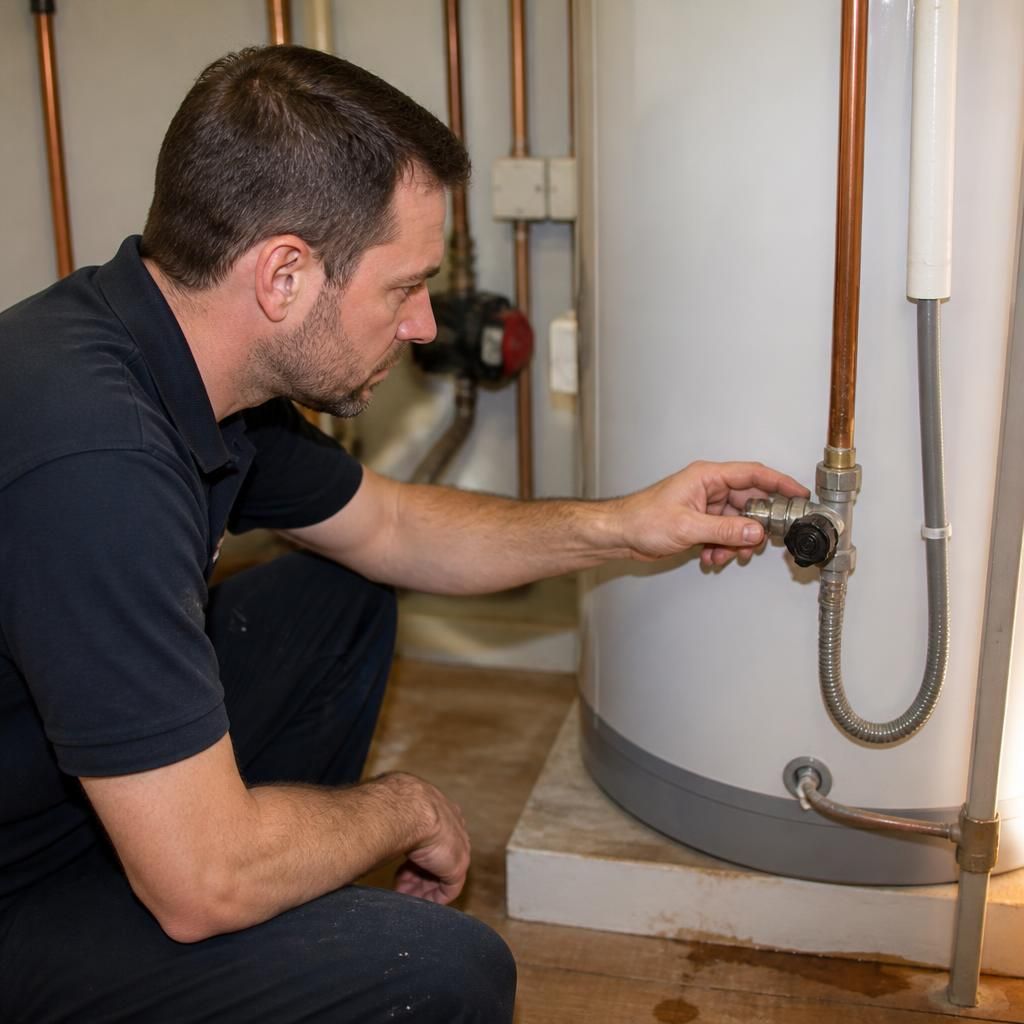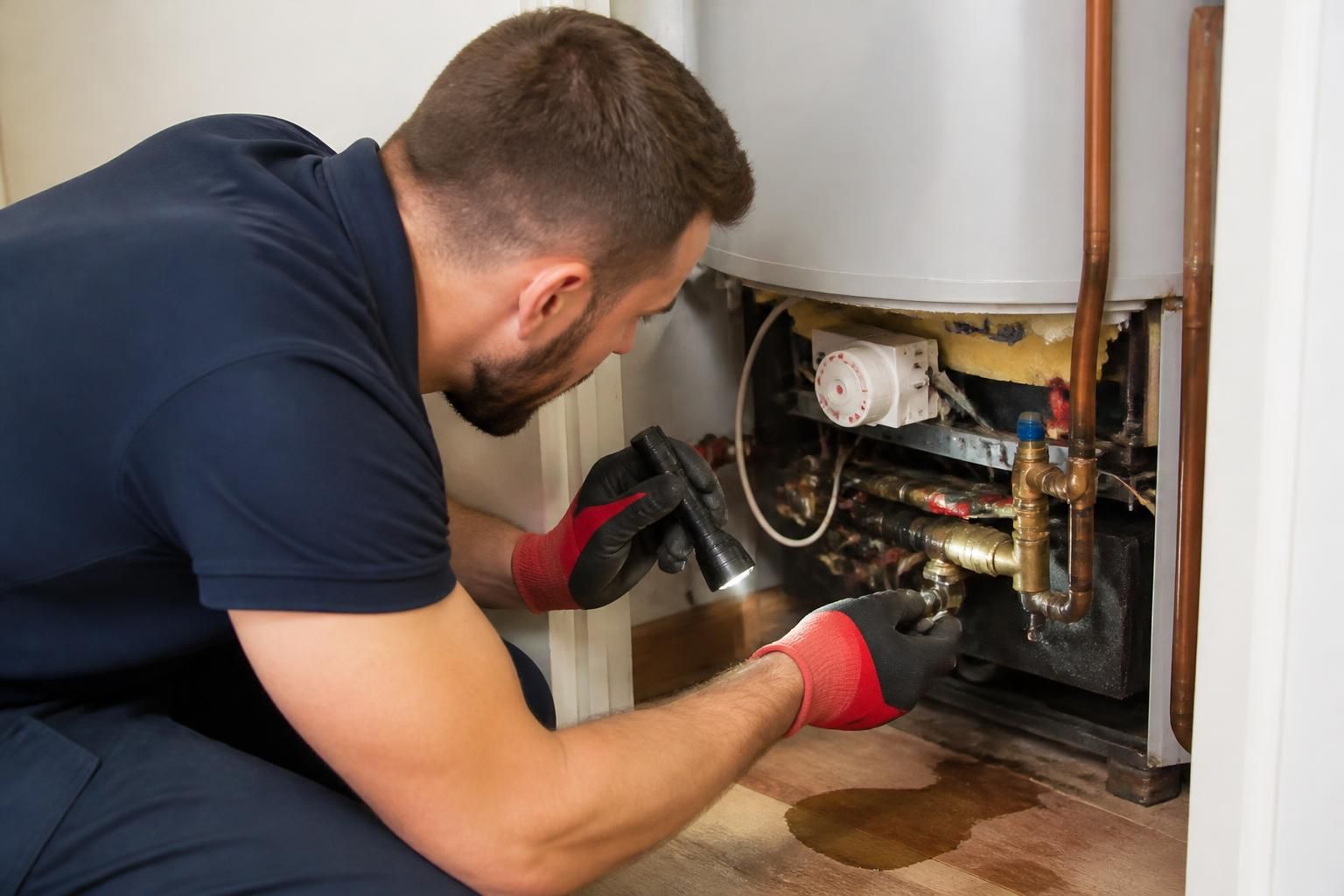
Once a water heater leak has been located, the next step is to identify the failed component, establish whether the surrounding system has been affected, and choose a suitable repair or replacement approach. The plumber should then complete the work in a controlled sequence, check for further leakage and confirm that the heater can be used safely.
The findings are explained clearly. A leak may come from a connection, valve, seal, cylinder, tank, heating element or nearby pipework. The visible water is not always coming from the component directly above it, so the inspection should distinguish the original fault from any water that has travelled along the heater or surrounding surfaces. Where relevant, the condition of insulation, electrical connections, supports and adjacent flooring or cupboards will also be considered.
The plumber will normally explain:
- which component has failed or is allowing water to escape;
- whether the fault is limited to the heater or has affected connected pipework and fittings;
- whether the component can be repaired or needs replacing;
- what access is required to carry out the work; and
- whether any related issue should be addressed to prevent the same type of failure recurring.
A repair is considered where the main unit remains in suitable condition. This may involve replacing a worn seal, tightening or renewing a connection, changing a faulty valve, repairing accessible pipework or replacing another individual component. The correct part must be compatible with the heater and the existing system. Simply sealing the outside of a damaged component is not a dependable substitute for replacing the failed part.
Replacement may be more appropriate when the heater itself is damaged. A corroded cylinder, a persistent leak from the body of the unit, extensive deterioration or a fault that cannot be safely isolated from the main assembly may make component-level repair unsuitable. The decision should take account of the heater's condition, the location of the damage, the practicality of accessing it and whether further work would be disproportionate to the unit's remaining serviceability.
Before work begins, the plumber may need to remove panels, insulation or stored items to reach the affected area. Any retained water should be managed carefully to reduce the risk of damage to flooring, cupboards and electrical equipment. If water has reached electrical components, the relevant supply should be treated with caution and left for appropriate professional assessment rather than handled as an ordinary plumbing leak.
After the faulty part has been repaired or replaced, the system is checked under normal operating conditions. This usually includes examining the repaired joint or component while the heater refills or operates, checking that fittings remain dry, and looking for signs of pressure-related leakage or seepage. Controls, valves and connected pipework should be observed as part of the inspection rather than checking only the original wet patch.
Testing should also consider whether the heater is delivering hot water correctly and whether its normal controls are functioning. For a system involving electrical heating, fuel, combustion or stored hot water, the relevant safety checks must be completed by a suitably qualified professional. A leak repair should not be treated as complete merely because the visible water has stopped.
The area around the heater may need attention after the plumbing work. Water can remain beneath insulation, behind panels or within flooring after the source has been dealt with. Drying the affected area and checking for continuing dampness can help identify whether there is residual water or an unresolved leak. Damage to surrounding materials, staining or mould should be assessed separately if it has developed.
Before the visit ends, ask what was repaired, which parts were changed and whether any limitations remain. It is also useful to know which isolation controls serve the heater and what warning signs should prompt further action. Keep any documentation or part details provided, particularly if the heater is later serviced, altered or replaced.
If water reappears after the repair, the heater should not be repeatedly restarted or adjusted in an attempt to test it. Isolate the equipment only if it is safe to do so, protect nearby belongings from further water and arrange a further professional inspection. A recurring leak can indicate movement, pressure, corrosion or a second fault that was not responsible for the original visible discharge.