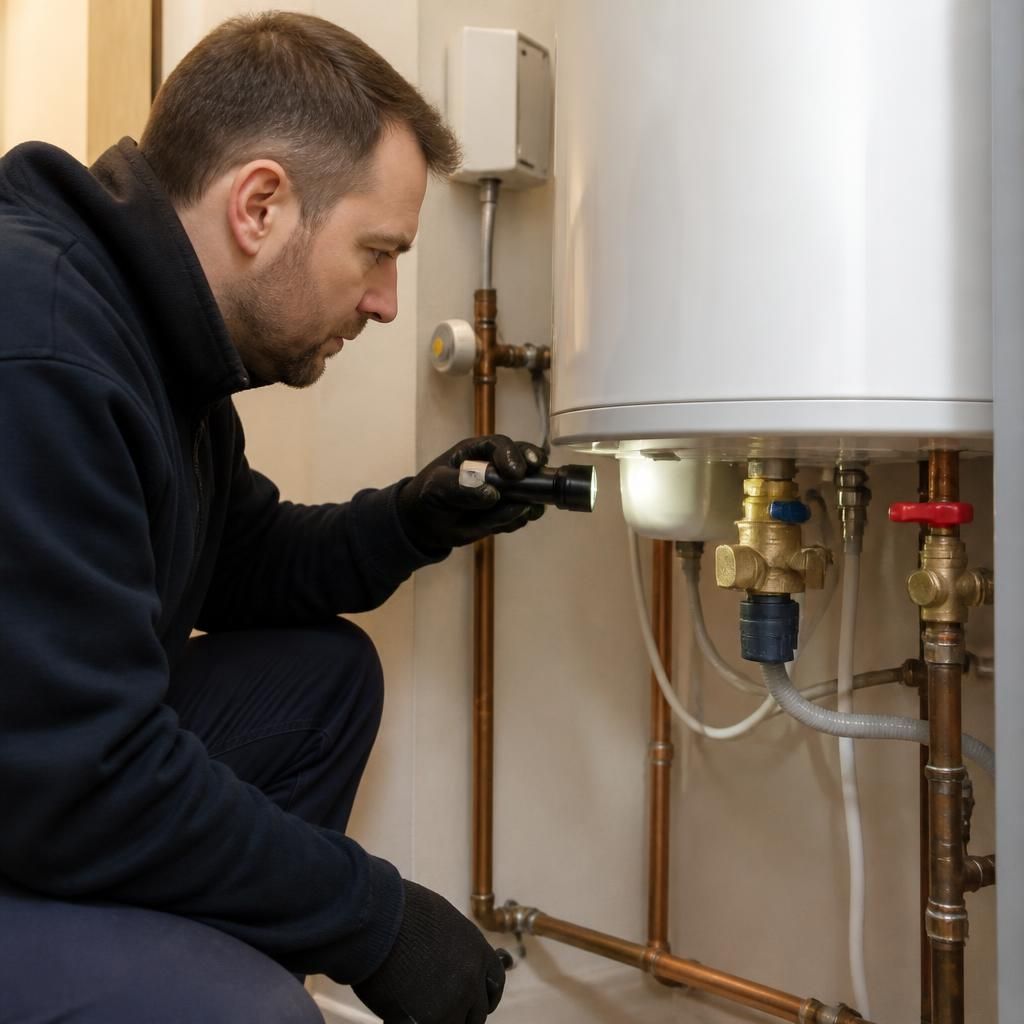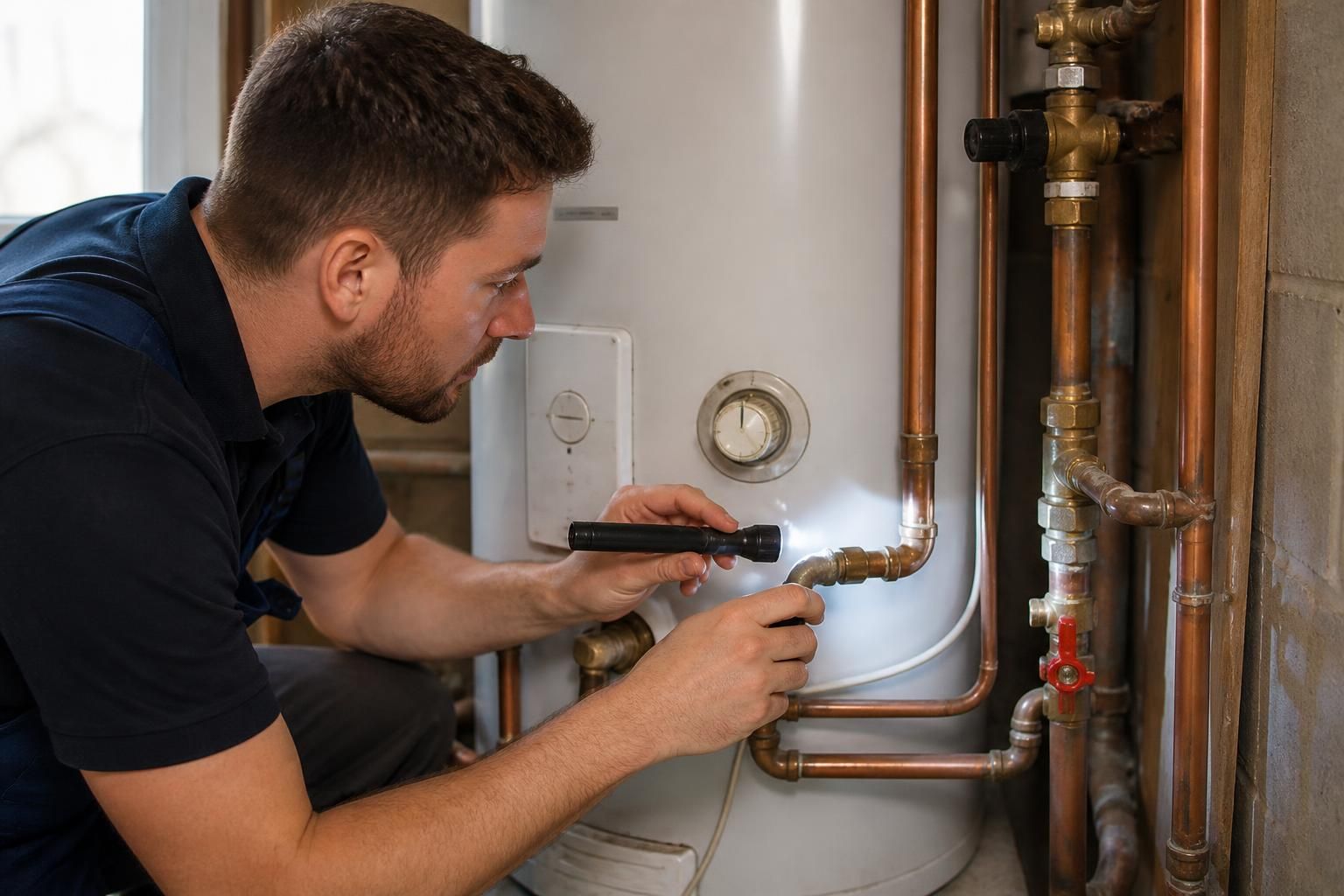
Explain how the heater is supplied. State whether it is an electric water heater, gas-fired unit, cylinder-based system or another type if you know. Mention whether the leak appears to involve hot water, cold water, a heating circuit or a discharge pipe. If you are unsure, describe the pipework and components as accurately as possible rather than guessing.
Describe the heater’s present condition. Useful details include whether it is still producing hot water, whether the water temperature or pressure has changed, and whether you have noticed unusual noises, repeated heating cycles, an error code, a pilot or power issue, or water from a pressure-relief or overflow pipe. A heater can leak internally or through connected pipework, so these symptoms may help distinguish a tank, valve, connection or control problem.
Report any safety concern immediately. Say if there is a gas smell, scorching, smoke, exposed wiring, sparking, very hot water, rapidly spreading water or water near electrical equipment. Do not operate electrical switches or attempt to relight or dismantle equipment where doing so could be unsafe. If you can do so without touching wet electrical equipment, tell the plumber whether the water supply, fuel supply or electrical power has already been isolated.
Give information about the surrounding damage. Explain whether water has affected flooring, cupboards, ceilings, walls, insulation or stored belongings, and whether there is staining, dampness, mould or visible corrosion. Mention if the leak appears to have affected another room or property below. Photographs or a short video can be useful where they can be taken safely, particularly if the leak is intermittent, but they should not delay action or require you to remove panels.
Include relevant records. If available, provide installation paperwork, previous inspection notes, repair invoices, warranty documents and recent photographs. Also mention any alterations to the plumbing, changes in water pressure or work carried out nearby. Do not worry if these records are unavailable; an accurate description of the symptoms remains useful.
Clarify the purpose of the visit. State whether you need the leak located only, the cause diagnosed, advice about repair, or an assessment of damage to connected pipework. If you are a tenant, explain whether the landlord or managing agent needs to approve work. Landlords should provide any relevant access or maintenance instructions, while tenants should avoid authorising work beyond the agreed scope if approval is required.
Before the appointment, keep the area around the heater clear where this can be done safely, secure pets and ensure the plumber can see the relevant pipework and controls. Do not remove covers, tighten fittings or use sealant as a temporary repair unless specifically advised by a qualified professional. Give any new information if the leak changes, stops and restarts, or becomes more severe after the initial arrangement.
Accurate information does not replace an on-site inspection. Water can travel along pipework, behind panels or through building materials, so the point where it becomes visible may not be the source. The plumber may therefore need to check connected valves, joints, discharge routes and nearby surfaces rather than examining only the wettest area.