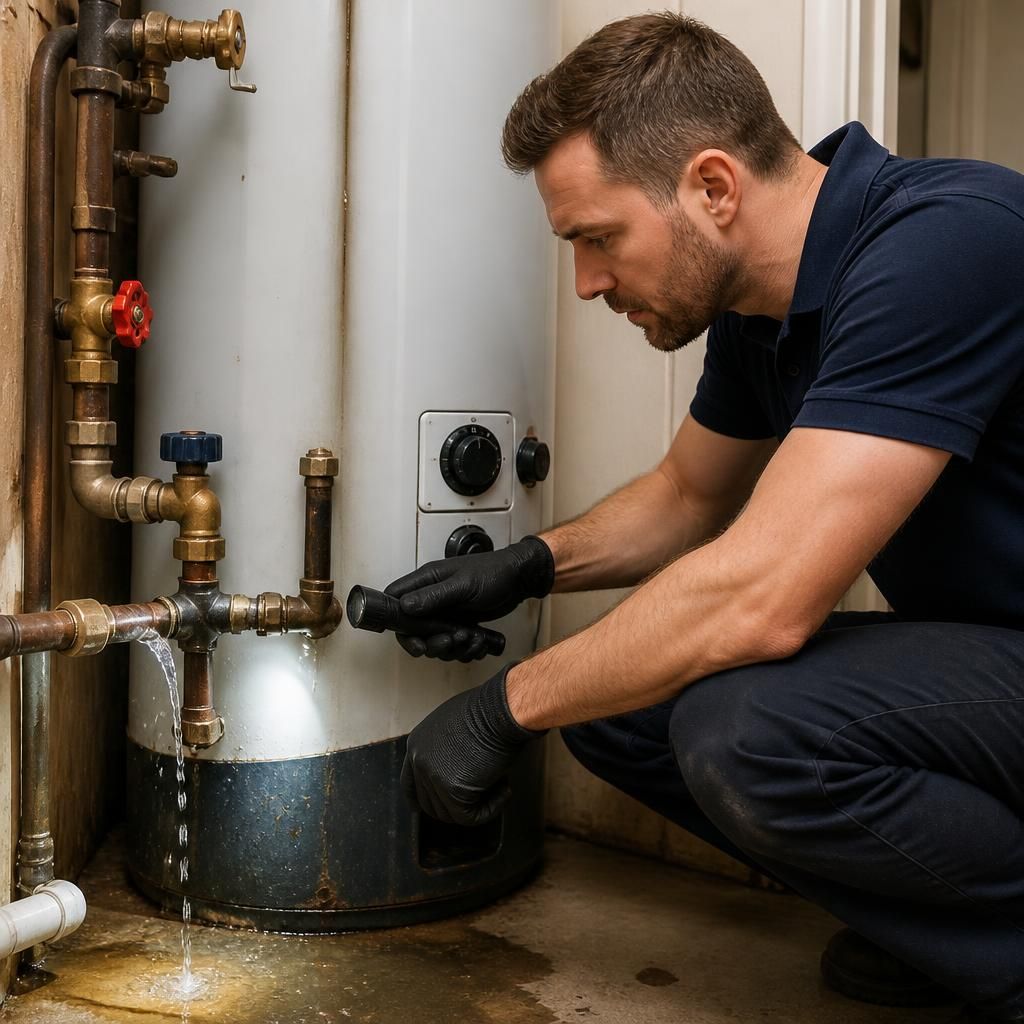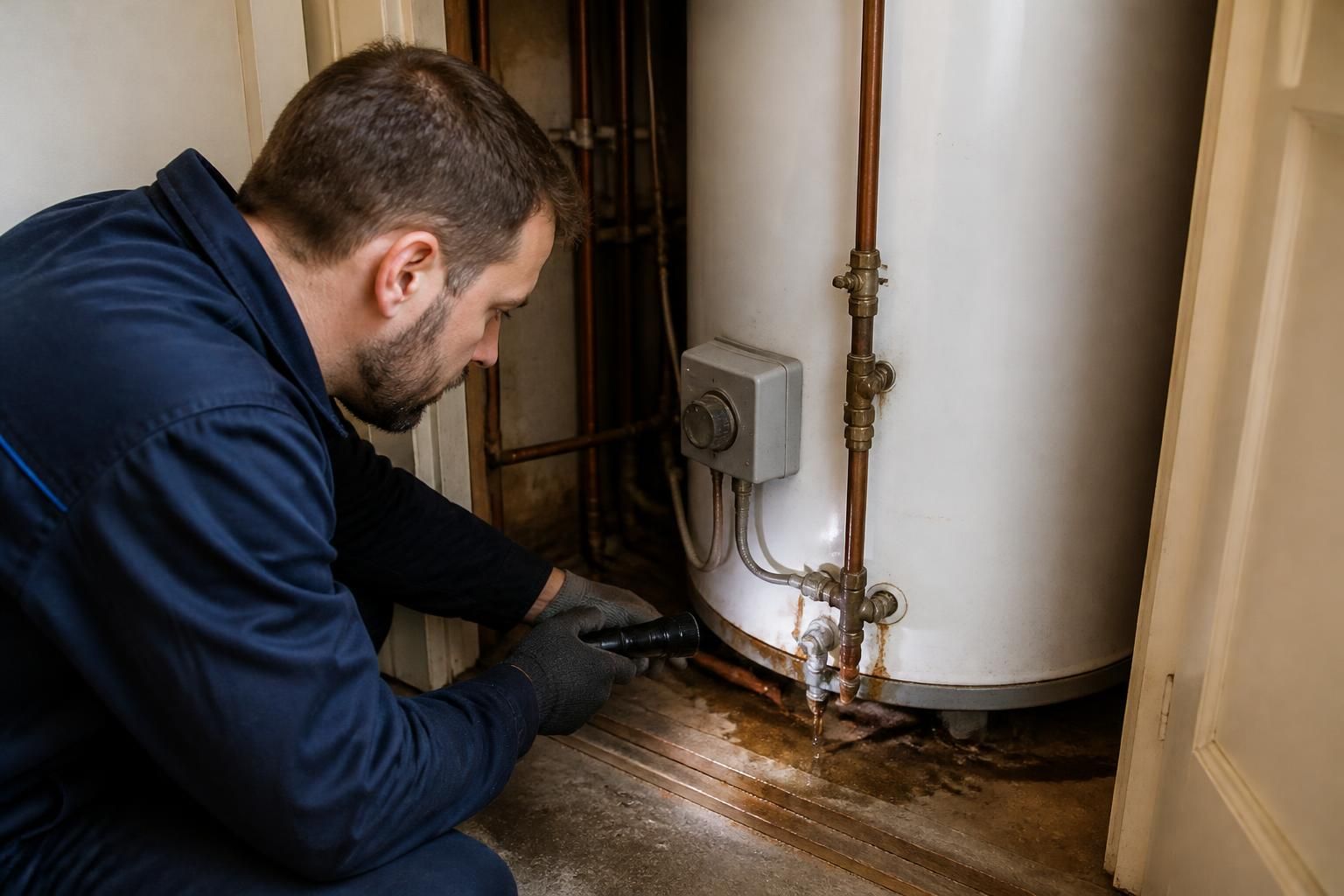
Before an emergency water heater repair visit, prioritise personal safety, give the plumber accurate information and make the appliance accessible without attempting to repair it yourself. These steps help the engineer understand the fault, identify potential risks and decide which parts may need testing or replacement.
Keep people away from the affected area. Children, tenants, visitors and pets should not use or approach a damaged water heater, particularly where there is exposed wiring, hot water, sharp metalwork or a wet floor. Do not stand in pooled water near electrical equipment, and do not operate switches or plugs if they may be wet. If you notice the smell of gas, leave the property and contact the appropriate gas emergency service rather than investigating the appliance.
Do not dismantle, reset or test the unit. Removing covers can expose live electrical components, stored hot water or pressurised parts. Repeatedly resetting an appliance may also obscure the original fault or allow a failing component to continue operating. Avoid relighting a gas appliance, opening electrical panels, tightening internal fittings or attempting to seal a leaking cylinder. A qualified plumber or heating professional should carry out diagnostic checks and repairs.
Prepare useful information for the engineer. If it can be obtained without touching the appliance, note:
- Whether the heater supplies a cylinder, tap, shower or wider hot-water system
- The type of fuel or power source used, such as electricity, gas or another system
- When the issue was first noticed and whether it has changed since then
- Whether the problem affects all hot-water outlets or only one tap or shower
- Any recent plumbing, electrical or heating work carried out near the unit
- The appliance make, model and serial details shown on an external rating label, if visible
Photographs can be useful if they can be taken from a dry, safe position. Images of the appliance, surrounding pipework, visible water marks and any external display may help the plumber prepare. Do not remove panels or move the heater to obtain a clearer picture.
Make the working area accessible. Move ordinary household items, laundry and stored belongings away from the route and the space around the heater, but do not disturb wet materials, damaged fittings or electrical equipment. If the unit is in a cupboard, loft or service area, unlock the access point where possible and identify any keys or restrictions. Tell the plumber about narrow access, fragile flooring, shared entrances or other practical issues before the visit.
Protect relevant records. Keep installation documents, previous repair notes, warranty information and maintenance records available if you have them. These may show the appliance age, previous component replacements or known installation limitations. If you rent the property, inform the landlord or managing agent and follow any procedure required for emergency repairs. Homeowners may also wish to check whether their buildings or contents insurer needs to be notified, particularly where water has affected ceilings, walls, flooring or fitted units.
Consider what services are currently unavailable, such as hot water to a bathroom or kitchen, and tell the plumber if anyone in the property has a particular health, mobility or care requirement. This information helps the repair be assessed in the right context, without asking you to operate an unsafe appliance.
Finally, keep the engineer’s contact details and any instructions received when arranging the visit to hand. If the leak, smell, noise or visible damage changes before the plumber arrives, report the change rather than carrying out further checks yourself. The safest preparation is to preserve the situation, provide clear information and leave technical diagnosis to the professional.