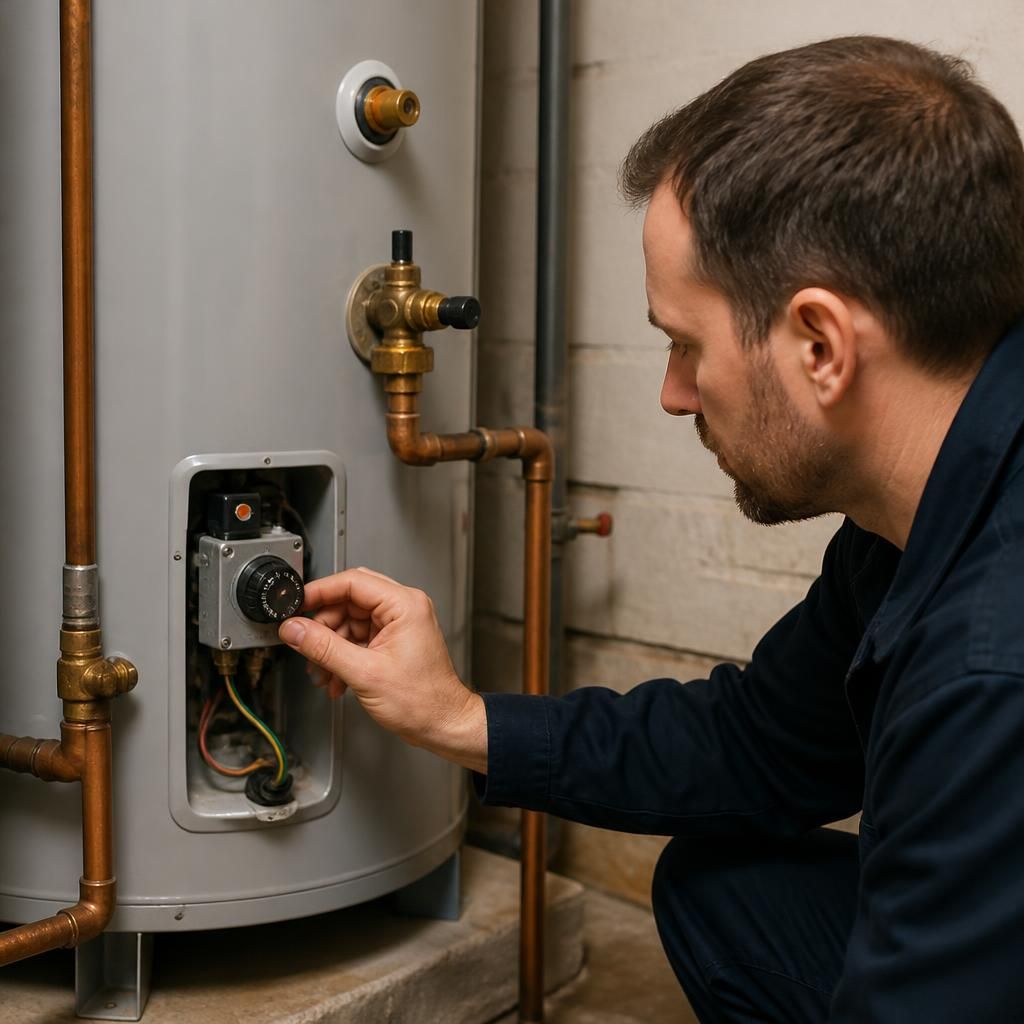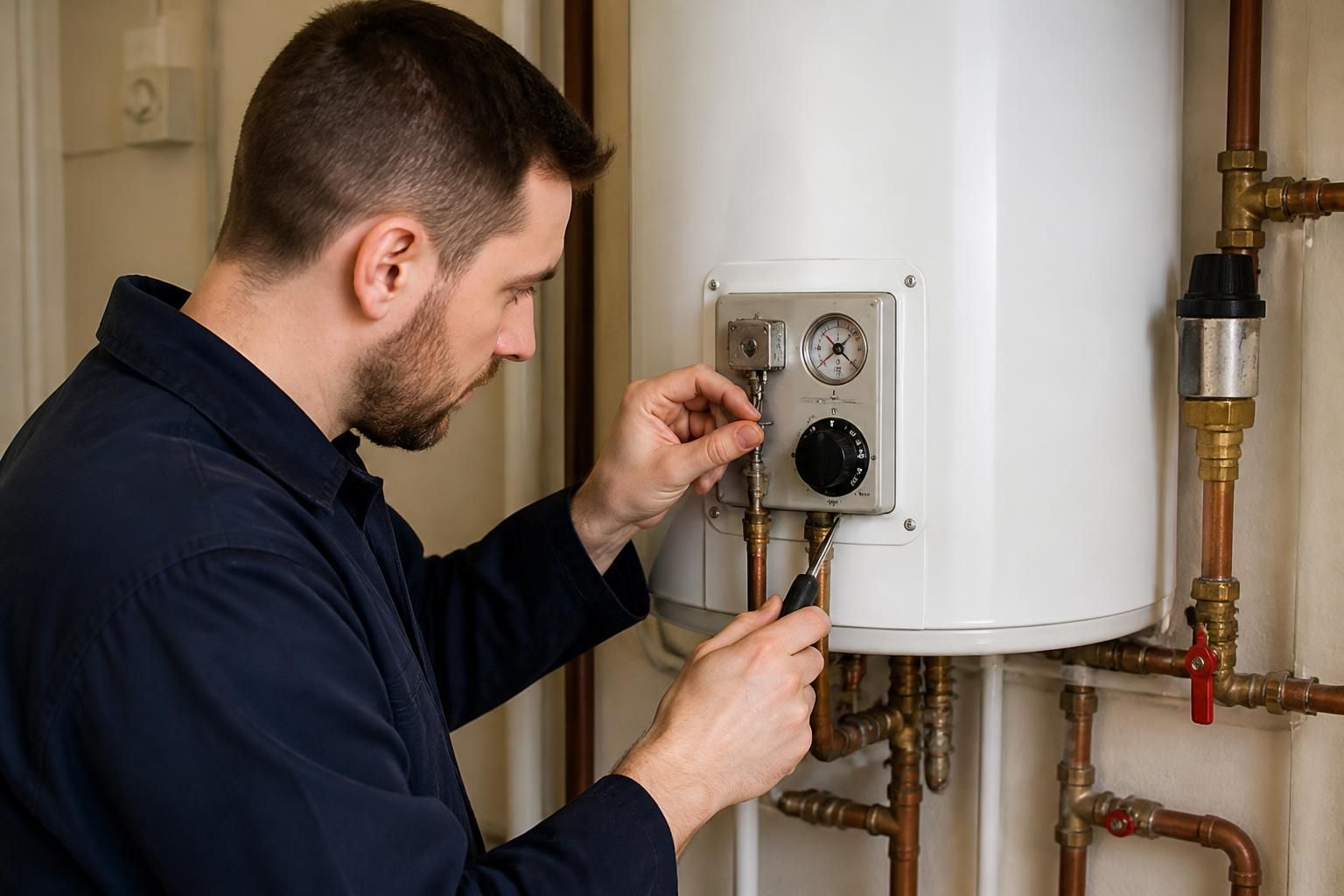
Professional water heater repair is needed when a fault affects safety, heating performance, water quality or the condition of the surrounding property. Some problems are obvious, while others develop gradually through corrosion, scale, pressure changes or failing components. A qualified plumber can identify the underlying cause rather than treating only the visible symptom.
Additional warning signs that merit professional attention include:
- Water collecting around the base of the cylinder or heater: Moisture beneath the unit can indicate corrosion, a damaged seal, a leaking connection or a split tank. Water from a tank itself is particularly important because it may worsen without warning.
- Discharge from the pressure relief pipe: A relief valve may release water when pressure or temperature becomes excessive. Occasional discharge should not simply be ignored, as the cause could involve the valve, thermostat, expansion vessel or system pressure.
- Rust, white scale or staining around connections: Corrosion and mineral deposits can weaken fittings and restrict components. Even a small marked area may point to a slow leak inside insulation or behind an access panel.
- A damaged or tripping electrical supply: Burning smells, scorch marks, melted insulation or repeated trips at the consumer unit require professional assessment. Do not remove covers or continue resetting the power, particularly where water is present.
- A pilot or ignition fault on a gas-fired appliance: Repeated failure to ignite, an unusual flame appearance or a smell of gas should be treated as a safety issue. Turn off the gas supply if it is safe to do so, avoid flames and electrical switches, ventilate the area and contact a Gas Safe registered engineer for gas-related work.
- A tank that appears swollen, distorted or heavily corroded: Changes to the cylinder shape or extensive corrosion can indicate structural deterioration. This is not a suitable condition for a temporary repair or DIY patch.
- Water that contains grit or metallic particles: Particles may come from internal corrosion, a deteriorating anode or accumulated sediment. The source should be checked before the heater is flushed, as flushing an older or damaged system may not resolve the underlying fault.
The location and pattern of the problem help distinguish between a repairable component fault and a failing water heater. For example, moisture at a threaded joint may require a connection or valve repair, whereas water emerging from the body of a cylinder can indicate tank failure. Similarly, a pressure relief issue may be linked to a separate control or expansion problem rather than the relief valve itself.
A professional assessment normally includes checking the cylinder or heater body, pipework, isolation valves, temperature controls, pressure-relief equipment, electrical connections and accessible discharge routes. The engineer should also consider whether scale, corrosion or incorrect pressure has contributed to the fault. Where the appliance is gas-powered, combustion and flue safety must be assessed by an appropriately registered engineer.
Switch the appliance off according to its instructions if you notice active water escaping, burning smells, exposed electrical parts or signs of overheating. Close the local water isolation valve where this can be done safely, place a container beneath a minor leak and keep people away from hot water or damaged equipment. Do not dismantle the casing, bypass safety controls or seal a leaking tank with tape or compound.
Prompt professional advice is especially important when the heater is installed in a loft, cupboard or upper-floor room, because a small leak can affect ceilings, flooring and electrical systems. Ideal Plumbing Services provides water heater repair for homeowners, landlords and tenants in Birmingham and across the West Midlands, helping identify whether a component can be repaired or whether replacement assessment is more appropriate.