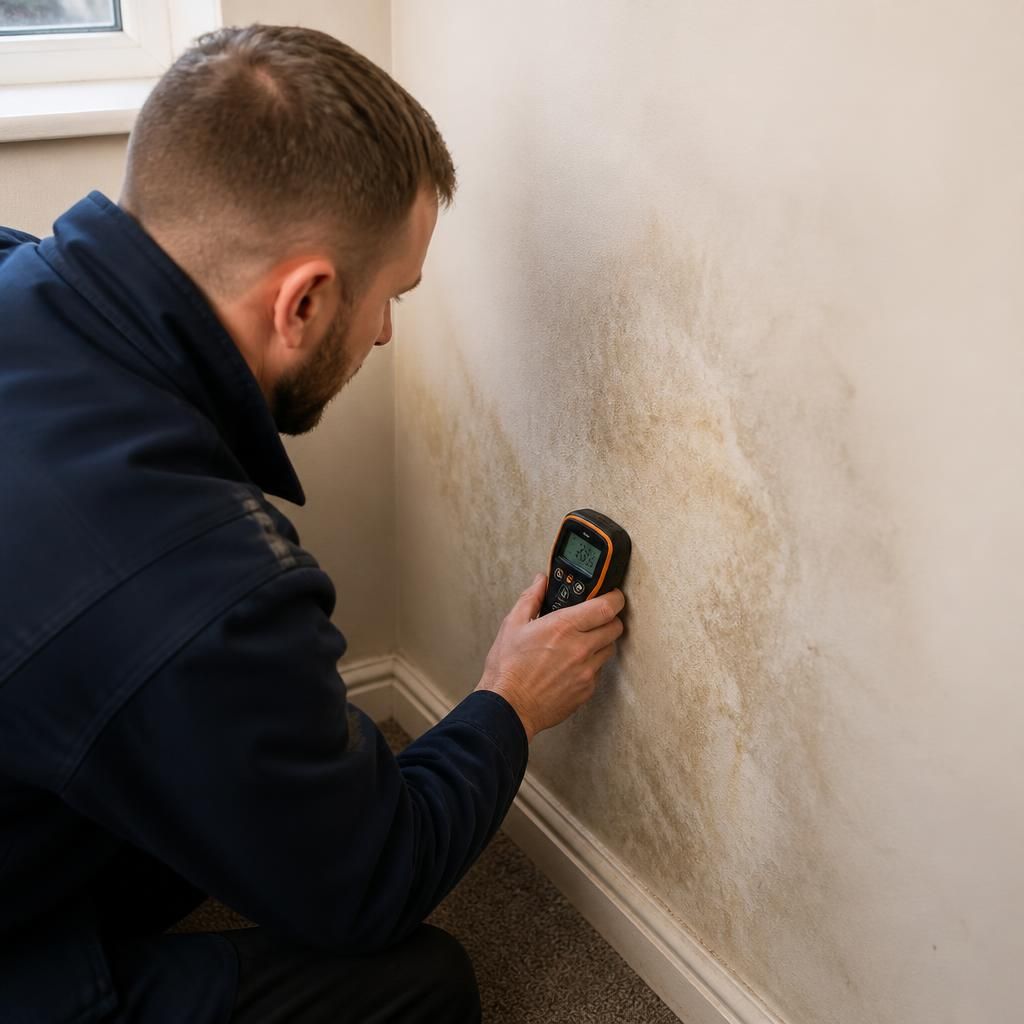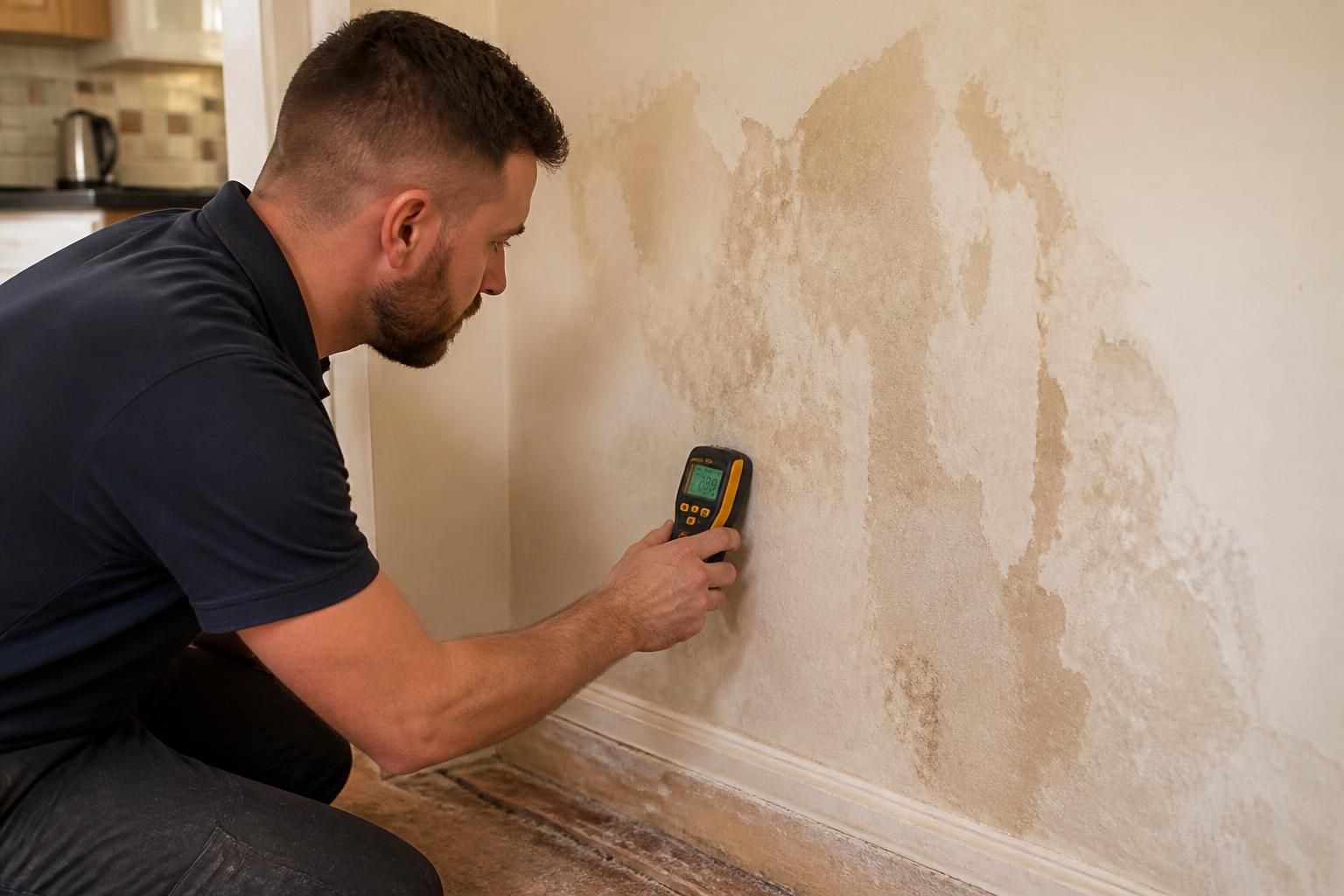
Professional leak detection can locate a concealed leak behind a wall without immediately removing large areas of plasterboard, tile or masonry. The technician combines visible evidence with specialist testing to establish whether water is escaping, identify the likely pipe or fitting involved and narrow the affected area before deciding whether access is needed.
How a hidden wall leak is assessed
The inspection normally begins with the plumbing layout and the symptoms inside the property. The position of a stain does not always match the position of the leak, because water can travel along pipework, joists, insulation or the back of a wall before appearing at the surface. A plumber therefore considers nearby bathrooms, kitchens, boilers, radiators, utility areas and external pipe routes rather than assuming the nearest fitting is responsible.
Useful observations include:
- Persistent damp patches, bubbling paint or discoloured plaster
- A musty smell or mould developing without an obvious source
- Peeling wallpaper, damaged skirting boards or crumbling plaster
- A wall that feels unusually cold or damp in one section
- Unexplained changes in water pressure or water use
- A ceiling or floor becoming wet below a concealed pipe route
Moisture meters can help compare readings across the affected surface and identify where dampness is concentrated. Thermal imaging may also show temperature differences caused by escaping water, particularly when a leaking pipe carries hot water. These readings are interpreted alongside the building construction, since insulation, ventilation and condensation can produce similar surface symptoms.
Using sound and pressure testing
A pressurised water pipe may produce a faint hissing, rushing or vibrating sound as water escapes through a small opening. Acoustic equipment can help detect and compare these sounds at different points on the wall or adjacent surfaces. Background noise, thick masonry and insulation can make acoustic tracing less straightforward, so sound is normally treated as one part of the assessment rather than standalone proof.
Where appropriate, pressure testing can indicate whether a sealed section of pipework is losing pressure. The system may be isolated into sections so that the plumber can distinguish a concealed pipe leak from a problem with a visible appliance or fitting. This is particularly useful when there is no obvious wet patch, although the results must be considered in relation to the type and condition of the plumbing system.
Can every leak be found without opening the wall?
Not in every case. Detection equipment can narrow the search, but access may still be necessary to confirm the defect, repair the pipe or replace a failed connection. The amount of opening-up depends on the wall material, pipe position, leak size, moisture spread and whether the pipe is accessible from the room behind, a floor, a ceiling or an adjacent service void. Targeted access is generally more practical than removing a large section without first establishing where the pipe is likely to be.
A damp patch can also have a source outside the wall. Possible alternatives include a leaking bathroom seal, failed shower connection, radiator valve, heating pipe, roof defect or rainwater penetration. Condensation can create surface moisture without a plumbing leak. A proper investigation tests these possibilities before attributing the damage to a concealed water pipe.
Water leaks and suspected gas leaks require different precautions
A suspected gas leak should not be investigated by operating electrical switches, using a naked flame or attempting to expose the pipe. Leave the area if necessary and follow the relevant gas emergency guidance. Gas detection involves different testing and safety procedures from water leak detection, and any repair must be carried out by an appropriately qualified gas professional.
If a wall is damp near electrical sockets, switches or appliances, avoid touching affected electrical equipment and arrange suitable professional assessment. Isolating the water supply may limit further damage where it is safe and practical to do so, but this does not replace identifying the source.
For homeowners, landlords and tenants, recording when the dampness appears and which appliances or taps were in use can provide useful diagnostic information. Photographs can also document how the affected area changes. An inspection by Ideal Plumbing Services can then use these observations, system checks and detection methods to determine the most likely source and explain what access or repair work is required.