Professional water and gas leak detection is a controlled diagnostic process used to establish whether a leak is present, identify the system or fitting involved, and determine its precise location before repair work begins. It combines information from the property with targeted testing, helping distinguish a supply-pipe problem from a faulty appliance, joint, valve or drainage connection.
The process normally begins with a detailed assessment. The engineer will discuss the symptoms, recent changes to the plumbing or heating system, and any visible damage. Relevant clues can include unexplained moisture, staining, mould, a drop in water pressure, sounds from pipes when fittings are not being used, or changes in gas appliance performance. The pattern and location of these signs can indicate whether the source is likely to be above ground, concealed within a building element or below ground.
Water leak investigations may involve checking the internal supply pipework, storage tanks, heating circuits, valves, sanitaryware and appliances. The system can be assessed in sections so that individual parts are compared rather than treating the whole property as one fault. Where appropriate, pressure testing helps establish whether a sealed water circuit is losing pressure. Water meters and stop taps may also provide useful evidence, particularly when water use appears to continue while all outlets are closed.
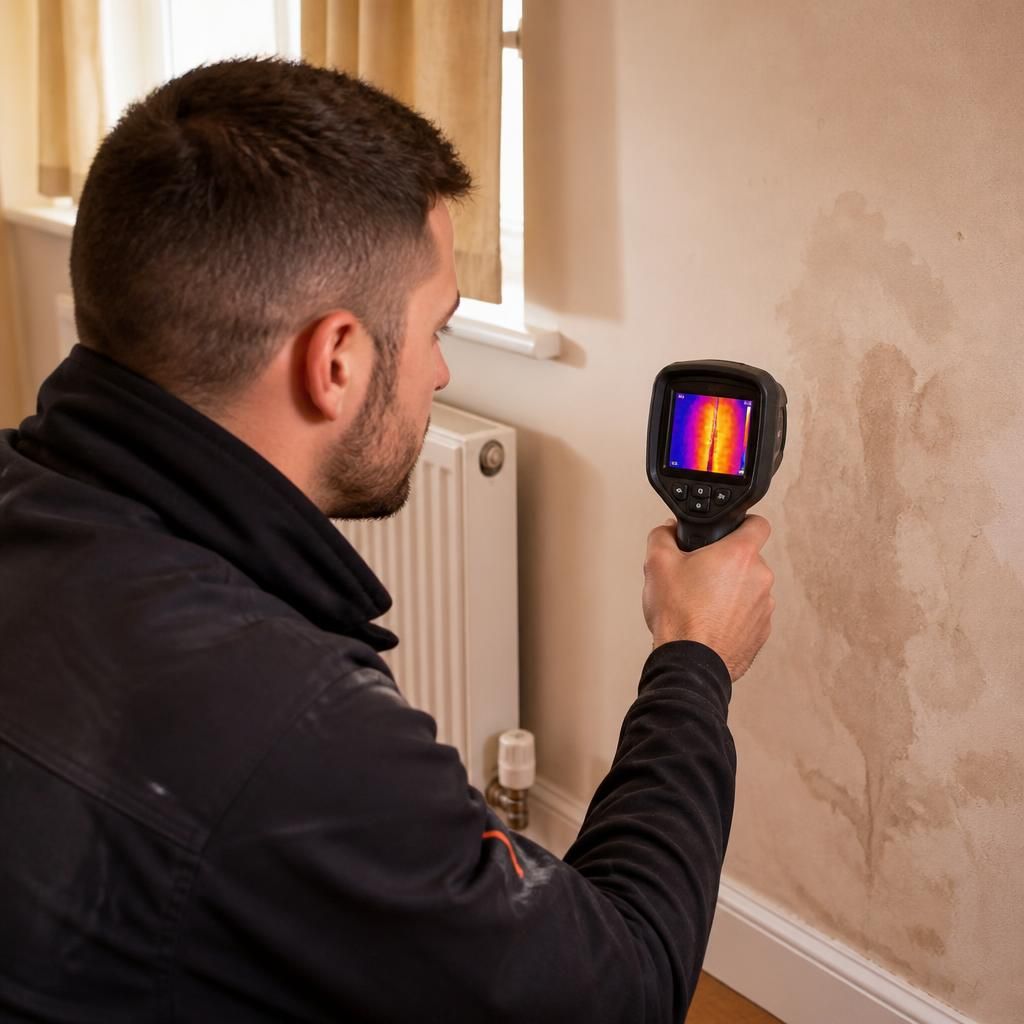
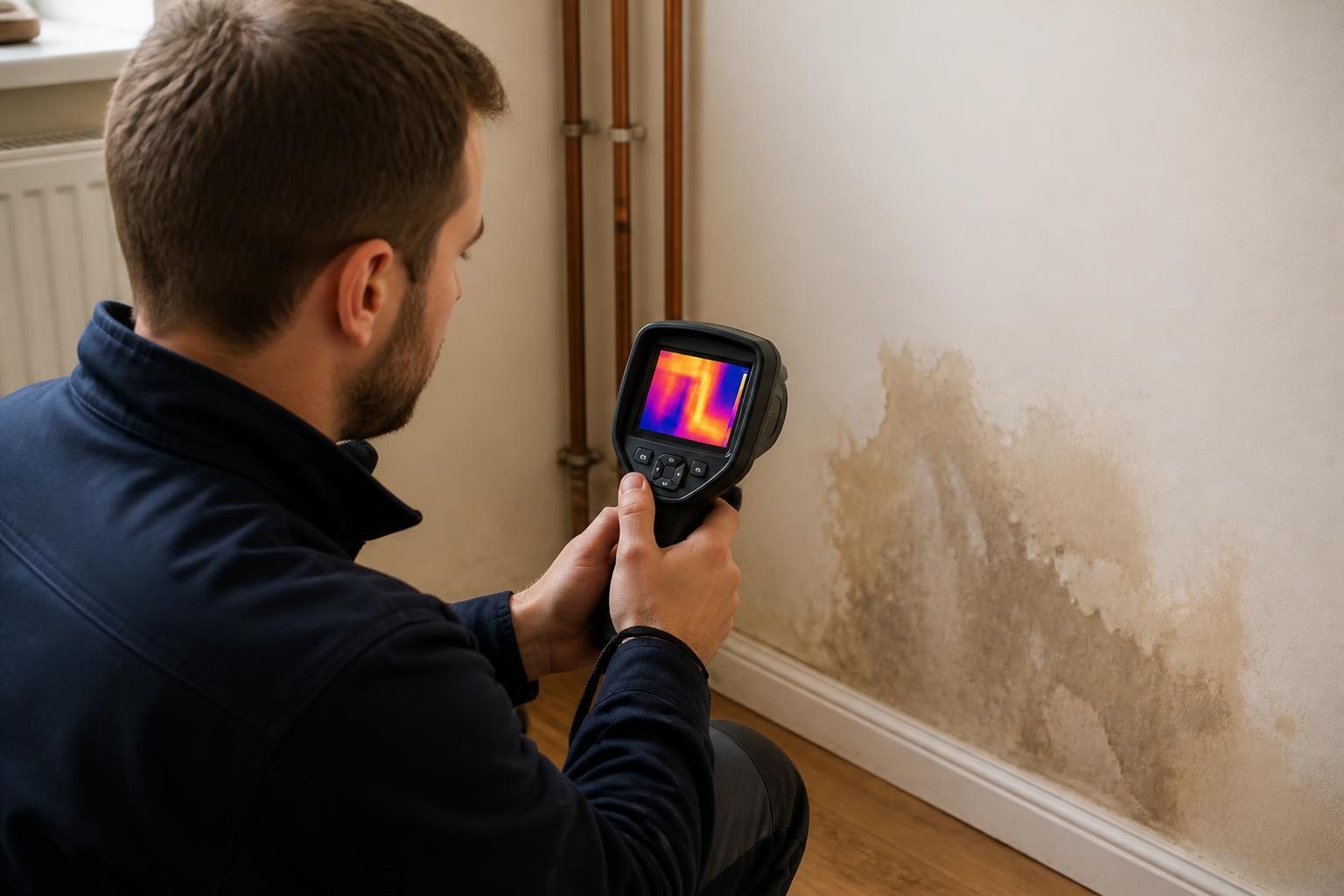
Non-invasive equipment can assist when the source is hidden. Depending on the circumstances, this may include acoustic listening equipment, thermal imaging, moisture meters, tracer methods and inspection cameras. These tools do not all perform the same function: acoustic equipment can help detect the sound of escaping water, thermal imaging can highlight temperature differences, and moisture meters can show where materials have retained dampness. The results need to be interpreted alongside the building layout because a wet patch is not necessarily directly below the leak.
Gas leak detection follows a different safety-led procedure. A suitably qualified gas engineer may test accessible gas pipework, appliance connections and relevant components with approved detection equipment. Gas readings are assessed carefully because ventilation, background conditions and the operation of nearby appliances can affect the results. If a gas leak is suspected, do not operate electrical switches, use naked flames or attempt to investigate the pipework yourself. Turn off the gas supply at the meter if it is safe to do so, ventilate the property without creating a source of ignition, leave the area if necessary and contact the appropriate emergency gas service or a qualified gas professional.
When the suspected location is beneath flooring, inside a wall or under external ground, the investigation may use a combination of pressure testing, acoustic methods, thermal imaging and route tracing. The objective is to narrow the work area before access is considered. Detection cannot always identify a fault without some opening-up, particularly where several leaks are present or where materials have allowed water to travel away from the original source, but a structured investigation can avoid unnecessary removal of fittings or finishes.
A professional conclusion should explain:
- whether a leak was detected;
- which system, fitting or section of pipework is implicated;
- the approximate or confirmed location of the fault;
- the evidence and testing used to reach that conclusion;
- whether further access, monitoring or specialist investigation is required; and
- the type of repair or follow-up work that may be appropriate.
Before an appointment, it is useful to clear access to the stop tap, meter, boiler, cylinder, visible pipework and affected rooms. Keep notes of when symptoms occur and avoid covering stains or drying affected areas before they have been assessed. Photographs can also help show how the problem has developed, although they cannot replace physical testing.
Detection and repair are related but separate stages. Locating the source does not automatically establish the extent of water damage, the condition of concealed materials or the cause of a recurring fault. After the location has been established, the next step may involve replacing a component, repairing pipework, checking pressure again or arranging additional building-damage assessment. For gas-related faults, any remedial work must be carried out in accordance with the relevant safety requirements by a properly qualified professional.