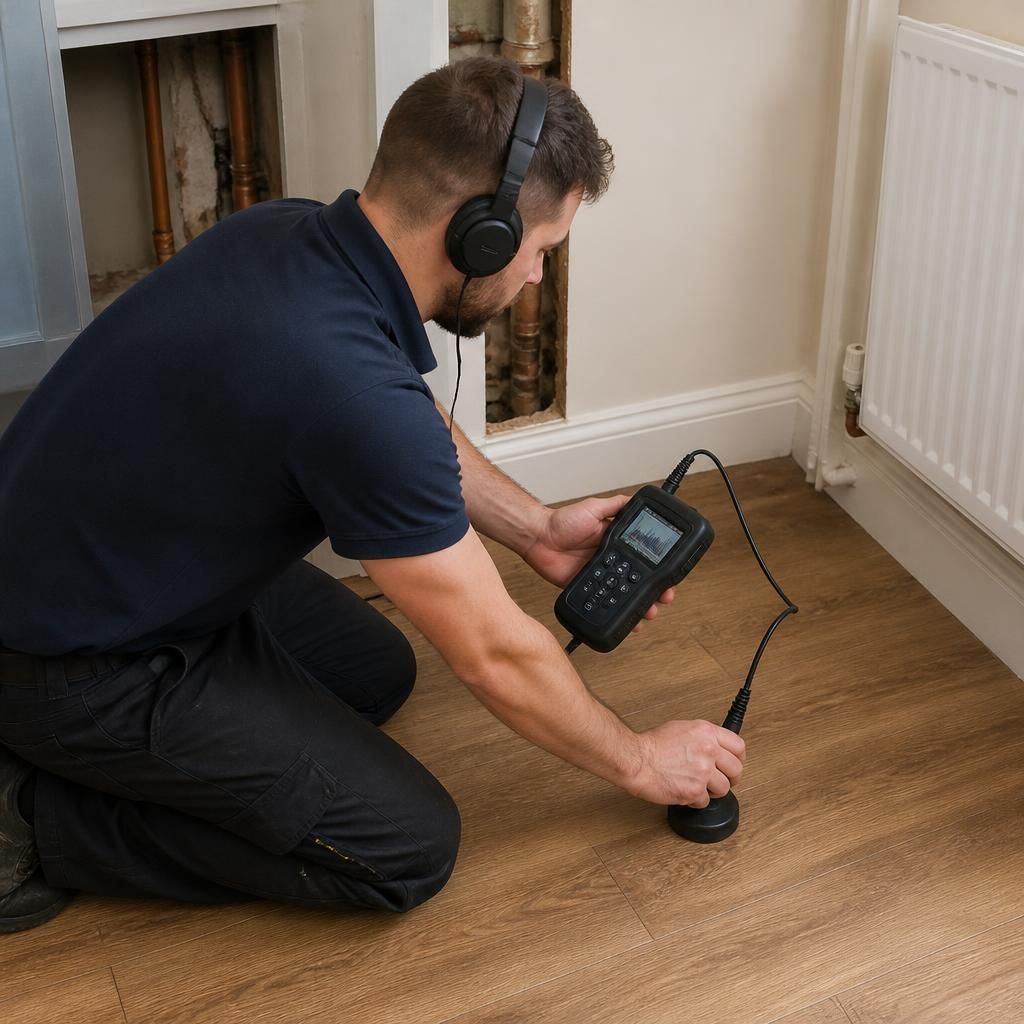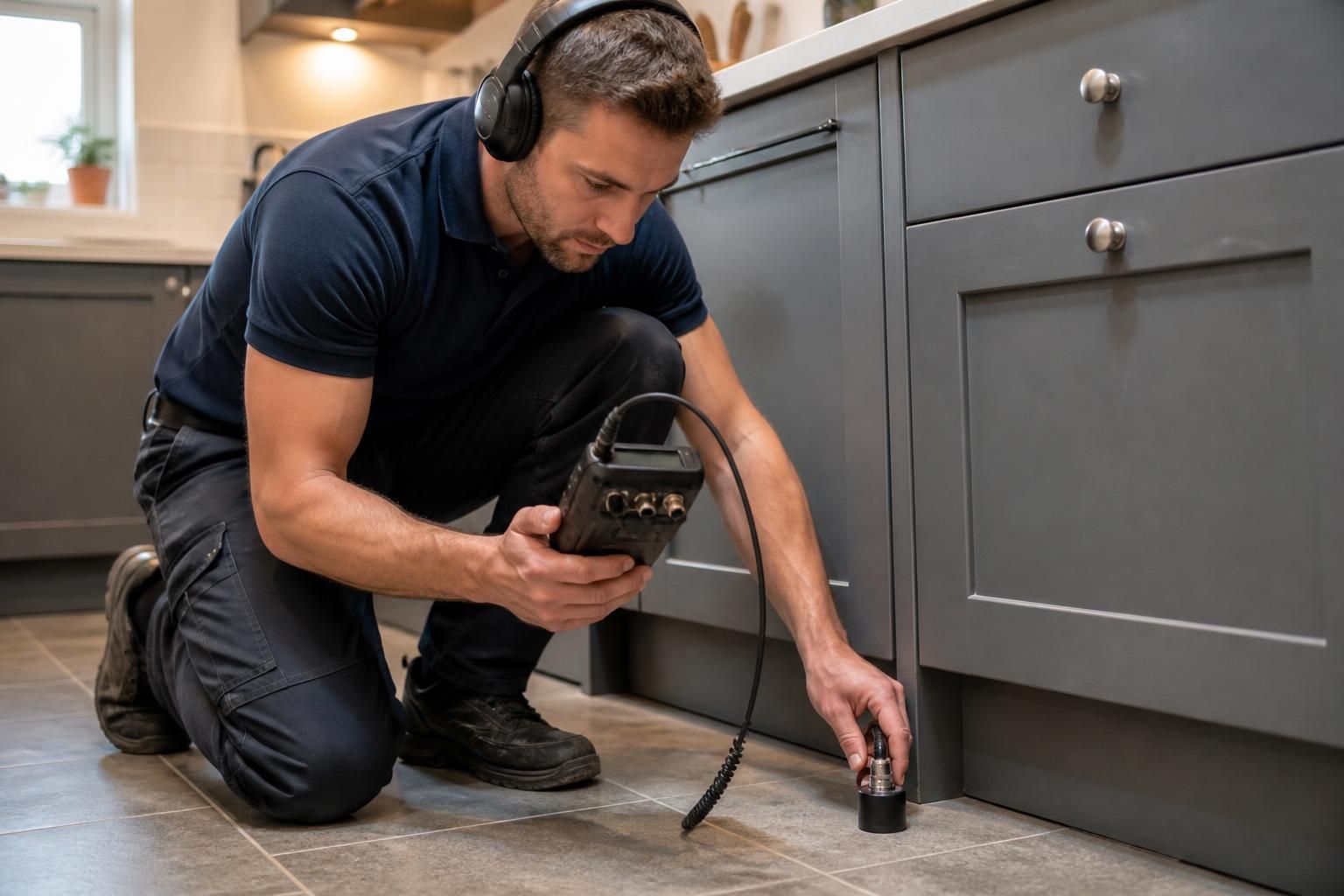
Arrange professional water or gas leak detection whenever there is credible evidence of a leak, but the source cannot be identified confidently without specialist testing. This is particularly important where the suspected leak is concealed beneath flooring, inside a wall, below ground, within a ceiling or near gas appliances. Professional investigation can establish whether a leak is present, narrow down its location and help determine the appropriate repair before unnecessary damage is caused.
Arrange detection for a suspected water leak when:
- Moisture or damage has appeared without an obvious cause, particularly if the affected area continues to grow.
- A plumbing fault seems to have been repaired but the problem returns.
- There is a leak in a concealed pipework route and accessing the pipe would involve removing flooring, plasterboard or fitted units.
- You can hear water movement when taps, toilets and appliances are not being used.
- A property has been vacant, recently renovated or altered, and you want pipework checked before further finishing work is completed.
- There is concern about a pipe beneath a floor, driveway, garden or other inaccessible area.
A professional assessment is also sensible when several possible sources are close together. For example, moisture near a bathroom may be caused by a supply pipe, waste pipe, shower installation or water travelling from another part of the building. Treating the most visible point alone may not resolve the underlying fault. Detection methods can help distinguish between these possibilities and reduce unnecessary opening-up work.
Arrange gas leak detection as a safety matter. Any suspected escape of gas should be treated seriously, even if the source is not visible and the smell is intermittent. Do not attempt to test a gas pipe with a naked flame, dismantle an appliance or carry out an improvised repair. Avoid operating electrical switches if gas may be present, extinguish flames where this can be done safely, leave the building and contact the appropriate gas emergency service. A qualified professional can investigate the installation and identify whether the issue is associated with pipework, a connection or an appliance.
Gas detection should not be delayed because an appliance appears to work normally. A gas escape may occur at a connection or section of pipework away from the appliance itself. If other occupants, neighbours or contractors could be affected, make sure they are kept away from the suspected area until it has been assessed.
Professional detection is preferable to monitoring the problem when:
- The cause is uncertain and continued use of the plumbing could worsen the damage.
- The suspected leak is concealed or access would be disruptive.
- There has been repeated staining, dampness or deterioration after previous work.
- The property contains valuable finishes, fitted furniture or flooring that should not be removed unnecessarily.
- You are responsible for a rented property and need a clear technical assessment for maintenance records and repair planning.
- You are buying, selling or refurbishing a property and need suspected pipework issues investigated before work proceeds.
What to do before the inspection
For a water leak, stop using fixtures connected to the suspected section if it is safe to do so. If water is escaping actively, turn off the internal stopcock where you can access it safely and move electrical items away from wet areas without touching anything wet or damaged. Note when the problem occurs and which fixtures or appliances were in use. Photographs of affected surfaces can also help record how the issue developed.
Do not cover damp areas, repaint staining or remove walls and floors before the source has been assessed unless immediate action is needed to prevent further damage. For a suspected gas leak, follow gas safety instructions rather than attempting to isolate or inspect the installation yourself.
A leak detection visit normally begins with a discussion of the symptoms, the building layout and any previous repairs. The plumber may then inspect accessible pipework and use suitable non-invasive or minimally invasive techniques, depending on whether the suspected fault involves water, heating or gas services. The findings should be explained clearly, including the likely location of the defect, any limitations in the investigation and what repair work may be required.
Arrange detection at the point when uncertainty could lead to greater damage, unsafe conditions or unnecessary disruption. A visible fitting that can be safely isolated may only need a straightforward repair, but an unexplained or concealed problem warrants professional investigation rather than repeated attempts to locate it by guesswork.
Ideal Plumbing Services provides water and gas leak detection for homeowners, landlords and tenants in Birmingham and across the wider West Midlands, with an emphasis on accurate assessment and practical repair advice.