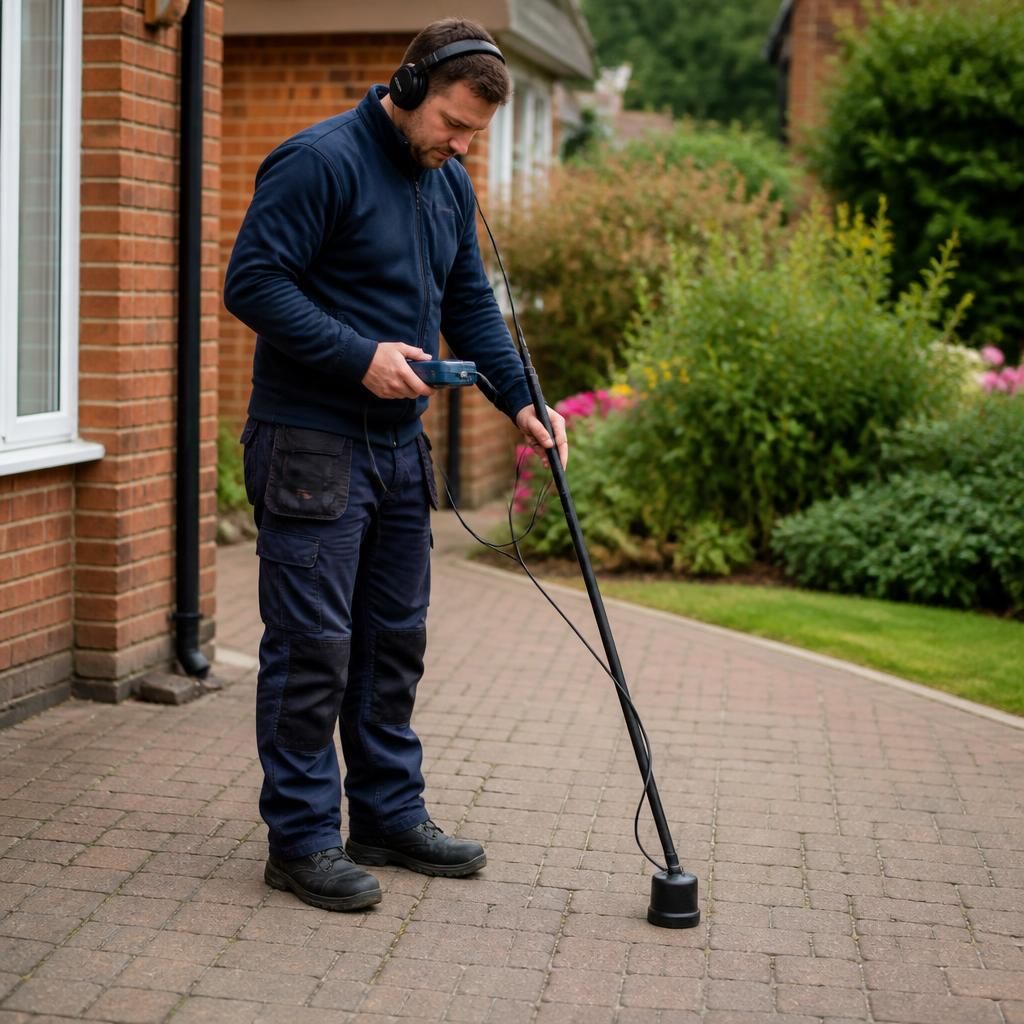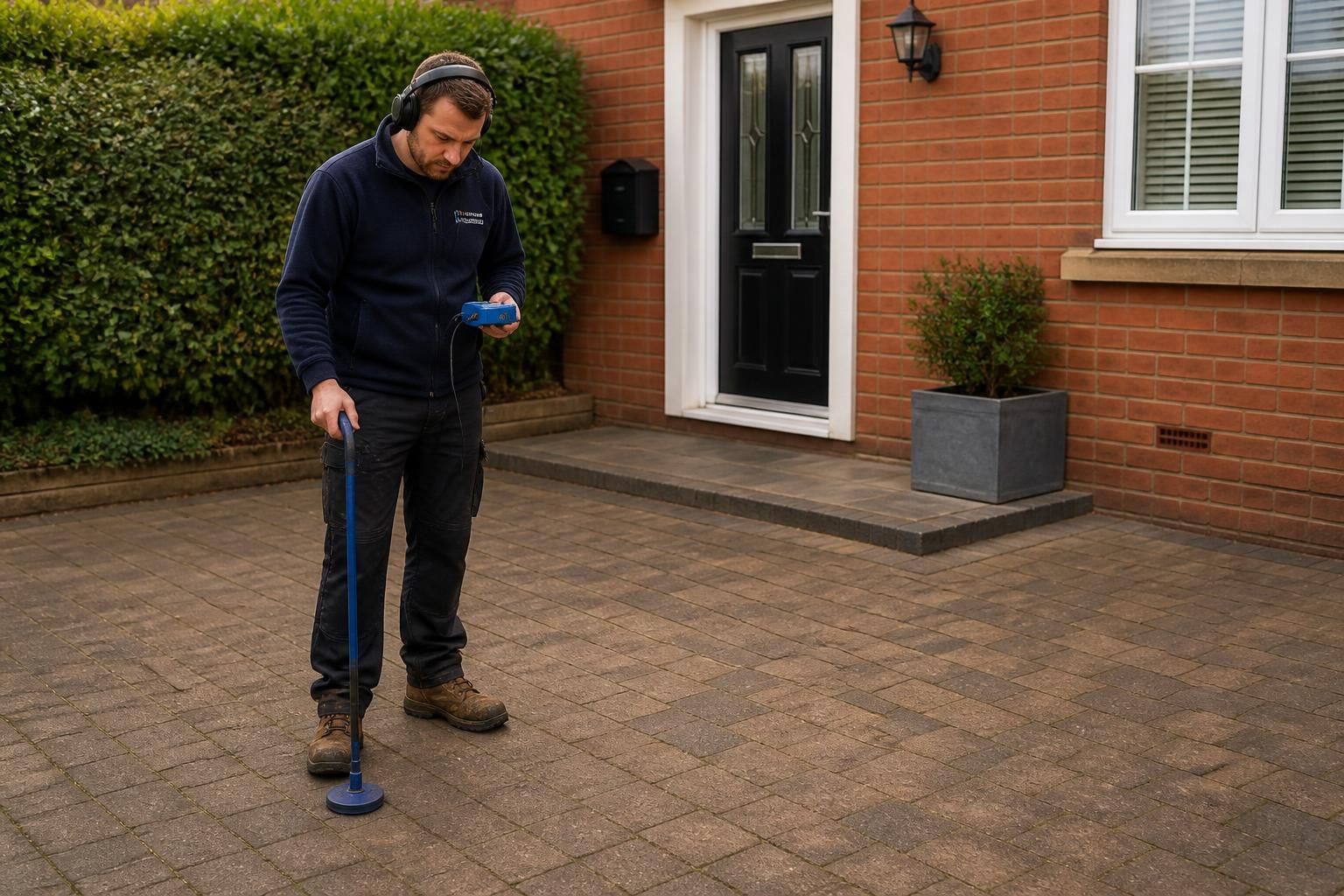
Professional leak detection can identify the likely location of an underground water pipe leak without excavating the entire route. The aim is to narrow the search to a specific section or point, allowing the necessary repair to be planned with less disruption to paving, flooring, gardens or other surfaces.
Underground leaks are often difficult to identify because water can travel through soil, concrete, cavities and service ducts before appearing at the surface. The visible damp patch is therefore not always directly above the damaged pipe. A survey helps distinguish the point where water is escaping from the point where it has emerged.
Signs that an underground pipe may be leaking include:
- A water meter continuing to register usage when all internal taps and appliances are turned off.
- A drop in water pressure that cannot be explained by normal household use.
- Persistently wet or unusually soft ground around a buried service route.
- Puddling, moss growth or an unusually lush strip of grass in one area.
- Dampness appearing beneath paving, concrete, floors or external structures.
- Unexplained staining, mould or moisture inside the property where the buried pipe enters the building.
These signs do not prove that an underground supply pipe is leaking. They can also result from a leaking appliance, an internal plumbing fault, surface water or a drainage problem. Establishing which system is affected is an important part of the investigation.
How the investigation is carried out
A plumber will usually begin by establishing the pipework layout, checking the available isolation points and reviewing when the symptoms occur. The water supply may be separated into sections so that changes in flow or pressure can be compared. This helps determine whether the fault is on the internal plumbing, the external private supply or another part of the system.
Specialist equipment is then used to assess the buried pipe and narrow down the suspected leak area. The results are interpreted alongside the pipe material, depth, ground conditions and the position of nearby services. Where the pipe route is uncertain, additional tracing may be needed before the leak position can be marked out.
Detection is not always a matter of finding a single obvious point. A pipe may have more than one defect, or a small leak may occur intermittently as pressure changes. Water can also move along the outside of a pipe or through surrounding ground. For these reasons, a reliable assessment considers the complete evidence rather than treating the wettest area as the definite source.
Factors that can affect accuracy
- Pipe depth and the type of ground surrounding it.
- Whether the pipe is made from plastic, metal or another material.
- Traffic, machinery, pumps or other background noise near the property.
- Multiple buried services crossing the suspected route.
- Leaks that change according to usage, temperature or pressure.
- Recent rainfall or a high groundwater level that makes surface moisture harder to interpret.
In some cases, the result will be a marked search area rather than an exact excavation point. This is still useful because it reduces unnecessary digging and gives the repairer a clearer basis for deciding where access is required.
What happens after the leak is located?
The next step depends on the condition and position of the pipe. A localised defect may be repaired by exposing and replacing the damaged section. If the pipe is badly deteriorated, difficult to access or affected along a longer run, replacing part of the route may be more suitable. The surface, access requirements and any associated reinstatement should be considered before work begins.
If an underground leak is suspected, avoid digging without first confirming the pipe route. Unplanned excavation can damage other utilities, enlarge the affected area or miss the actual source of the water. A professional water leak detection assessment provides evidence about where to investigate and helps separate a buried pipe fault from other possible causes of damp or water loss.