A bathroom fitting leak can usually be traced by observing when the moisture appears, where it first becomes visible and which part of the fitting is operating at the time. The source may be a pressurised supply connection, a waste pipe, a worn seal, a failed overflow or a concealed joint behind the fitting. Water can travel along tiles, flooring or pipework, so the wettest visible point is not always the point of failure.
Look for patterns rather than isolated drops. A leak from the water supply side often produces moisture even when the tap, shower or toilet is not being used. A waste-side leak generally appears when water is discharged. A seal or joint may only leak when the fitting moves, fills, empties or reaches a particular water level. Recording these patterns helps separate a bathroom fitting fault from a leak within the wall or floor.
- Basin and bath taps: Water around the base of a tap can indicate a failed mounting seal or water tracking beneath the fitting. Moisture on the flexible hoses, isolation valves or compression joints points towards a supply connection. If water appears underneath the basin or bath after draining, inspect the waste connection, trap and overflow route.
- Shower fittings: Drips from the showerhead may be caused by a valve that is not closing correctly, but water behind the trim plate or around the valve body can indicate a failed seal or concealed connection. Water escaping from a shower screen, tray edge or damaged sealant may be a containment problem rather than a pipe leak.
- Toilets: A damp floor around the base may result from the inlet connection, cistern, flush pipe, pan connector or a failed pan seal. Water that appears only after flushing is particularly relevant when distinguishing a waste or pan connection from a mains-fed supply leak. A cistern that continues to refill can also cause water to pass through the overflow or escape from an internal component.
- Baths and basins: Movement in a bath or basin can strain waste joints and sealant. A leak may therefore occur when the fitting is occupied or when its weight changes, even though the pipework looks dry at other times.
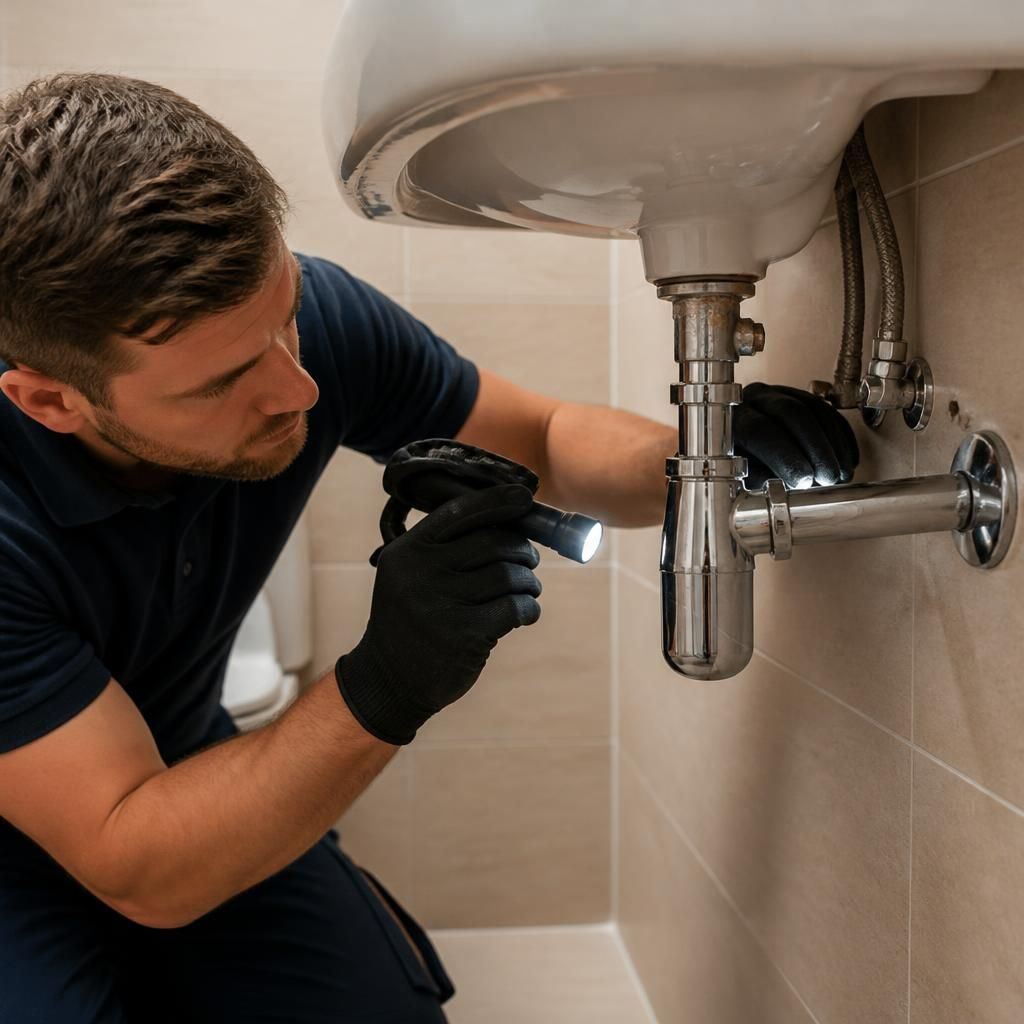
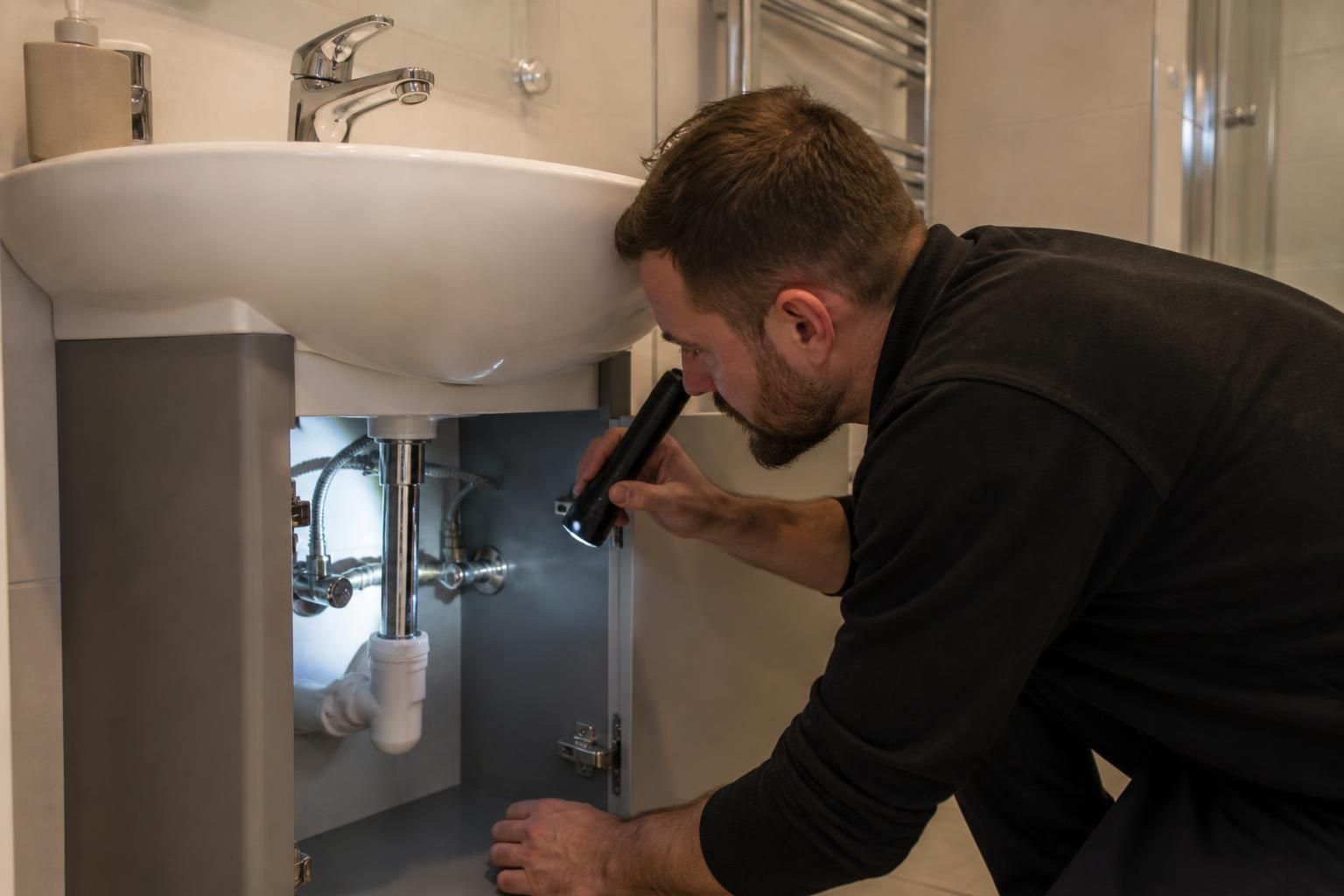
Use a controlled inspection. Remove stored items and access panels where this can be done safely, then examine the underside of connections with a torch. Look for limescale, green or white deposits, softened sealant, staining, swollen flooring, peeling finishes or corrosion. These marks show that moisture has been present repeatedly, although they do not by themselves confirm the exact source.
For a supply-side investigation, check the visible joints without dismantling them. A small piece of dry tissue placed beneath a connection can reveal a fresh seep that is difficult to see, provided it is kept clear of electrical equipment and moving parts. Do not overtighten compression fittings or force plastic nuts; this can damage the seal and turn a minor seep into a larger failure.
For a waste-side investigation, add water to the basin or bath and release it while watching the trap, waste flange and accessible pipe joints. A shower tray should be checked around the waste and edges while water is directed towards different areas, but flooding the tray or surrounding floor should be avoided. If the leak occurs inside a wall, beneath a floor or below a fixed bath, further testing may be needed instead of removing tiles or flooring unnecessarily.
Check for causes that can be mistaken for a fitting leak. Condensation on cold pipes, splashing from an open shower enclosure, water running along grout lines and an overflowing cistern can all create damp areas without a failed pipe joint. A leak from an adjoining room, roof space or heating pipe may also appear in the bathroom. Persistent staining, a musty smell, lifting flooring or dampness that continues when the bathroom is unused suggests that the fitting may not be the only possible source.
Where the source cannot be confirmed visually, a qualified plumber can use a structured process: isolate suitable supplies, test the fitting under controlled conditions, inspect accessible pipework, and use non-invasive leak detection methods where the leak is concealed. This can help identify whether the fault is associated with the fitting itself, its connections or pipework behind the finished surface.
Arrange professional assistance if water is reaching electrical accessories, the ceiling below is staining, the floor is becoming soft, a concealed connection is suspected, or closing the relevant isolation valve does not stop the problem. Keep the affected fitting out of use and, where safe, isolate its water supply until the cause has been established. Ideal Plumbing Services provides leak detection and bathroom plumbing repairs for homeowners, landlords and tenants in Birmingham and the wider West Midlands.