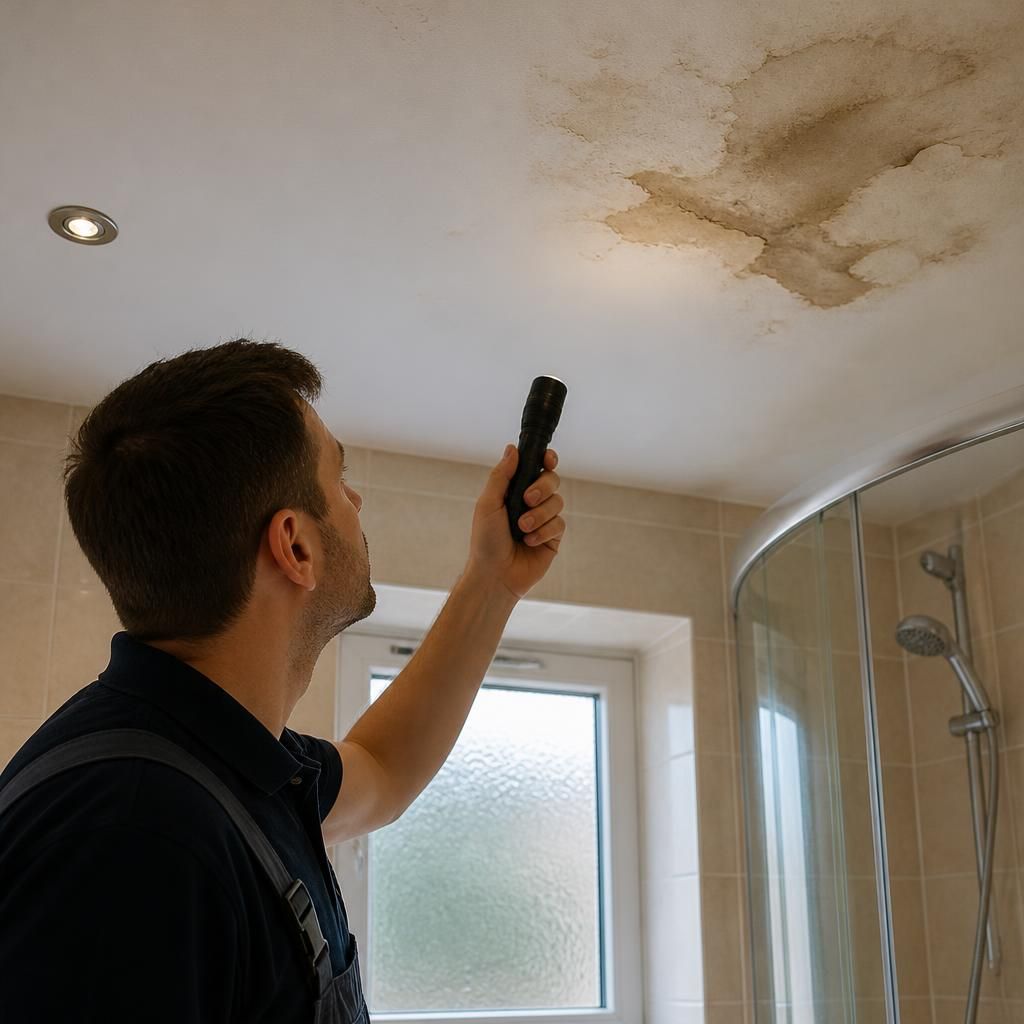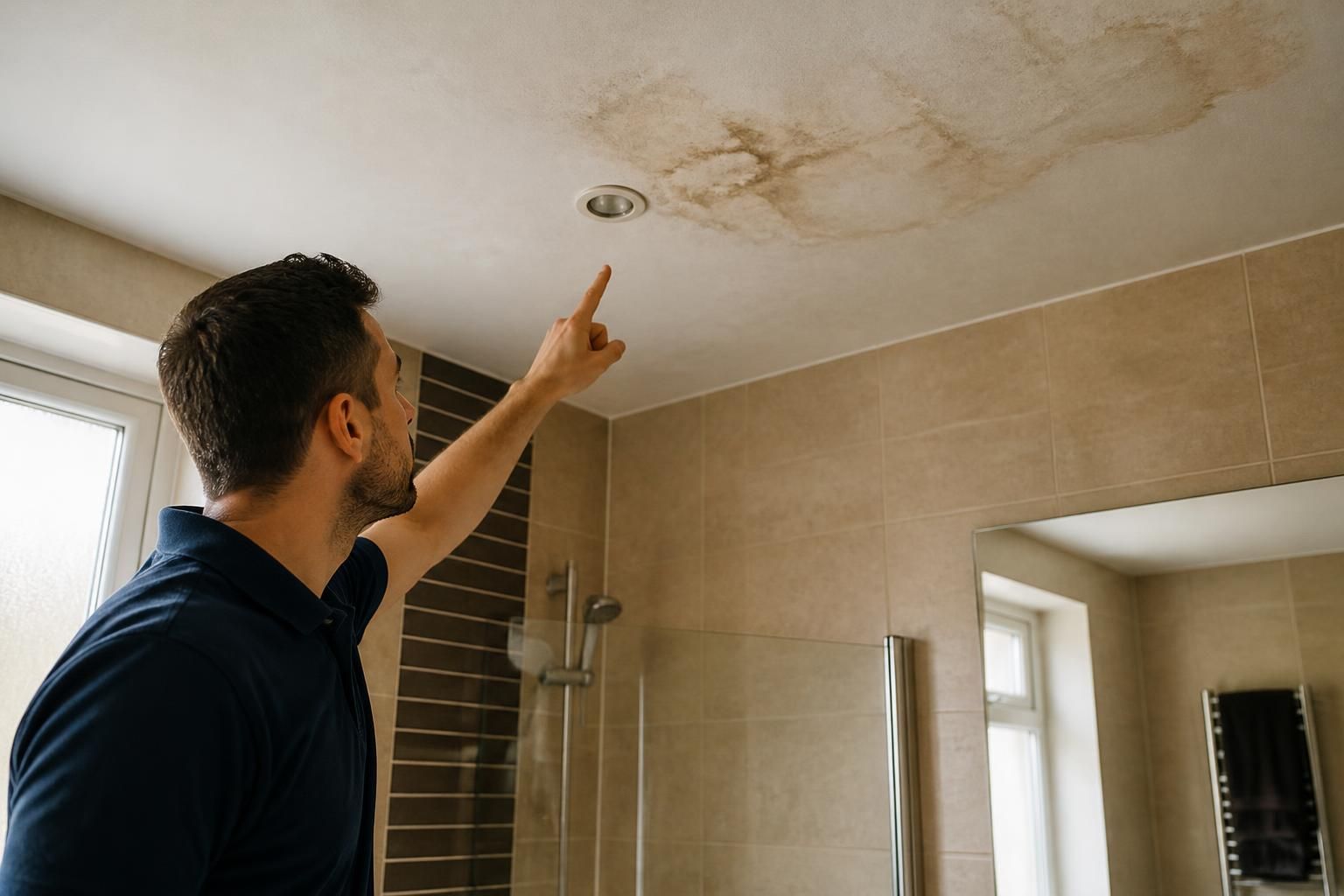
Bathroom ceiling leak detection in a rented property is a practical way to identify whether water is coming from the bathroom above, a neighbouring room, pipework, sanitaryware or another part of the building. The investigation can usually be arranged with the tenant, landlord or managing agent, depending on who is responsible for granting access and authorising work.
Responsibility for reporting the problem normally begins with the tenant. Signs such as brown staining, bubbling paint, damp patches, mould, dripping water or a musty smell should be reported to the landlord or agent promptly. Photographs and a brief record of when the signs appeared can help establish whether the problem is worsening and provide useful information before an inspection.
The person arranging the visit should confirm which areas can be accessed. This may include the affected bathroom, the room below the ceiling, an adjoining room, a loft space or a service cupboard. Access to more than one area can help trace the route taken by water rather than relying only on the visible ceiling damage. Tenants should not remove ceiling panels, lift flooring or open boxed-in pipework themselves unless the landlord has authorised it.
An inspection can involve checking visible pipework, joints, traps, seals, the bath or shower area, toilet connections and the condition of the ceiling. Moisture-detection equipment may help identify dampness beyond the obvious mark, while visual tracing can indicate whether water is travelling from a concealed pipe or entering around a bathroom fitting. The visible stain is not necessarily directly below the original leak.
Where the source is not active during the inspection, the findings may be considered alongside the condition of nearby fittings, previous repairs and any pattern in when the staining appears. For example, water that appears after bathing may point towards a seal, shower enclosure or waste connection, whereas persistent dampness may require closer examination of pipework or the surrounding structure.
For a rented property, the outcome should distinguish between:
- the likely source of the water;
- the areas or materials affected;
- whether the leak appears active or historic;
- whether further access or opening-up is needed; and
- which repair should be considered next.
This information helps the landlord or managing agent decide whether to approve a repair, arrange additional investigation or involve another professional. Detection and repair are separate stages: finding the source may show what needs attention, but repairing the fault can require access to a fitting, pipe, ceiling or floor that was not disturbed during the initial inspection.
Tenants should avoid using an affected bathroom fitting if doing so increases the leak, and should keep electrical items away from wet areas. If water is close to a light fitting or other electrical installation, the area should be treated as a safety concern and reported to the landlord or managing agent without attempting to inspect the electrics.
Ideal Plumbing Services can carry out investigations for rented homes with the relevant access arrangements in place, providing practical findings that tenants, landlords and managing agents can use to plan the appropriate plumbing or building repair.