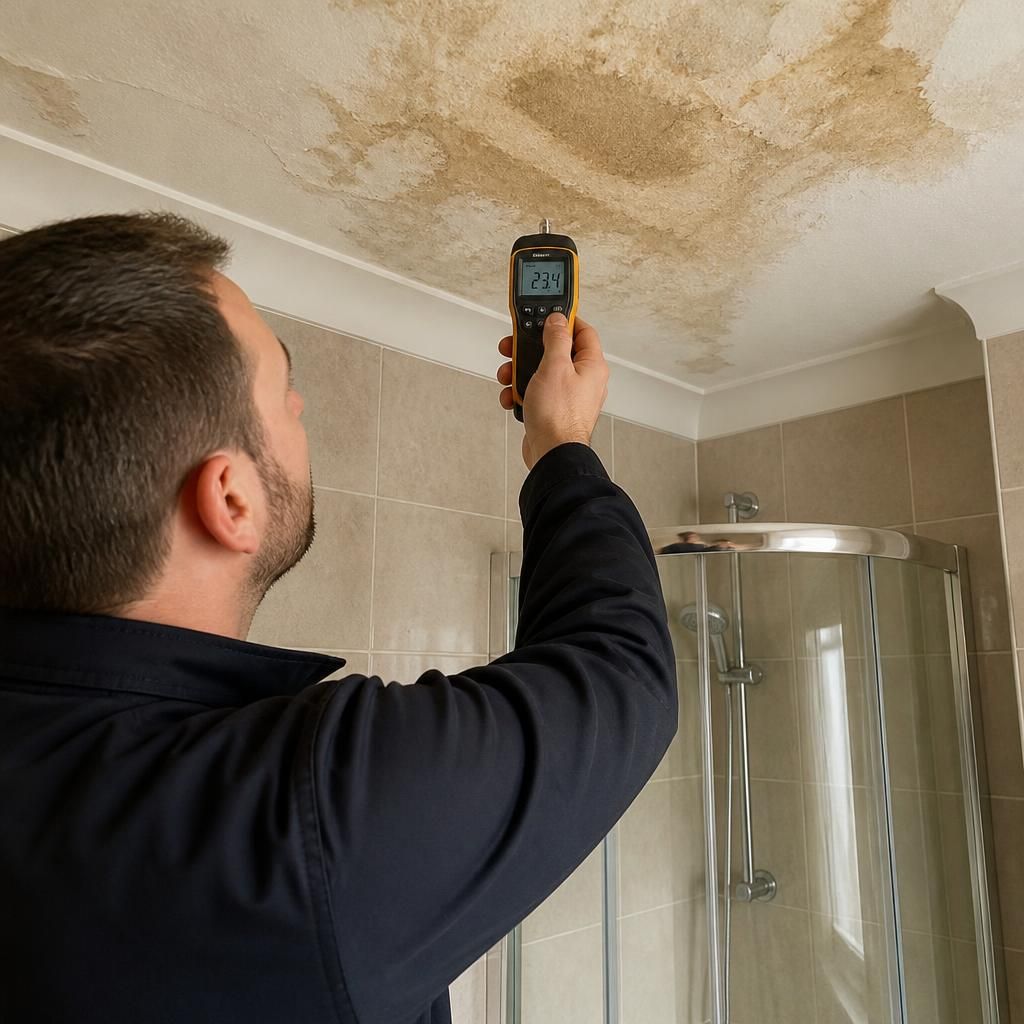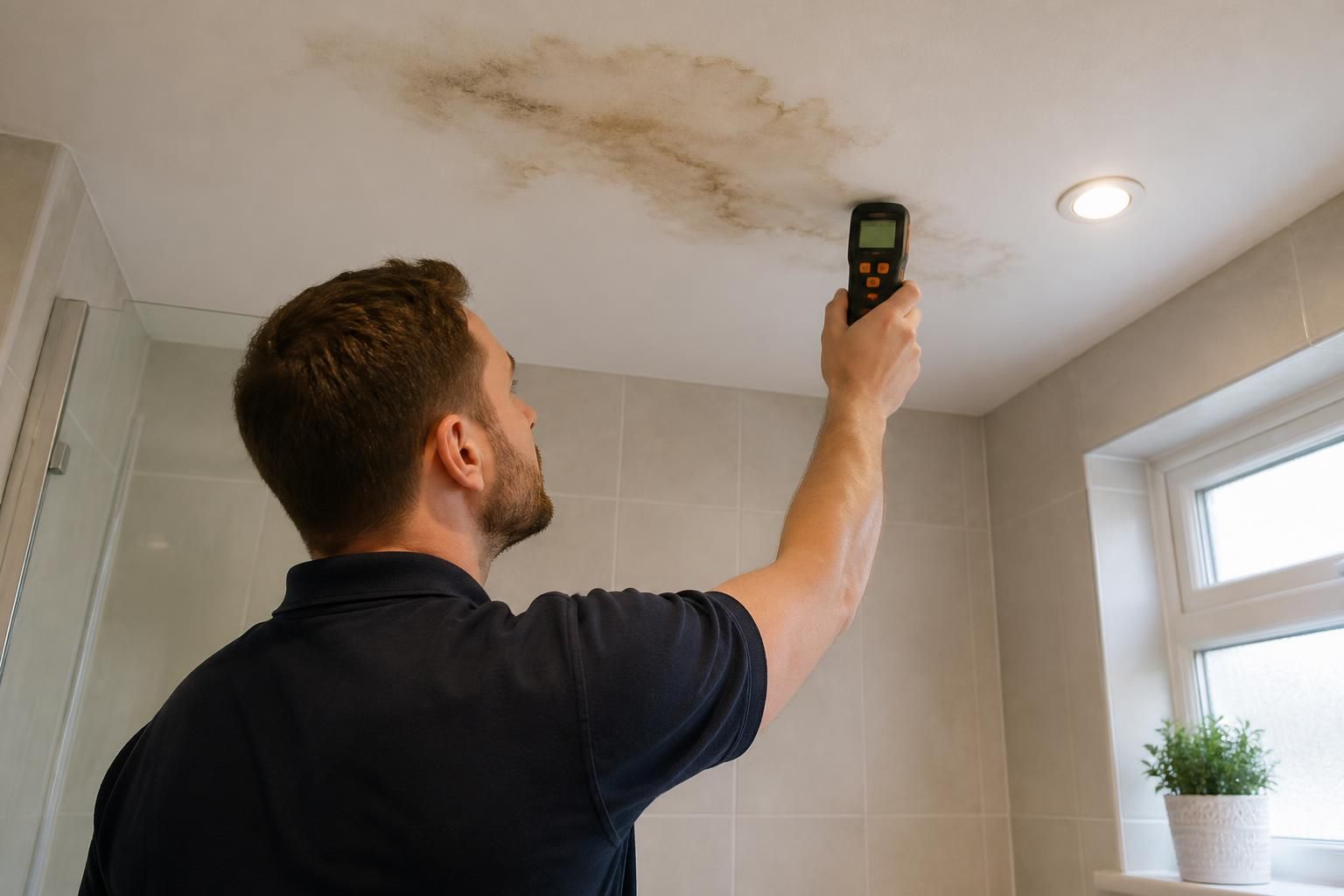
The cost of bathroom ceiling leak detection is normally based on the investigation required to identify the source, rather than the size of the visible stain alone. A straightforward inspection may involve visual checks and moisture readings, while a concealed or intermittent leak can require more detailed testing and additional investigation.
What the detection charge may include
- Inspection of the ceiling, surrounding walls and nearby bathroom fittings.
- Moisture measurements to establish whether the area is actively damp or retaining moisture from an earlier leak.
- Checks to pipework, waste connections, shower areas, baths, toilets and heating-related components where relevant.
- Non-invasive testing equipment used to trace moisture beyond the point where staining is visible.
- An explanation of the likely cause and the recommended next step.
The visible mark is not always directly below the fault. Water can travel along joists, pipework or the back of plasterboard before appearing through the ceiling. This means that investigating only the stained area may not identify the actual source. The time and equipment needed to trace that route can affect the final detection charge.
Why two bathroom ceiling leak investigations may cost different amounts
- Type of suspected leak: A failed seal around a bath or shower may require a different investigation from a pressurised supply pipe or a waste connection.
- Whether the leak is active: A persistent flow can be easier to trace than a leak that occurs only when a fitting is used or when a heating system operates.
- Extent of the affected area: Widespread staining, soft plasterboard or dampness in adjoining areas may require a broader inspection.
- Need for specialist equipment: Moisture meters, acoustic equipment or other tracing methods may be appropriate when the source cannot be confirmed visually.
- Documentation required: Landlords, insurers or property managers may need written findings, photographs or a record of recommended repairs.
Detection and repair should be treated as separate parts of the work. The investigation establishes what is likely to be wrong; repair pricing depends on the defective component, the condition of surrounding materials and the work needed to reach and replace it. Reinstating damaged plaster, decoration or other finishes may also fall outside the plumbing investigation and should be clarified before work begins.
Before agreeing to an investigation, ask whether the quoted amount covers the inspection only, whether equipment or reporting carries an additional charge, and how any further repair work will be priced. It is also sensible to ask whether opening the ceiling or removing a fitting is included, since intrusive work should not be assumed to form part of a standard inspection.
Do not delay an assessment because a stain appears small. Ongoing moisture can damage ceiling materials, encourage mould growth and affect electrical fittings or the room below. If the ceiling is sagging, visibly wet, discoloured rapidly or close to electrical equipment, avoid using the affected fitting where possible and seek appropriate plumbing assistance.
Ideal Plumbing Services investigates bathroom ceiling leaks for homeowners, landlords and tenants in Birmingham and the West Midlands. A clear assessment can help separate the cost of finding the source from the cost of putting the underlying fault right, giving you a more useful basis for deciding on the next step.