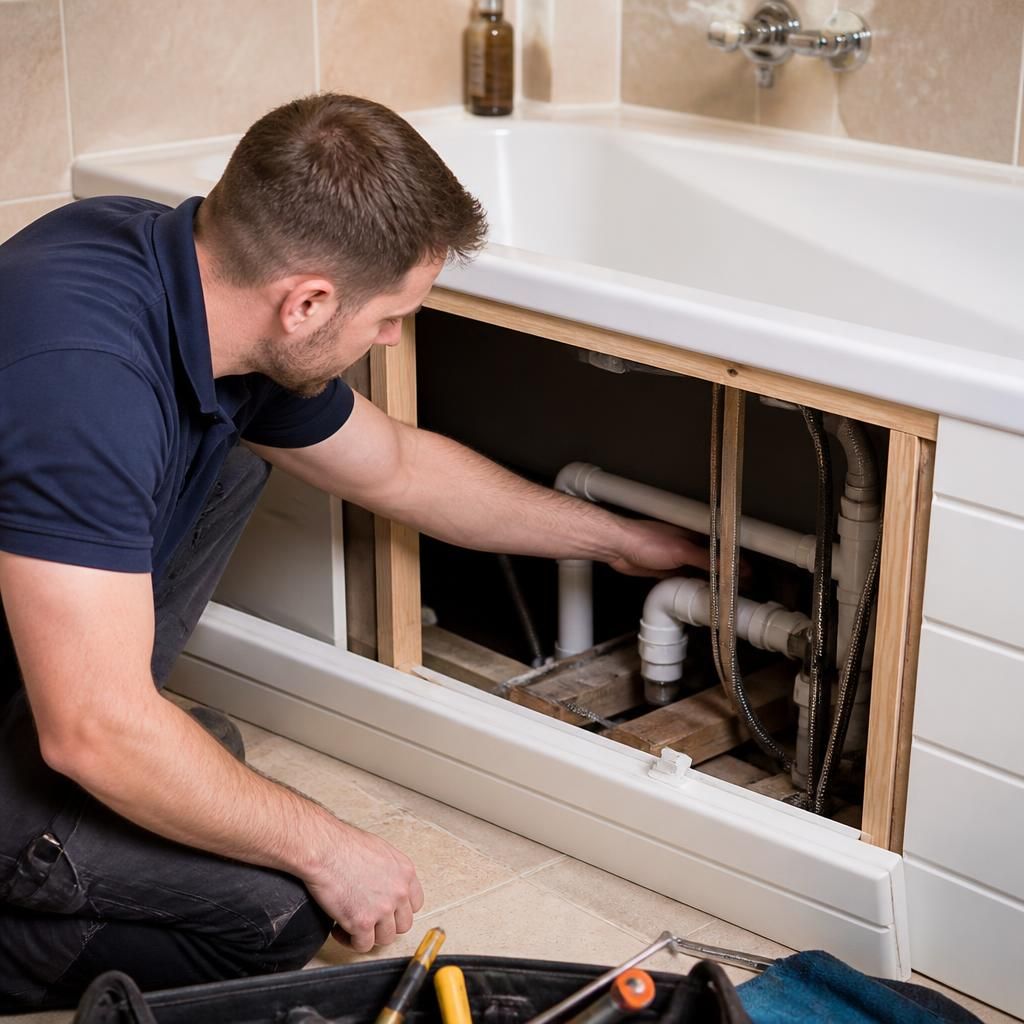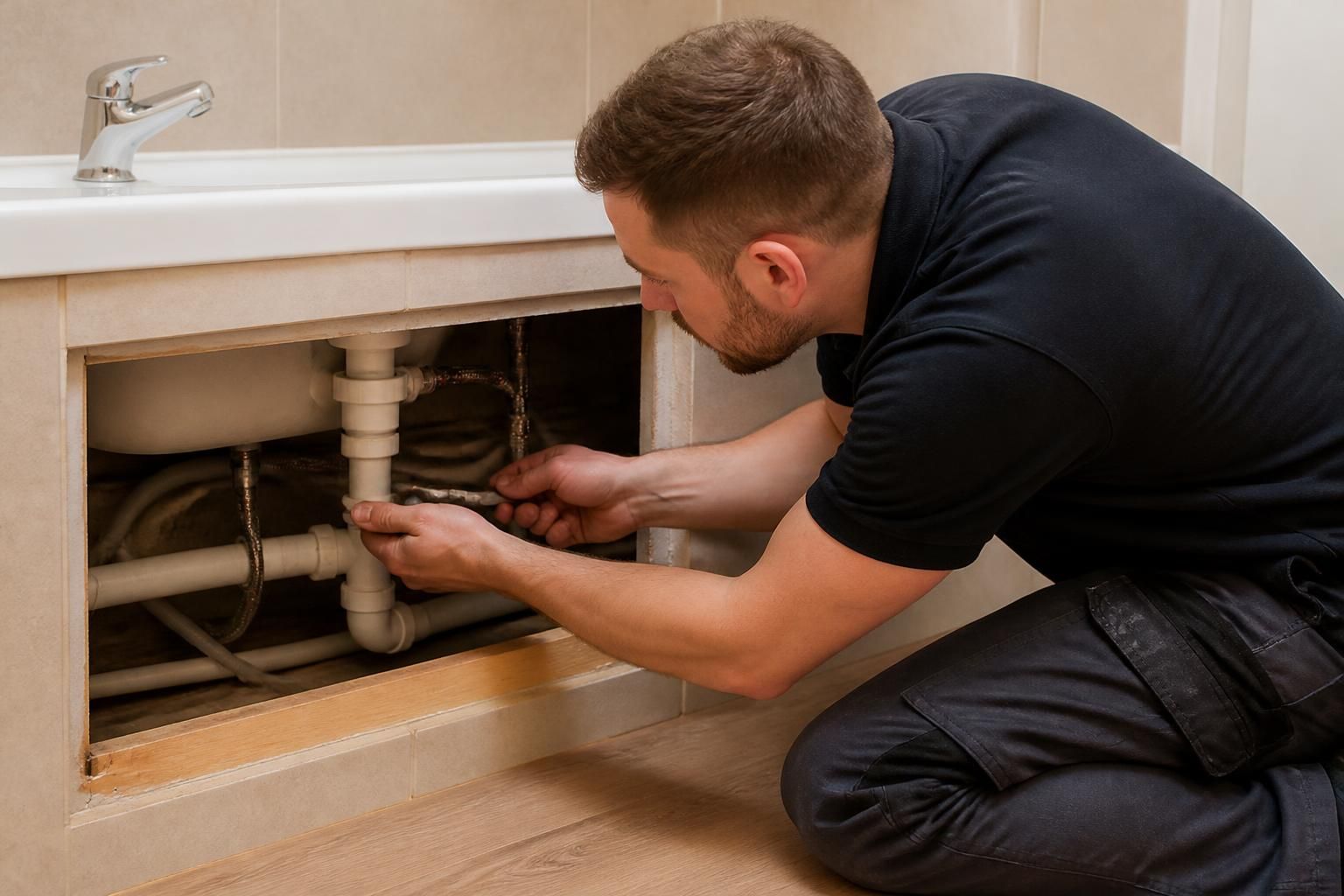
Yes, a concealed leak beneath a bathtub can usually be investigated from the bathroom ceiling below, the bath side panel or nearby access points. The aim is not simply to find damp plasterboard, but to establish whether the water is coming from the bath’s supply pipes, taps, overflow, waste fittings, trap, seals or the surrounding waterproof junctions.
A leak beneath a bath may not appear directly below its source. Water can travel along joists, pipework or the underside of the floor before reaching the ceiling, so the position of a stain is useful evidence rather than definitive proof. A spreading brown mark, bubbling paint, soft plasterboard, peeling coating or a damp smell in the room below can indicate ongoing moisture. A stain that becomes worse after the bath is filled, emptied or used as a shower provides an additional clue about when the leak occurs.
The investigation normally begins with a visual assessment of both rooms. The bath, taps, visible pipe connections, overflow and waste outlet are checked for movement, corrosion, failed seals or signs of previous repair. In the room below, the ceiling surface and the surrounding area are assessed for moisture patterns. Moisture-measuring equipment can help distinguish an active damp area from an old, dried stain and can show whether moisture extends beyond the most obvious mark.
Controlled testing is important because different faults appear under different conditions. A supply pipe may leak while the taps are running, whereas a waste connection may only release water as the bath empties. A defective overflow may only become apparent when the water level rises, and a damaged bath seal or surrounding joint may allow water through during bathing or showering. Testing these situations separately helps narrow down the source without immediately removing the bath.
Where appropriate, a plumber may use acoustic listening equipment, moisture readings, visual inspection through an existing opening or other non-destructive techniques. These methods can indicate the likely route of the water and help determine whether the fault is beneath the bath or elsewhere in the bathroom. If the evidence points to a concealed fitting that cannot be confirmed from an existing access point, a small, targeted opening or removal of the bath panel may be necessary. The extent of access depends on the bath design, flooring, ceiling construction and the position of the pipework.
Several faults can produce similar symptoms:
- A loose or damaged waste connection may leak mainly while the bath is draining.
- A failed trap or pipe joint can release water inside the void beneath the bath.
- A worn tap connector or supply pipe may leak continuously or whenever the tap is operated.
- An ineffective overflow seal may allow water into the floor structure when the bath is filled too high.
- Water passing around the bath edge or shower area may be mistaken for a leak from a pipe.
Identifying the source matters because drying or repairing the ceiling alone will not resolve the problem. The underlying fault needs to be corrected, and the affected area should then be allowed to dry before damaged plasterboard, decoration or insulation is assessed. Covering a stain while moisture remains can conceal continuing deterioration and make later diagnosis more difficult.
If the ceiling below is visibly sagging, the damp area is expanding, or water is close to a light fitting or other electrical installation, avoid using the bath and seek qualified assistance. Do not cut into the ceiling without first considering concealed pipes, cables and the possibility of weakened materials. For homeowners, landlords and tenants in Birmingham and across the West Midlands, Ideal Plumbing Services can investigate suspected leaks beneath baths and explain whether the evidence indicates a plumbing fault, a failed seal or water entering from another part of the bathroom.