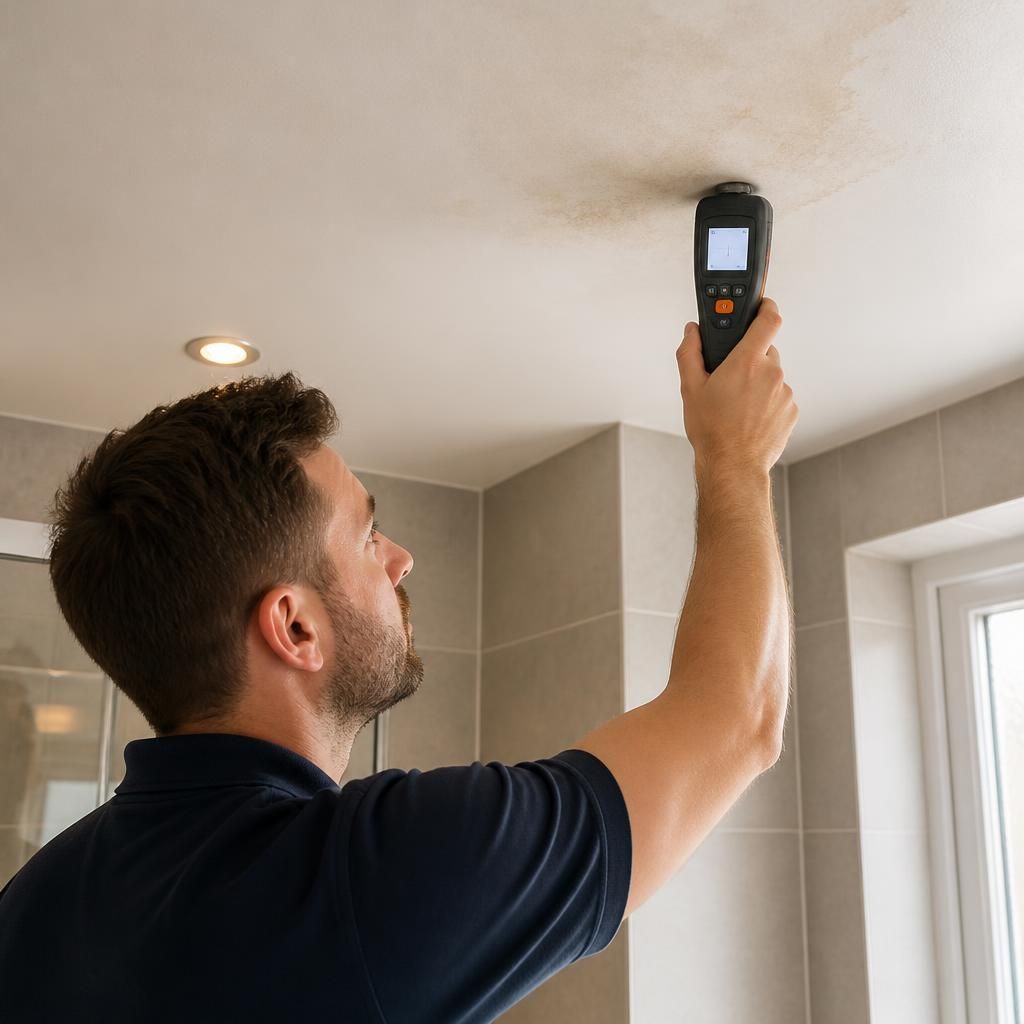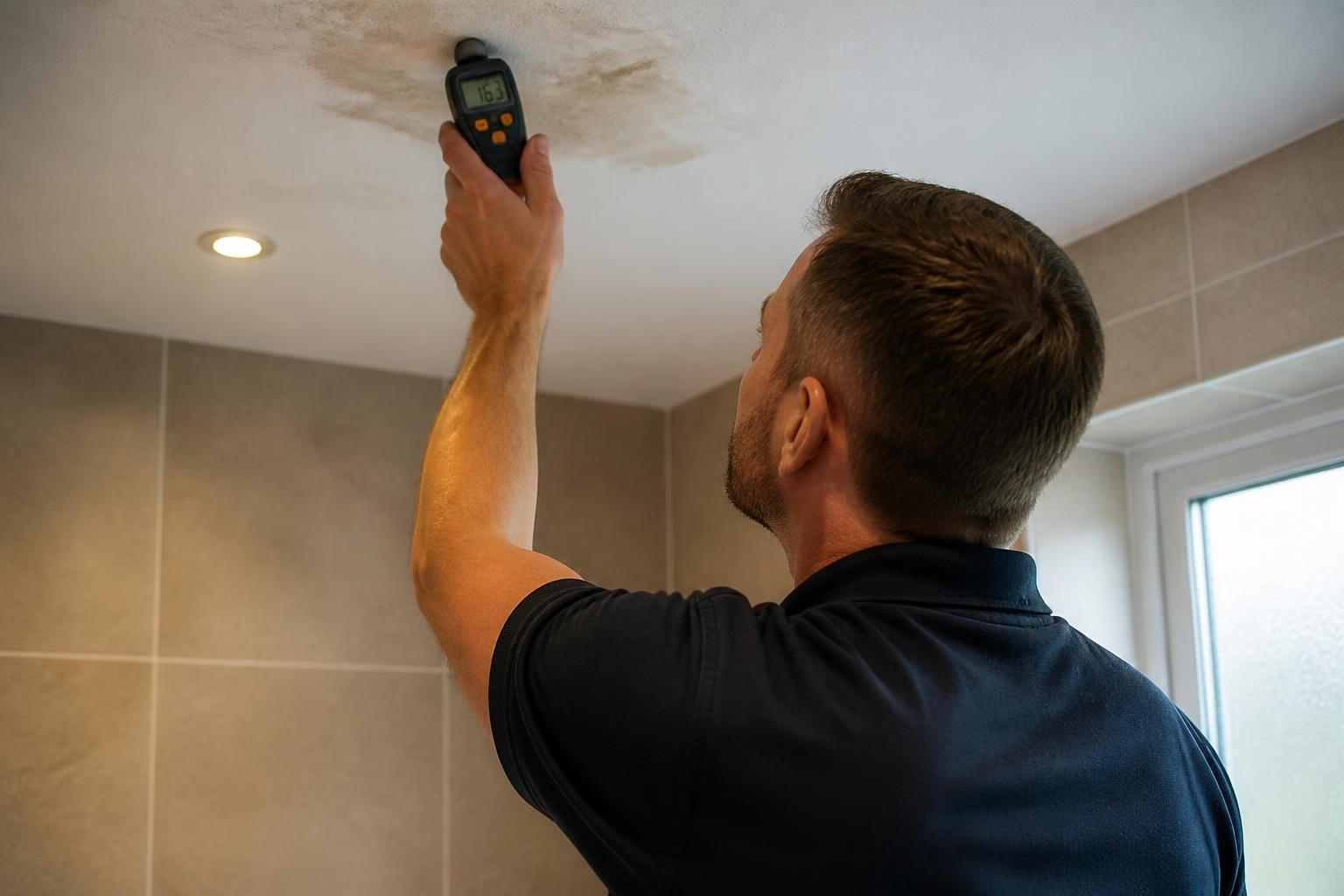
Properly conducted bathroom ceiling leak detection should not damage the ceiling beyond any existing effects of the leak. The investigation is normally planned to preserve the surface, identify the source and avoid unnecessary removal of plasterboard, plaster or decorative finishes.
How the inspection is carried out
- The plumber first assesses visible signs such as staining, bubbling paint, softened plaster, mould growth and the position of the damp area.
- Moisture levels may be compared across several points to establish whether water is spreading from above or entering from another part of the bathroom.
- Where appropriate, pipework, bath and shower connections, sanitary fittings and the floor above are checked as potential sources.
- Non-destructive detection equipment can help narrow down the affected area before any physical access is considered.
These steps matter because the wet mark on a ceiling is not always directly below the fault. Water can travel along joists, pipework or the back of a ceiling before becoming visible. Opening the ceiling at the stain without tracing the route first could therefore create unnecessary damage without exposing the actual leak.
When could some damage be necessary?
If the source cannot be confirmed through accessible areas, a carefully positioned access point may be needed. This is more likely where pipework is enclosed, moisture readings are inconclusive, or the ceiling has already deteriorated. A professional should select the smallest practical access point and avoid cutting through electrical cables, structural components and concealed services.
An inspection opening is different from uncontrolled damage. It should be discussed before work begins, including its proposed location, purpose and the likely making-good requirements. In some cases, access may be possible through a removable light fitting, loft space, airing cupboard or an adjoining section rather than through the main visible part of the ceiling.
What can increase the risk of damage?
- Probing a surface that has become soft or unstable through prolonged water exposure.
- Cutting before the suspected route of the leak has been narrowed down.
- Disturbing swollen plasterboard, loose plaster or flaking paint that is no longer securely attached.
- Working around concealed wiring, pipework or insulation without first identifying their position.
- Applying pressure to a ceiling that is already sagging or showing signs of structural weakness.
If the ceiling is bowed, saturated or partly detached, the priority is to make the area safe and prevent further water entry. Detection may need to be combined with removal of unsound material, but this is a consequence of the leak's condition rather than an unavoidable part of every investigation.
What happens after detection?
Finding and stopping the source does not immediately restore the ceiling. The affected materials need time to dry, and concealed moisture may remain above the surface. Painting over a damp patch too soon can trap moisture and lead to recurring staining, mould or peeling finishes. Once the area is suitably dry and stable, repairs may include replacing damaged plasterboard, treating staining, plastering, sanding and redecorating.
It is also important to distinguish between damage caused during investigation and damage that was already present. Photographs and a clear explanation of the proposed work can help record the ceiling's condition before access is made. For rented properties, the tenant should normally report the issue to the landlord or managing agent and obtain permission for invasive work where required.
A competent leak detection inspection aims to limit disruption while obtaining enough evidence to locate the fault accurately. If an access opening is proposed, ask what alternatives have been considered, why that position is appropriate and whether making good is included or must be arranged separately.