The absence of a stain, drip or damp patch does not rule out a plumbing leak. A concealed leak may first show itself through changes in moisture levels, odour, temperature or the performance of a plumbing system, rather than through visible water on the finished surface.
Why a leak may not become visible
Leaks do not all release the same amount of water or occur continuously. A small seep from a joint may only happen when a tap, toilet, shower, washing machine or heating system is being used. If the affected area dries between incidents, there may be no obvious mark even though the underlying fault remains.
Some leaks are also isolated behind waterproof finishes, insulation, flooring or fitted units. Paint, tiles and other surface materials can conceal early moisture changes. In a ceiling, the water may remain above the visible finish until enough moisture accumulates to affect the plasterboard or decoration.
Signs that may indicate a hidden leak
- A musty, damp or earthy smell in a room without an obvious source.
- Paint that blisters, flakes, bubbles or changes colour.
- Wallpaper lifting at the edges or becoming loose.
- Plaster that feels soft, crumbly, swollen or cooler than the surrounding area.
- A ceiling or wall that develops a faint yellow, brown or grey mark which comes and goes.
- Tiles, grout or sealant that darken repeatedly after the area should have dried.
- Skirting boards, flooring or joinery that swell, warp or separate from adjacent surfaces.
- A drop in water pressure, a boiler pressure change or a heating system that needs repeated topping up.
- A water meter that continues to register use when all taps and water-using appliances are off.
- The sound of running, hissing or dripping water when the property is quiet.
These signs are not proof of a leak on their own. Condensation, inadequate ventilation, failed sealant, penetrating rainwater and defects in the building fabric can produce similar symptoms. The location of a mark is not always the location of the fault, so removing a section of plaster or opening a ceiling based only on appearance can lead to unnecessary damage.
How the source can be investigated
A proper assessment begins with the history of the problem. The pattern of the symptoms can help distinguish between a pressurised supply leak, a waste-pipe issue, a heating fault, a shower or bath seal problem and moisture entering from outside. It is useful to note whether the sign appears after bathing, flushing a toilet, running an appliance, using central heating or during wet weather.
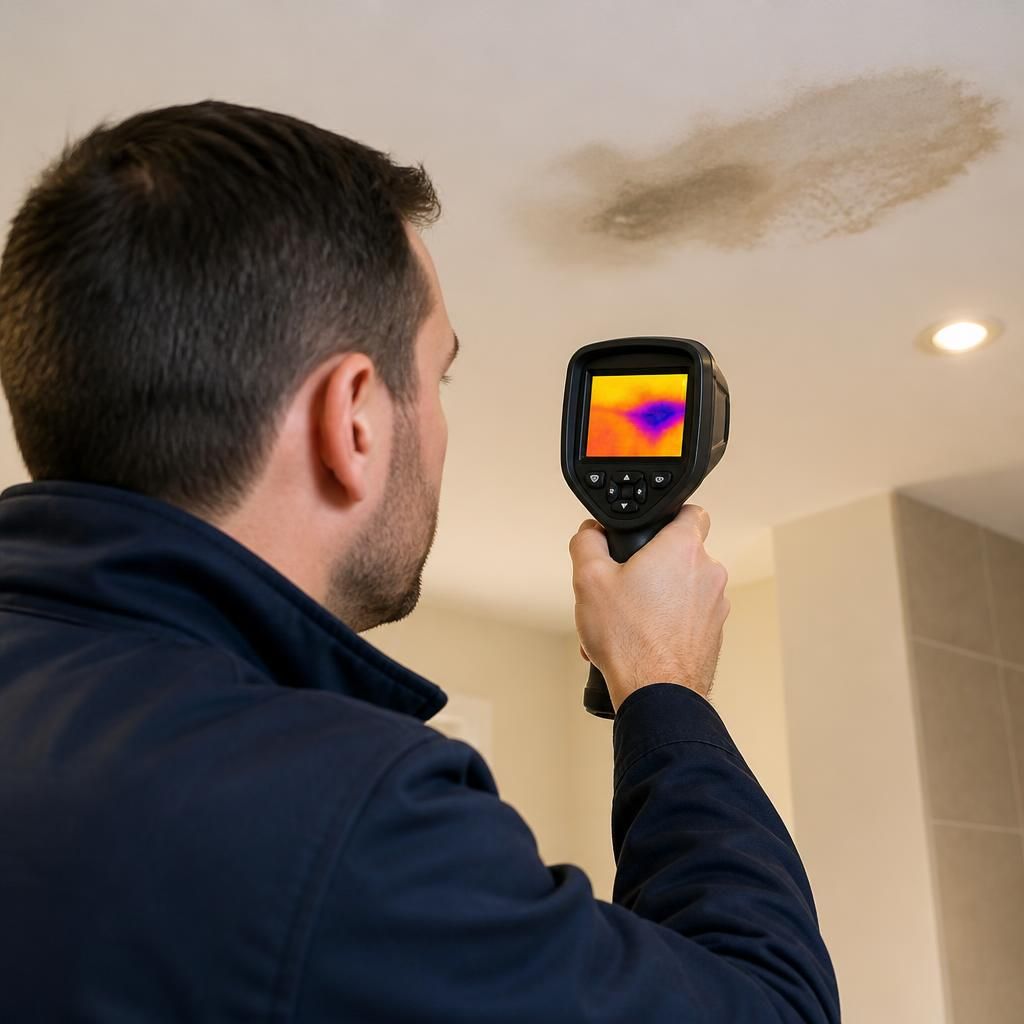
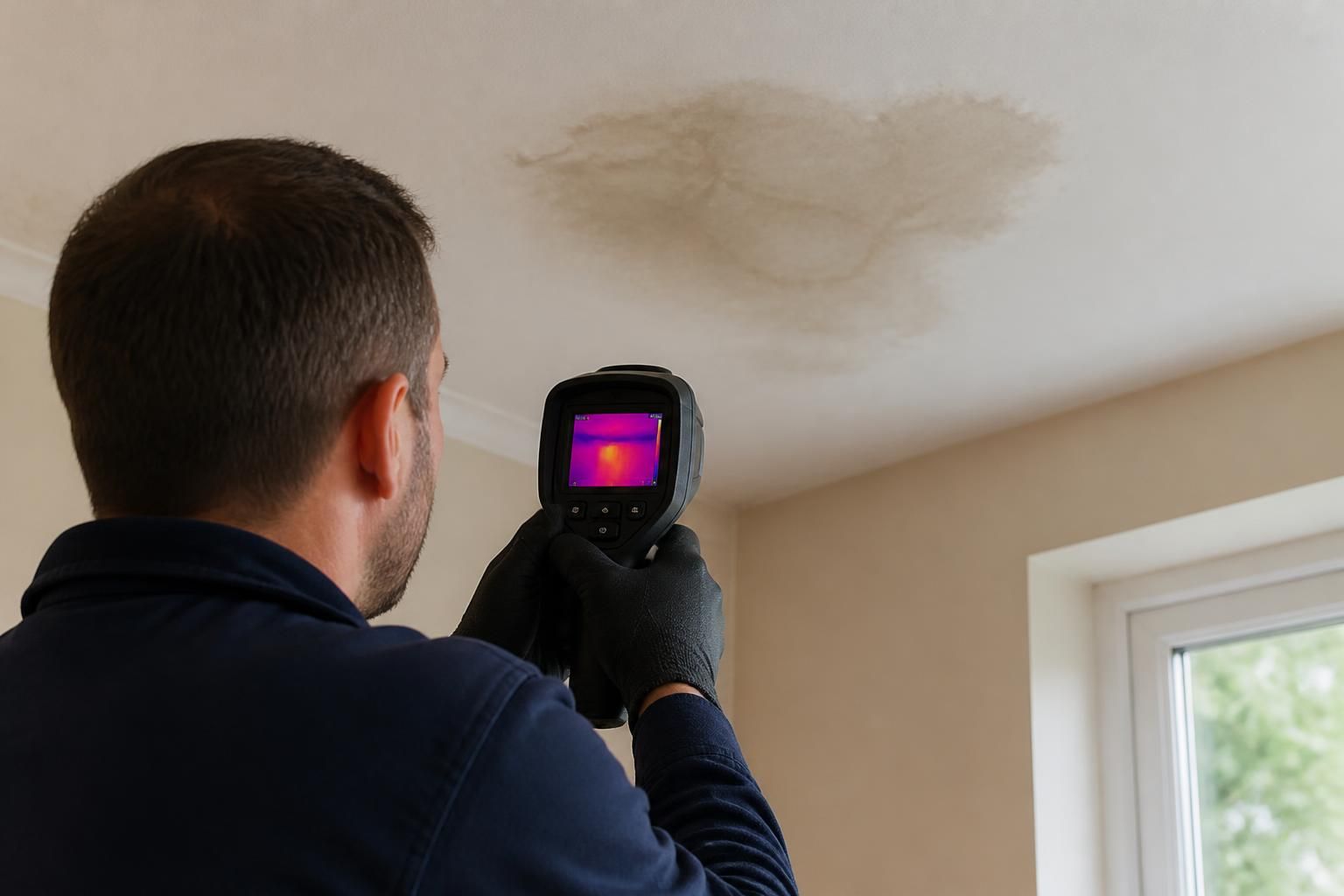
Depending on the circumstances, an engineer may compare moisture readings across nearby surfaces, inspect accessible pipework and fittings, check the water meter, assess system pressure or carry out a controlled test. Non-invasive methods such as acoustic equipment, thermal imaging and moisture measurement can help narrow down the affected area before any opening-up work is considered. Tracer dye may also be suitable for some waste or sanitary fittings, provided it is used safely and appropriately.
No single test identifies every concealed leak. Thermal imaging, for example, detects temperature differences rather than water itself, while a moisture meter can show elevated moisture without identifying its source. Results need to be interpreted alongside the building layout, pipe routes, plumbing use and other possible causes of damp.
When to arrange an inspection
Arrange professional leak detection if a sign keeps returning, if there is unexplained water use, if a heating system repeatedly loses pressure, or if a damp smell persists despite cleaning and ventilation. An inspection is also sensible where a ceiling or wall is beginning to deteriorate, even if there is no active drip. Early investigation can help establish whether the problem is plumbing-related before finishes and structural materials sustain more damage.
Until the cause is known, avoid painting over a mark or sealing the surface with waterproof coatings. If it is safe to do so, record when the symptom appears, check accessible isolation valves and stop using the suspected fixture. Do not interfere with electrical fittings near a damp area. If water is close to electrics, isolate the electricity only if this can be done safely and seek qualified assistance.
Ideal Plumbing Services provides specialist leak detection and plumbing repairs for homeowners, landlords and tenants in Birmingham and the West Midlands. Investigating the source rather than relying solely on the visible symptom helps determine whether the issue is an active plumbing leak, a previous incident or a different moisture problem altogether.