Ceiling leak repair cost is usually made up of three elements: identifying the source, stopping or repairing the leak, and restoring any ceiling materials damaged by the water. A straightforward repair may involve only a pipe or fitting, while a more involved job can include leak detection, access through plasterboard, drying, plaster repairs and redecoration.
The main factors affecting the price include:
- Location of the leak: A visible pipe, radiator connection or bathroom fitting is generally easier to investigate than a concealed pipe within a ceiling, floor or wall.
- Access: If the affected pipe cannot be reached through an existing hatch or removable panel, limited access may need to be created. The cost can therefore include careful removal and replacement of plasterboard or other finishes.
- Type of repair: Replacing a washer, valve or small section of pipe is different from repairing a damaged joint, waste pipe or central-heating pipework.
- Extent of water damage: Staining may need cleaning and sealing, whereas soft plasterboard, damaged insulation, timber or electrical fittings may require further attention.
- Reinstatement: Plumbing repairs and ceiling restoration are separate parts of the work. Plastering, painting and matching an existing finish can increase the overall cost.
A proper assessment is important because the visible stain is not always directly below the source. Water can travel along joists, pipework or the back of a ceiling before appearing in another location. Repairing the marked area without locating the cause can leave the leak active and lead to further damage.
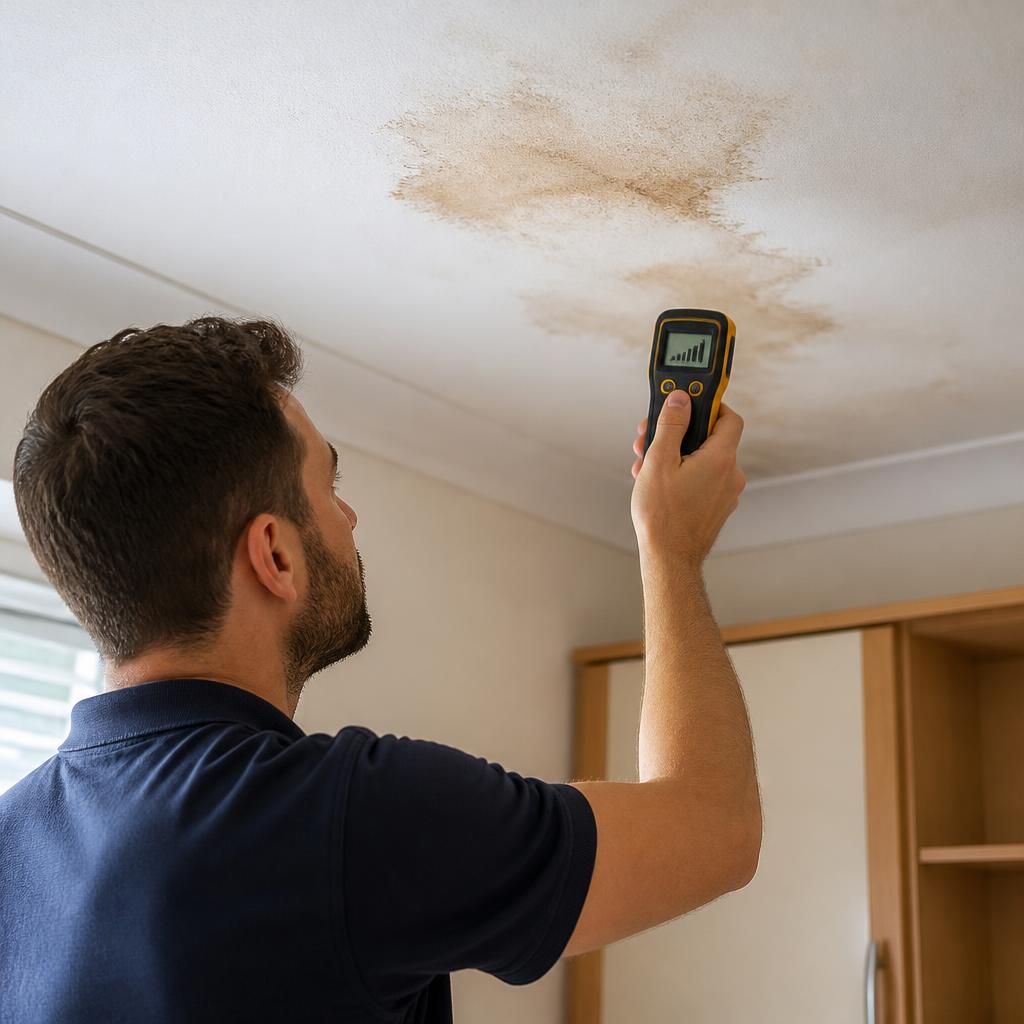
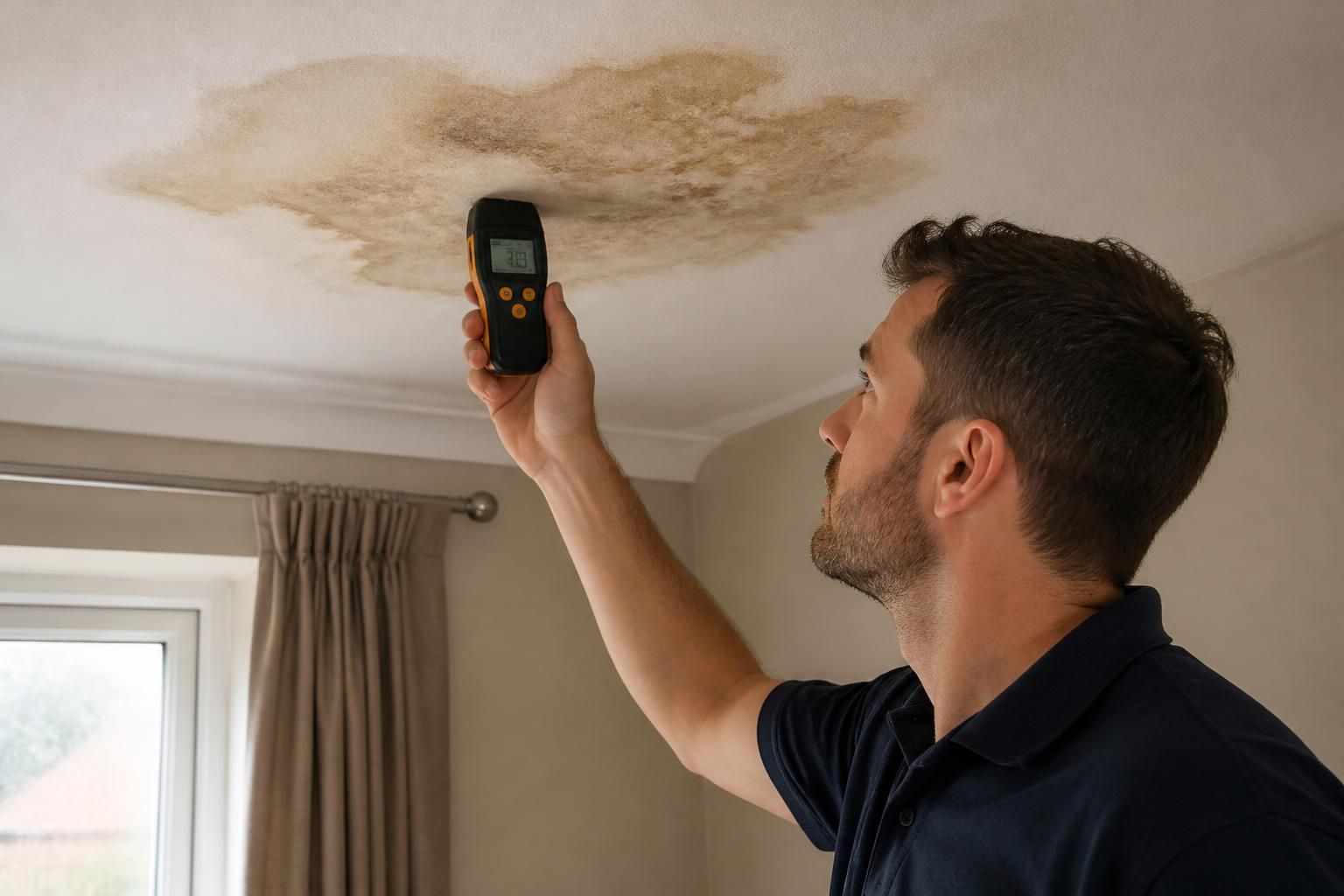
Where the source is concealed, a plumber may use non-destructive or minimally invasive detection methods before opening the ceiling. The most suitable approach depends on the construction, the suspected pipework and the amount of moisture present. Finding the source first can help limit unnecessary removal of plaster and reduce the risk of carrying out the wrong repair.
Ceiling leak repair may involve the following stages:
- Inspecting the ceiling, nearby rooms and accessible pipework for signs of moisture.
- Tracing the leak to its source rather than relying only on the position of the stain.
- Isolating the relevant water supply or heating circuit where appropriate.
- Repairing or replacing the failed component.
- Checking that the repair has stopped the escape of water.
- Advising whether damaged plaster, insulation or decorative finishes need separate restoration.
Do not assume that a dry ceiling is safe to ignore. A stain, bubbling paint, cracking plaster, sagging surface or musty smell can indicate that moisture remains present. A bulging ceiling should be treated particularly carefully because trapped water and weakened materials can create a risk of collapse. Keep people away from the affected area, place a container under active dripping if it is safe to do so, and avoid touching electrical fittings or switches that may have become wet.
When comparing repair prices, check whether the estimate covers investigation, labour, parts, access, making good and any follow-up testing. Ask which items are included and which may be charged separately, particularly plastering, painting and work required if concealed damage is discovered. Ideal Plumbing Services assesses the cause and required repair before providing a clear price, with no hidden charges.
For homeowners, landlords and tenants, keeping photographs of the damage and recording when it appeared can help with communication and any relevant insurance enquiry. The important point is to deal with the source before arranging cosmetic ceiling repairs; otherwise, fresh staining or further deterioration may occur after the ceiling has been redecorated.