Locating a ceiling or wall leak identifies the point of entry, but it does not necessarily show the full extent of the problem. Water can travel along joists, plasterboard, insulation or pipework before becoming visible, so the next stage is to establish whether moisture has spread beyond the original mark and whether surrounding materials remain sound.
The area is normally examined for secondary damage, including softened plaster, staining, mould growth, deteriorated sealant, swollen timber and damaged insulation. Electrical fittings, light switches and nearby appliances also need particular care because water entering a wall or ceiling can create a safety risk. If water has reached electrical components, avoid using them and arrange an appropriate safety assessment.
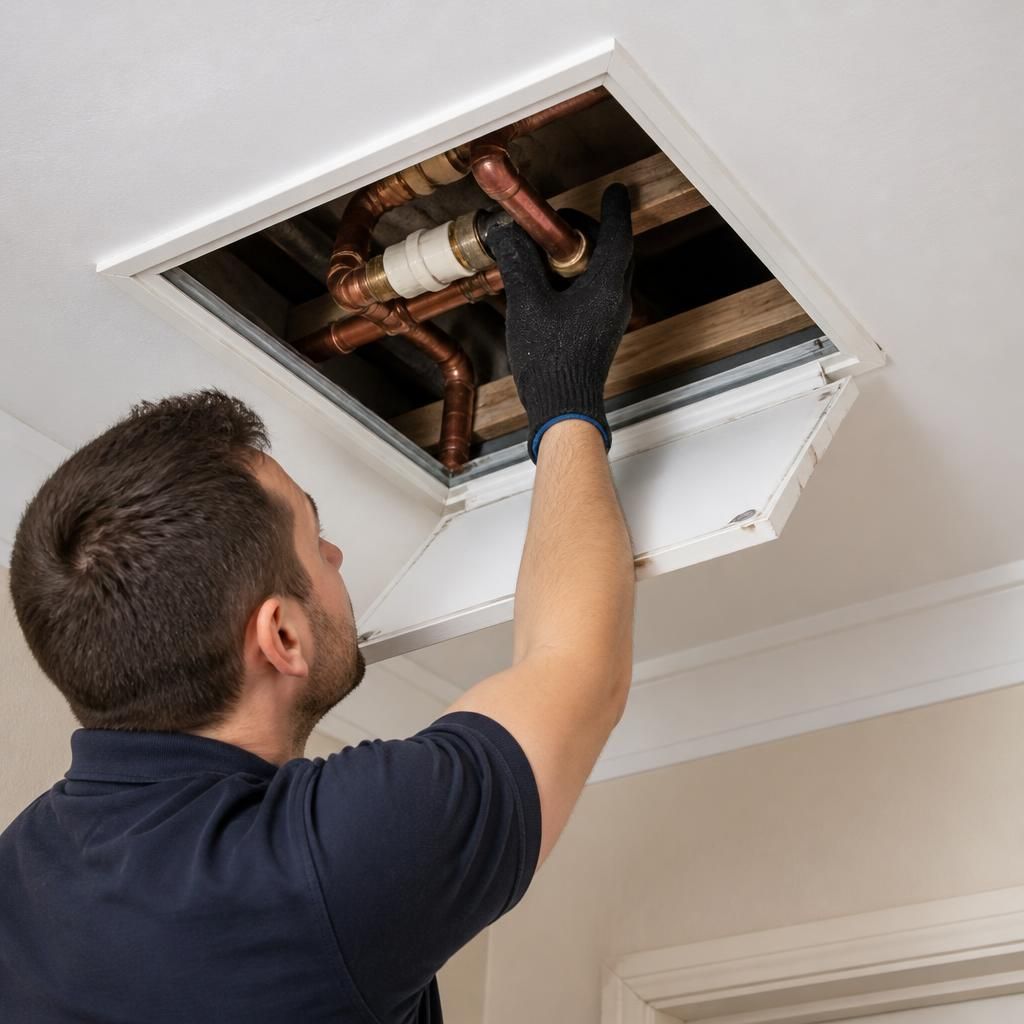
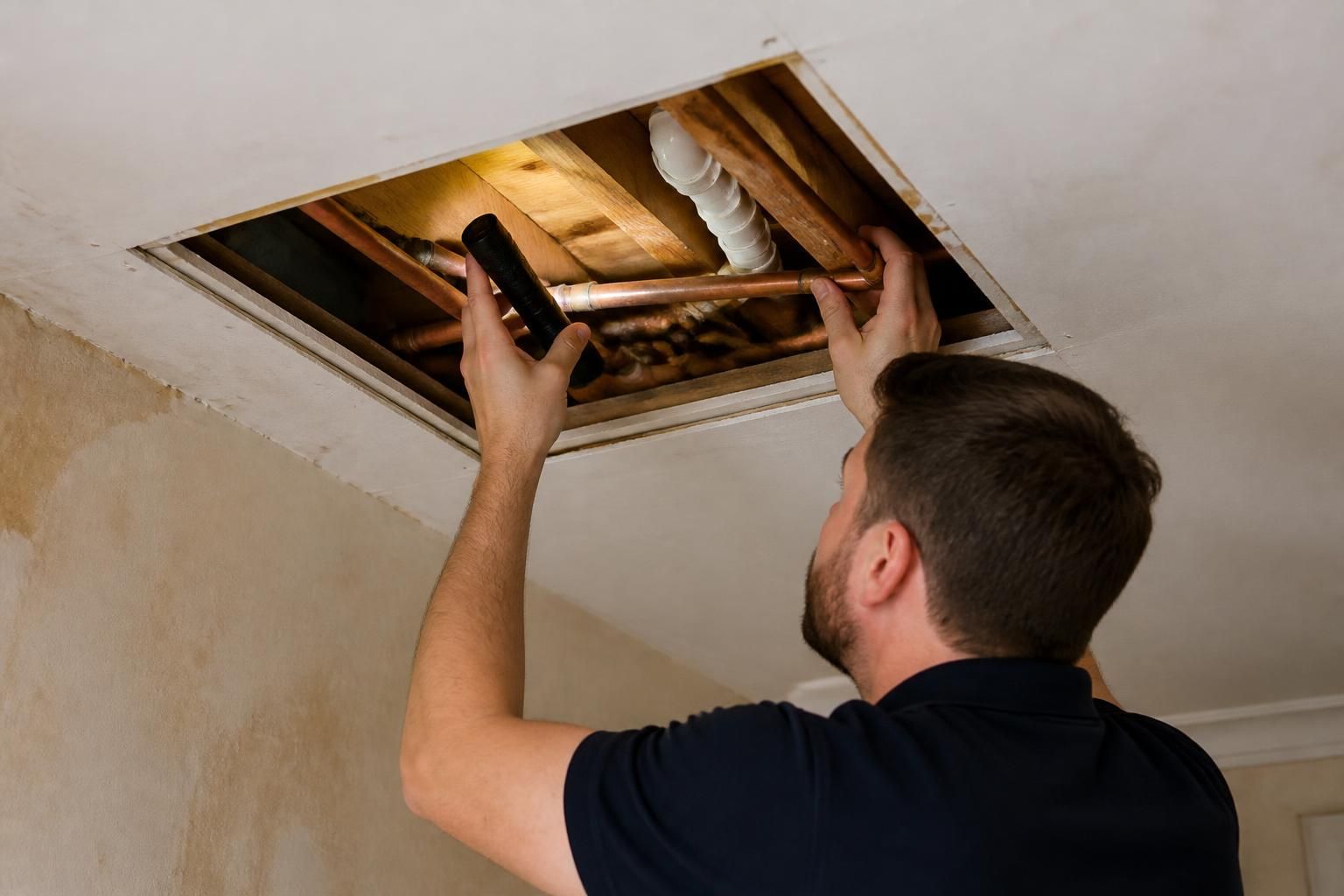
Access may be needed to inspect concealed pipework or the void above a ceiling. A suitable repair should balance effective investigation with minimal disturbance. This might involve lifting a floorboard above the affected ceiling, removing a small section of plasterboard or taking off an access panel. The required access depends on the construction of the property and the position of the leak.
After the plumbing issue has been dealt with, the affected area needs time to dry fully before redecoration. Painting over damp plaster can trap moisture, cause staining to return and encourage mould. Drying may involve ventilation, controlled heating or specialist moisture monitoring, depending on how much water has entered the materials. Porous items such as insulation and badly affected plasterboard may need removal if they cannot be dried and cleaned properly.
A professional assessment should also consider why the leak occurred. Corrosion, movement, failed joints, poor sealing or a damaged appliance connection can each require a different long-term solution. Addressing the underlying cause is important where the visible damage is only one symptom of a wider plumbing problem.
Before the area is closed or decorated, useful checks include:
- examining nearby pipe routes and fittings for signs of continuing moisture;
- checking adjacent rooms, floors and ceilings for spreading stains or dampness;
- confirming that plaster, timber and insulation are sufficiently dry;
- looking for mould or unpleasant odours that may indicate retained moisture; and
- keeping a record of photographs, findings and remedial work for property maintenance or an insurance claim.
Once the affected materials are dry and stable, cosmetic restoration can be completed. This may include replacing damaged plasterboard, filling cracks, treating staining, renewing sealant and repainting. Decoration should be treated as the final stage rather than a way to conceal a recurring damp patch.
For homeowners, landlords and tenants in Birmingham and the wider West Midlands, Ideal Plumbing Services can help investigate the plumbing implications of a located ceiling or wall leak and advise on the appropriate next step. The most useful information to provide is when the damage first appeared, whether it changes after using a bathroom or appliance, and whether staining or dampness has spread.