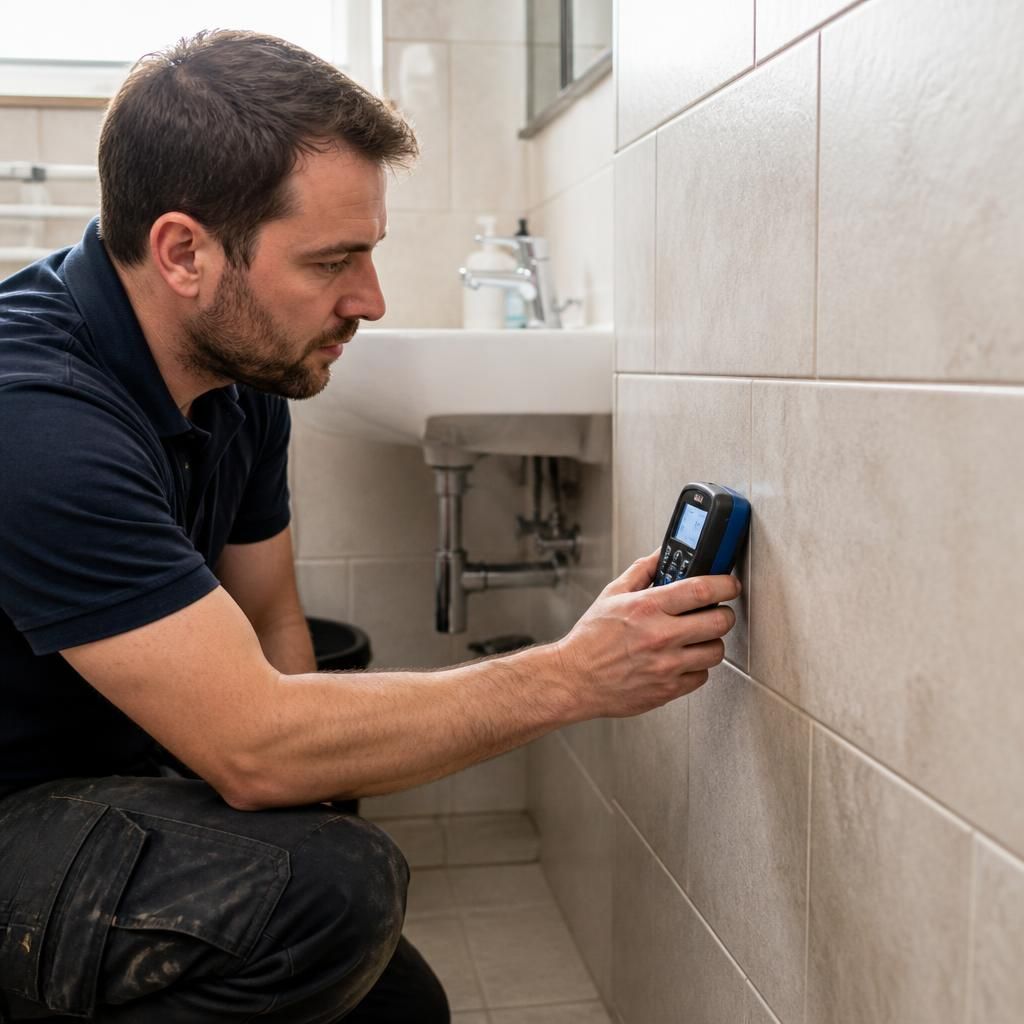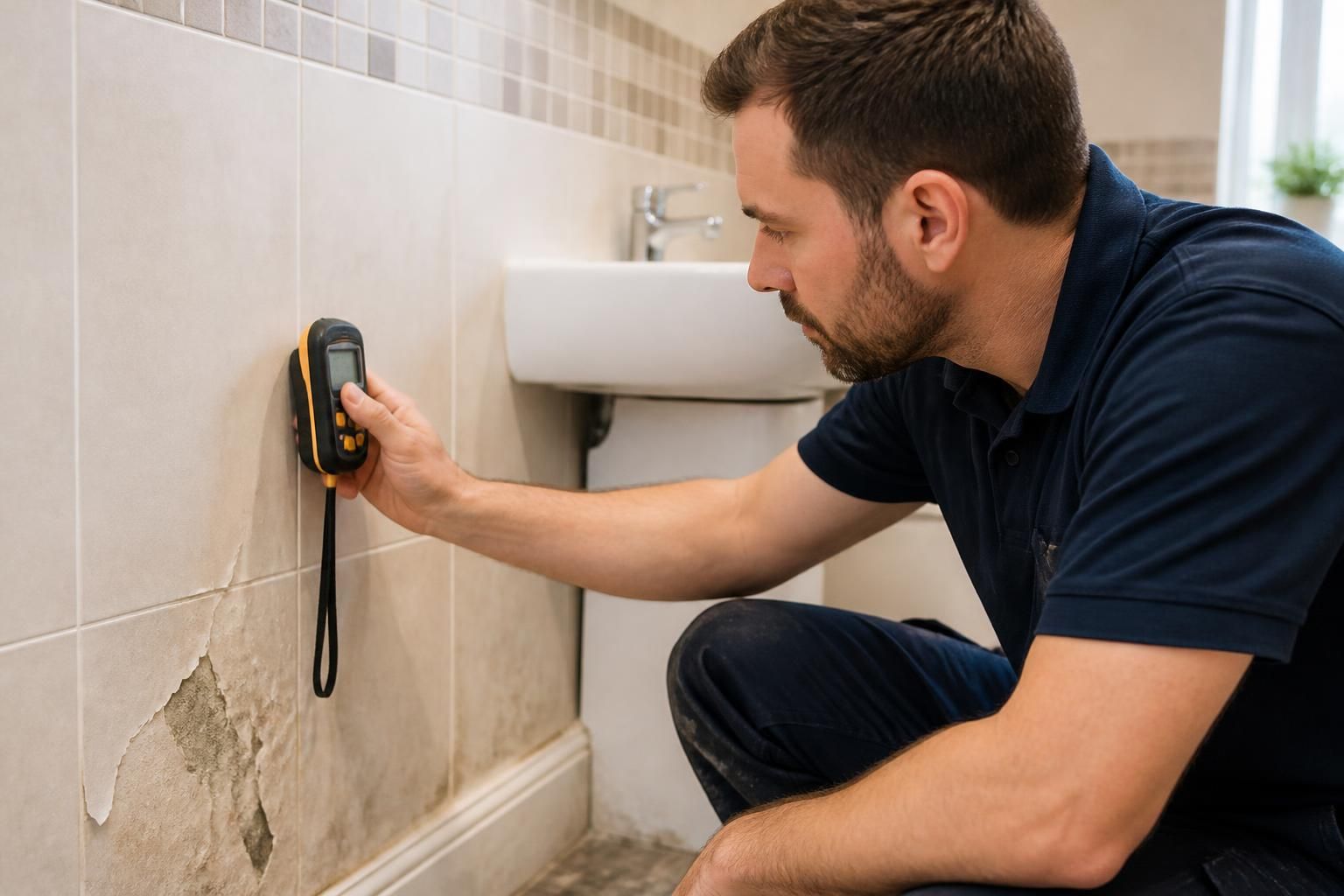
A leak behind a bathroom wall may first show through changes to the room’s fittings, finishes or plumbing behaviour rather than an obvious wet patch. Important clues include loose tiles, damaged grout, swollen woodwork, a toilet that keeps refilling, unexplained water movement on the meter and a localised temperature change around concealed pipework.
- Loose, hollow or shifting tiles: Moisture behind a tiled surface can weaken the adhesive or substrate. A tile that sounds hollow when lightly tapped, moves under gentle pressure or repeatedly cracks may indicate water penetration, although poor installation can cause similar problems.
- Cracked or deteriorating grout: Isolated grout failure, particularly around a bath, shower or pipe penetration, can allow water into the wall structure. Grout damage does not prove there is a hidden plumbing leak, but it can help identify where further investigation is needed.
- Swollen skirting, flooring or bathroom furniture: Water travelling down inside a wall can affect the lower edge of skirting boards, laminate flooring, vanity units or the back of fitted cupboards. Warping, lifting, soft timber or doors that no longer close properly are useful clues.
- A toilet that periodically refills: If the cistern refills when nobody has flushed it, water may be escaping through the toilet mechanism or a concealed connection. This can be mistaken for a wall leak, so the toilet and its supply pipe should be checked before opening the wall.
- Unexplained movement on the water meter: Turn off taps, appliances and toilets, then check whether the meter continues to register use. Movement suggests water is passing through the supply system, but it does not identify whether the source is inside the bathroom wall or elsewhere on the property.
- A localised temperature difference: A warm area may correspond with a hot-water pipe, while a cooler area can occur around a cold-water supply. Thermal imaging can help map these differences, but it cannot by itself confirm that water is escaping.
- Recurring moisture at a fixed joint or fitting: Water that appears around a bath panel, shower valve, basin connection or pipe boxing after a particular fixture is used may point towards a failed joint or pipe behind the surrounding wall. The timing of the moisture is useful: note which fitting has been operated and how long it takes for the problem to appear.
These clues can have non-plumbing causes. Condensation, failed sealant, movement in plasterboard, defective tile installation and leaks from an adjoining room can create similar damage. Comparing the problem with how the bathroom is used helps narrow the possibilities, but concealed pipework cannot be assessed reliably from surface appearance alone.
Before arranging an inspection, avoid drilling through the affected area or removing tiles to search for the leak. Dry the area where practical, keep notes about when the problem occurs and check accessible connections beneath the basin, behind the toilet and around the bath panel. If water is near sockets, switches or other electrical equipment, avoid contact with the area and use the appropriate isolation point only if it is safe to do so.
A professional leak investigation may include visual checks, moisture readings, pressure testing and acoustic or thermal equipment. These methods help establish whether the source is a supply pipe, waste pipe, heating pipe, sanitary fitting or water entering through a failed seal. Targeted detection is preferable to removing large sections of plaster or tiling without first locating the likely route.
Contact a qualified plumber when the signs persist, the water meter shows unexplained use, a fitting continues to refill or the affected area is close to electrical wiring. Ideal Plumbing Services provides leak detection and plumbing repairs for homeowners, landlords and tenants across Birmingham and the West Midlands, including investigation of concealed bathroom pipework before suitable repair work is planned.