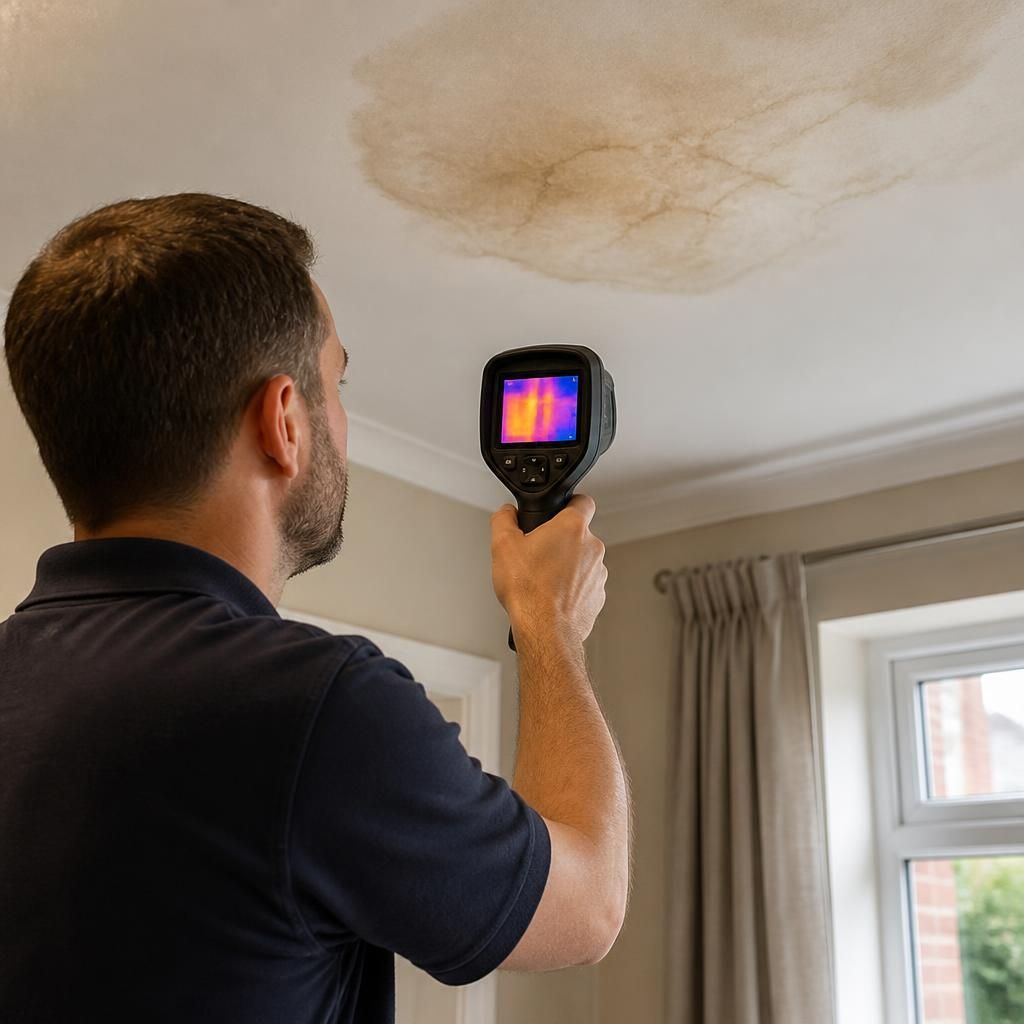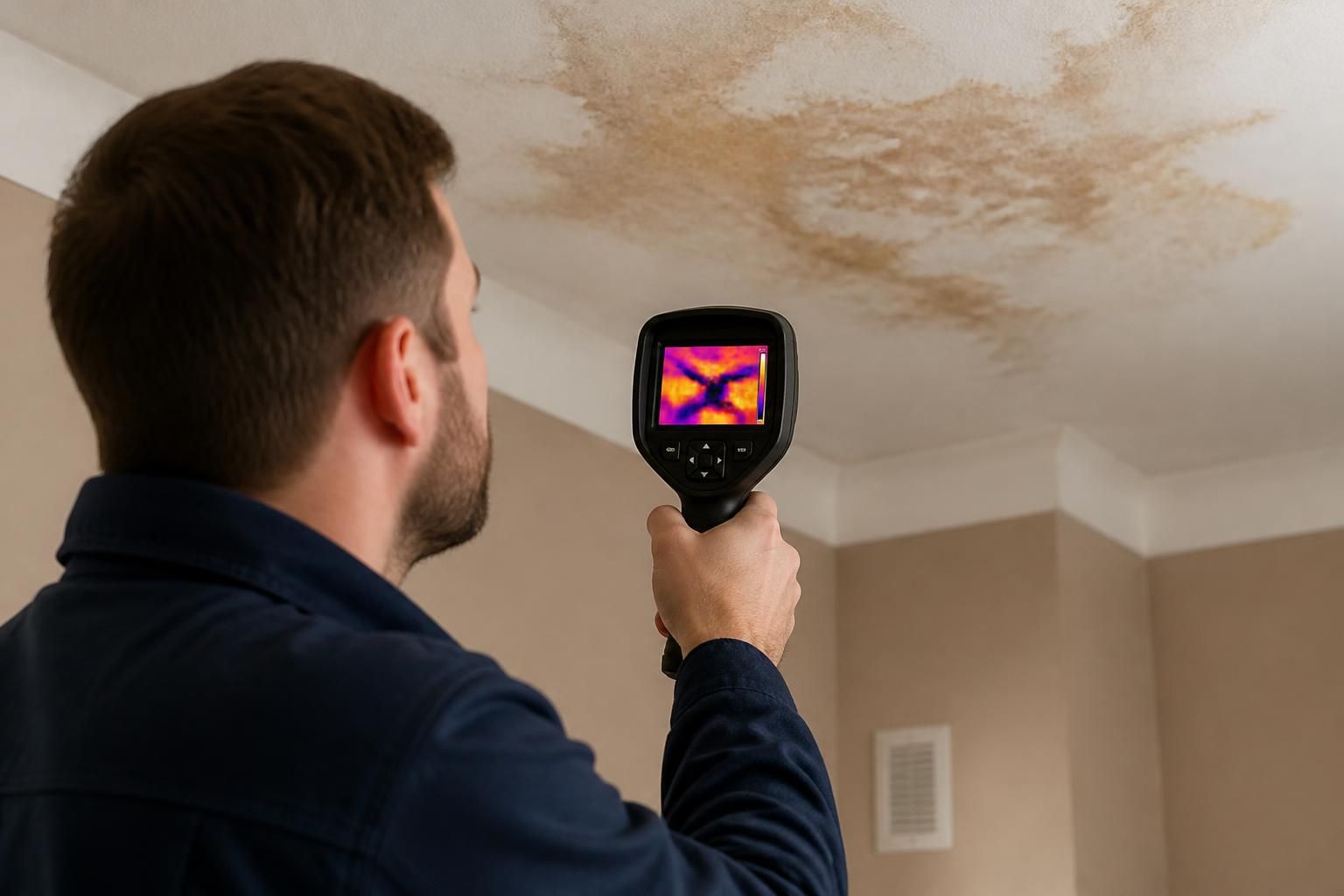
Often, yes. A non-invasive survey can usually identify the wet area, trace the direction of water movement and narrow the problem to a particular pipe, fitting or section of ceiling. However, finding the precise point where water escaped is not always possible without some access, because water can travel along joists, plasterboard, insulation and pipework before becoming visible.
The key distinction is between locating the damage and locating the source. The darkest or softest part of a ceiling may be below the leak rather than directly beneath it. A ceiling can also retain moisture after a supply pipe, waste connection or heating component has stopped leaking. For this reason, an inspection should assess the wider area rather than rely on the most obvious stain alone.
A plumber will normally compare moisture levels across the ceiling and nearby walls, inspect accessible fittings above or beside the affected area, and look for patterns that indicate whether the water is rising, spreading sideways or tracking downwards. The condition of paint, plaster, insulation and timber can help establish whether the problem is recent, intermittent or longstanding.
Where the source is connected to a pressurised water system, controlled checks can help distinguish an active leak from residual dampness. Drainage leaks may require the relevant appliance, trap or waste route to be assessed while water is discharged. Heating leaks are considered differently, particularly where the pressure in the system changes or staining appears near radiators, valves or concealed heating pipework.
Non-invasive detection is most effective when the leak is active or has left a clear moisture pattern. It becomes more difficult when:
- the leak occurs only when a bath, shower, appliance or heating system is used;
- water has travelled a substantial distance from the original failure point;
- the ceiling contains dense insulation, foil-backed materials or multiple layers;
- the visible area has dried but the underlying materials remain affected;
- several historic leaks have created overlapping patches; or
- the suspected pipe is beneath a solid floor or inside an inaccessible void.
In these situations, a survey may identify the most likely route without proving the exact defect. Further checks may then be needed, such as isolating sections of the plumbing system, observing the area during controlled use or inspecting an accessible adjoining space. These steps reduce the risk of repairing the wrong location.
An opening is more likely to be recommended when readings and visual evidence point to a confined area but cannot confirm the failed joint or pipe. If access is necessary, the opening should be limited to the smallest practical area and positioned using the information gathered during the survey. This is different from removing large sections of ceiling without first establishing where the fault is likely to be.
It is also important to address the water source before judging the ceiling repair. Drying, plaster replacement and decoration cannot resolve an ongoing supply, drainage or heating leak. Once the plumbing fault has been dealt with, the ceiling can be assessed for remaining moisture and for damage that may affect its strength or finish.
Professional ceiling leak detection can therefore provide a reliable diagnosis without immediate destructive work, but it cannot guarantee that every concealed defect will be visible from the room below. The appropriate approach depends on the type of leak, how long it has been present, the construction of the ceiling and whether there is accessible space above it.