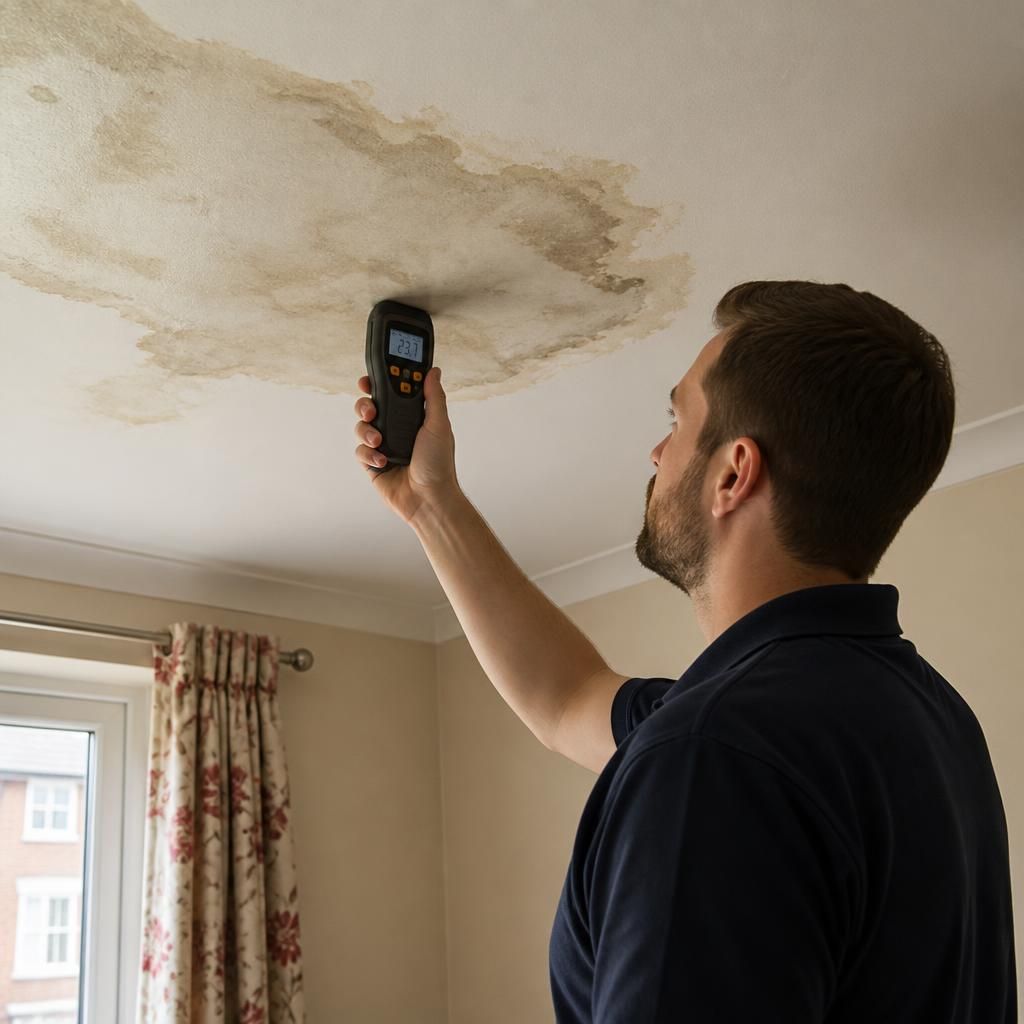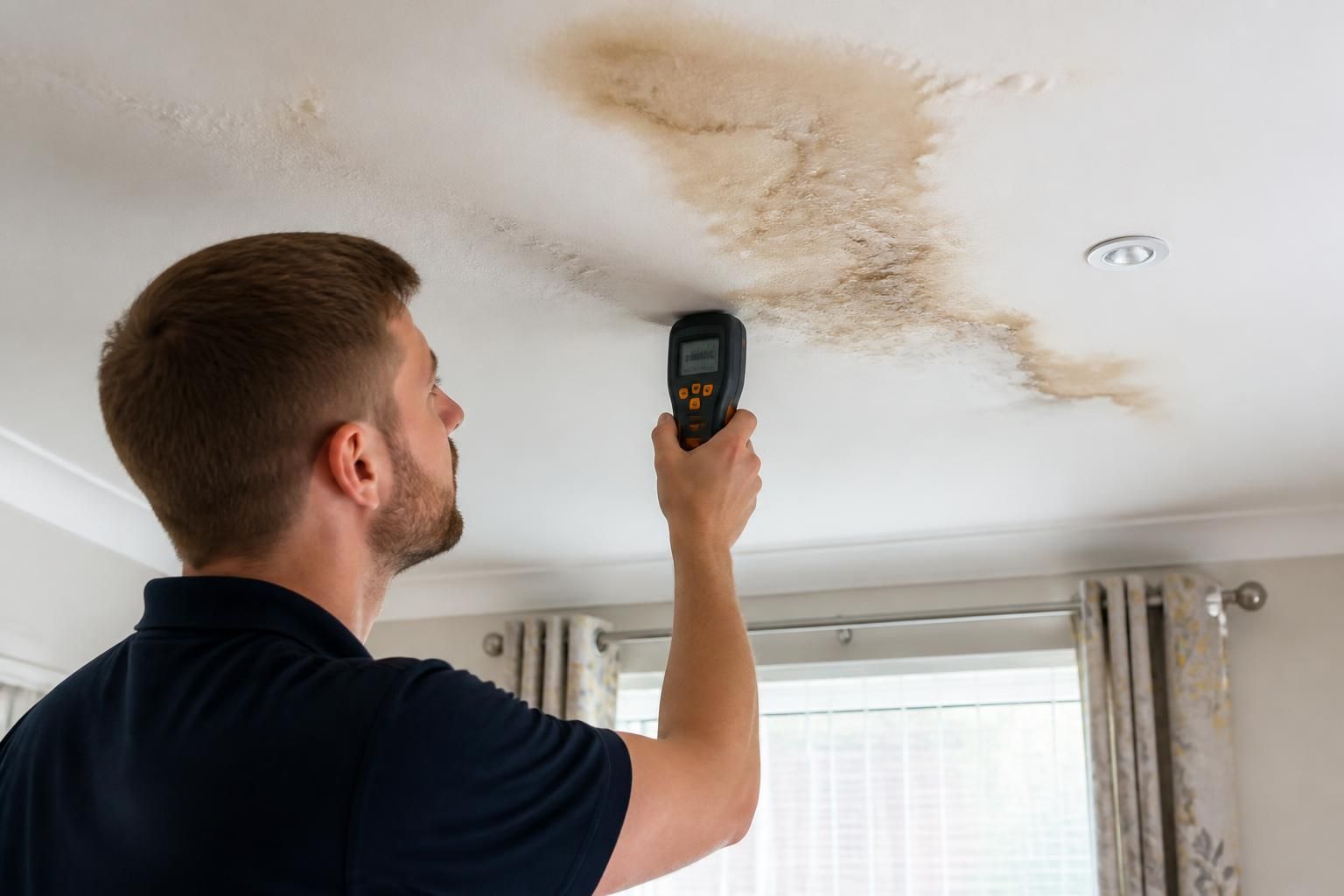
Ceiling leak detection is suitable for flats and is often particularly useful where the visible water damage does not show the true source. In a flat, moisture can travel through floors, ceilings, service voids and shared pipe routes, so the location of a stain may be different from the point where water entered the building. A structured inspection can help narrow down the source before damaged plaster, flooring or decorative finishes are removed.
Why flats can be more difficult to investigate
Flats commonly contain several connected systems within a relatively confined structure. A leak may involve a supply pipe, waste pipe, central-heating pipework, bathroom fitting, kitchen appliance connection, roof area or communal installation. Water can also move along the underside of a floor or within a wall cavity before appearing on the ceiling below. This makes visual inspection alone less reliable, particularly when the leak is intermittent or the surface has already dried.
Detection methods can include moisture measurement, visual tracing, pressure checks and, where appropriate, thermal or acoustic investigation. The method used depends on the type of pipework, the construction of the building, whether the leak is currently active and how accessible the suspected area is. These techniques can help identify patterns of moisture and distinguish a current plumbing leak from residual dampness left by an earlier incident.
What makes detection suitable for a flat
- It can reduce the need to remove ceilings or fitted finishes before there is evidence of where the defect lies.
- It can help separate a plumbing leak from condensation, rainwater penetration or water entering through a roof or external structure.
- It can provide useful evidence when the affected ceiling is below another flat or near shared building services.
- It can help establish whether further investigation should take place inside the affected flat, the property above or a communal area.
Detection is most useful when it is treated as an investigation rather than a guarantee that every hidden defect will be identified immediately. Some leaks leave a broad area of dampness, while others create only a small, concealed path for water. A dry surface does not always rule out a leak, especially if the water flow is occasional. Conversely, a moisture reading may reflect water retained in plaster or insulation rather than an active fault, so findings need to be interpreted alongside the building layout and plumbing system.
Access and permission in flats
Investigation may require access to more than one property. The ceiling showing damage may be in one flat, while the most informative inspection point is in the flat above or within a communal service cupboard. Tenants should normally inform their landlord or managing agent, and leaseholders may need to involve the freeholder or property management company where shared pipework, structural elements or communal areas are concerned. This helps avoid delays and clarifies who can authorise access or follow-on repairs.
Where the suspected source is inside another occupied flat, the inspection should be arranged with the relevant resident or property representative. Entry should not be assumed simply because water has appeared elsewhere in the building. If water is close to electrical fittings, lights or consumer-unit equipment, avoid touching affected electrics and seek appropriate professional advice before attempting to inspect the area.
When another approach may be needed
Ceiling leak detection may not by itself resolve every issue. A roof defect, failed external seal, damaged communal stack or problem with rainwater drainage may require inspection of the building exterior or shared infrastructure. Similarly, long-standing dampness can involve saturated insulation, damaged plaster or mould risk after the original leak has been stopped. Detection helps identify the likely source, but repairs and drying may need to be handled as separate stages.
It is also important to investigate promptly when staining is spreading, plaster is sagging, water is actively dripping or the affected area is near electrical equipment. Continuing to use a bathroom, appliance or heating system suspected of causing the leak may increase damage, depending on the fault. If safe to do so, isolate the relevant water supply and protect belongings beneath the affected area while arrangements are made for assessment.
For homeowners, landlords and tenants, the main benefit in a flat is better-informed decision-making. The findings can indicate which part of the building needs attention, whether access to another property is necessary and whether opening a ceiling is justified. That can support a more targeted repair plan and help prevent repeated patching when the underlying source has not been addressed.