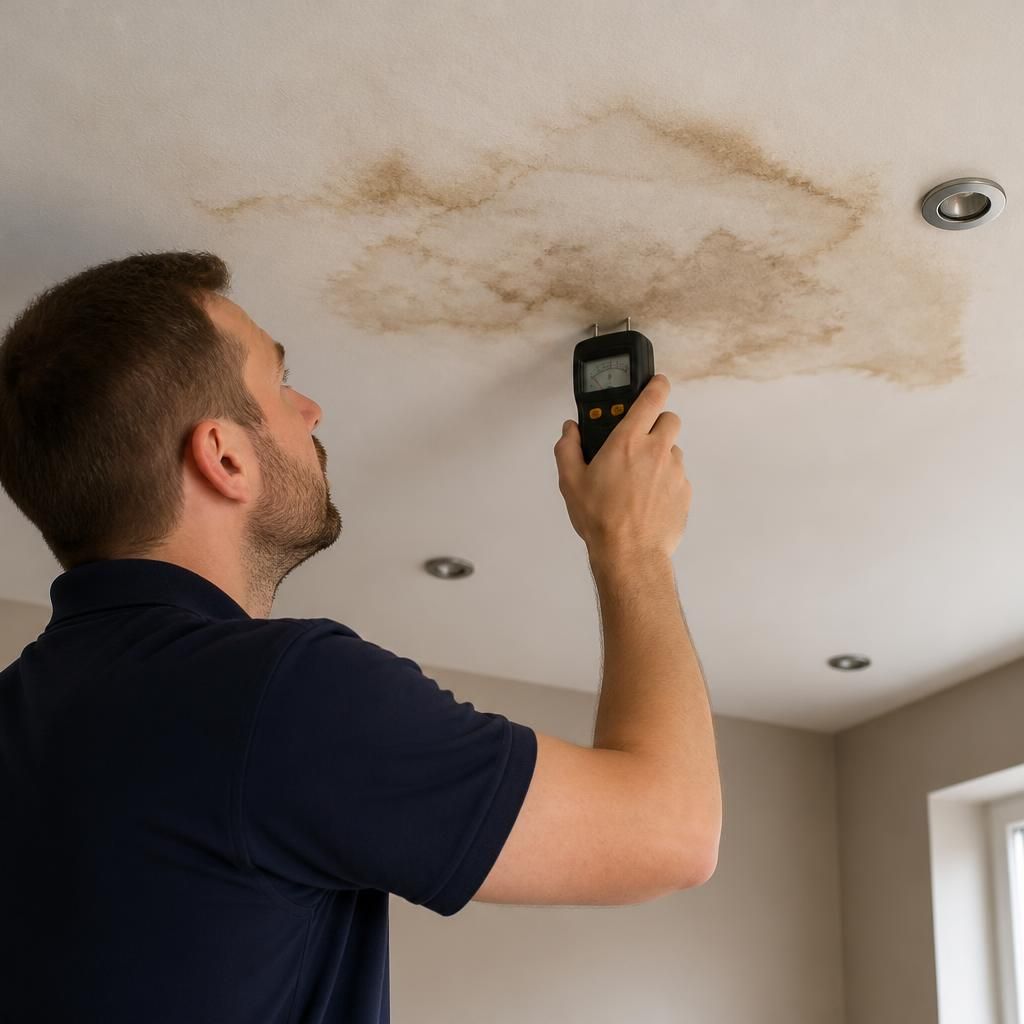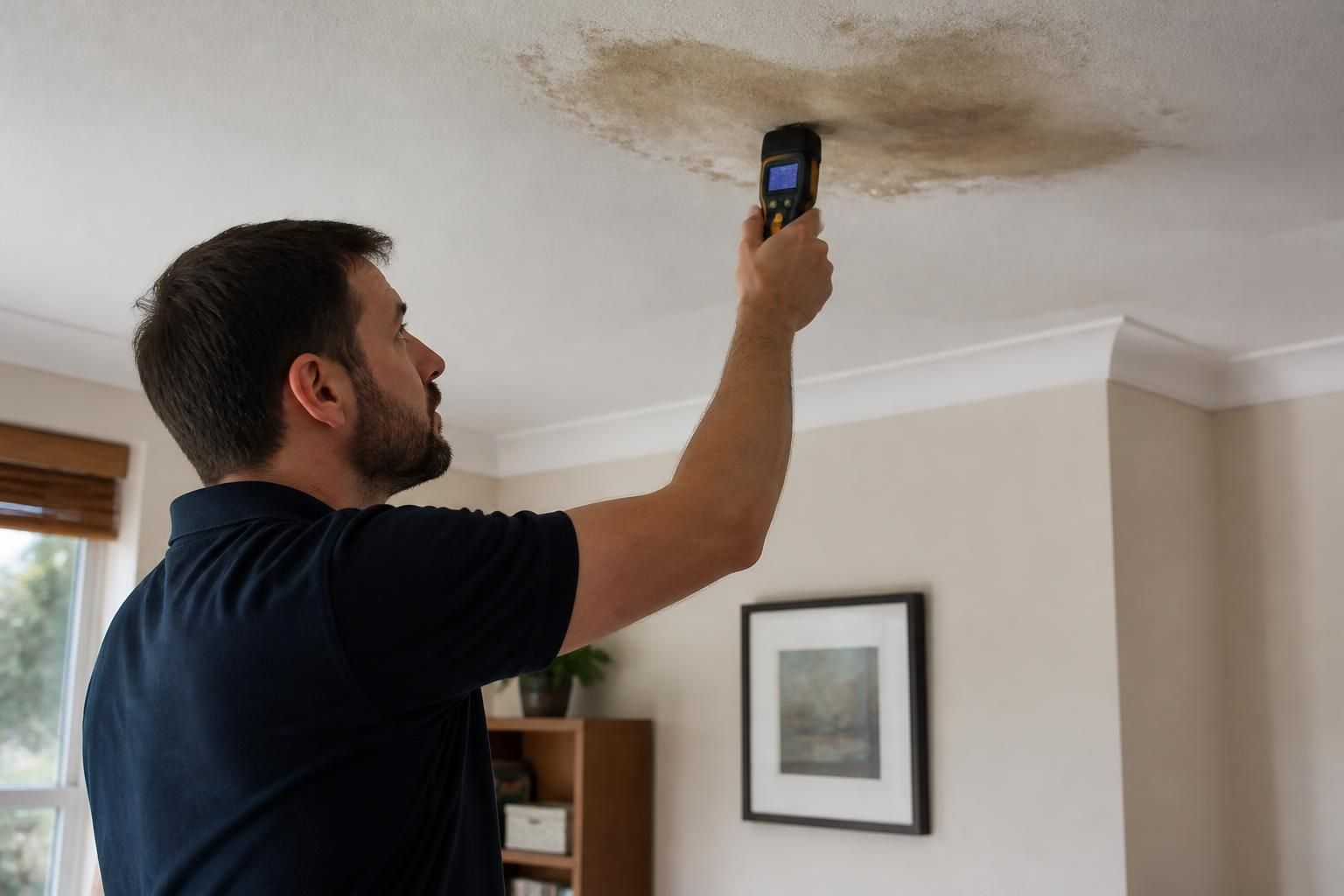
Ceiling leak detection is generally a controlled investigation rather than a major building job. Most disruption comes from gaining safe access to the affected area, protecting furniture and flooring, and carrying out checks; the inspection itself does not usually involve extensive removal of plasterboard, plaster or decorative finishes.
Before the inspection: the area beneath the staining or damp patch should be made accessible. This may involve moving furniture, clearing shelves and removing items that could be affected by dust or moisture. A technician may also need access to nearby rooms, the loft, pipework or the property above, depending on the suspected source. Keeping these areas clear can reduce unnecessary handling during the visit.
During the investigation: the technician will assess visible staining, dampness, pipe routes and surrounding surfaces. Moisture-detection equipment can help compare readings across the ceiling and nearby walls, while other diagnostic checks may be used to distinguish an active leak from residual moisture or an old mark. These methods are quieter and less disruptive than immediately removing part of the ceiling.
Some checks can create minor noise or require temporary access equipment, particularly where the ceiling is high or the suspected pipework is concealed. Any equipment should be positioned to protect the floor and nearby belongings. The inspection should also avoid disturbing electrical fittings, ceiling insulation or other building components unless safe access makes this necessary.
If opening the ceiling is unavoidable: the access point should be kept as limited and purposeful as possible. A small opening may allow the pipe, joint or void above the ceiling to be examined directly, but the exact location depends on the evidence gathered during the inspection. Opening a ceiling without first narrowing down the likely source can create avoidable damage and still fail to expose the defective section.
The condition of the ceiling affects how easily it can be accessed. Plasterboard may be cut and later repaired, whereas older plaster, textured finishes, coving or decorative features may need greater care to prevent additional cracking or damage. Water-saturated materials may also be weak, so an assessment should consider whether the surface is safe before anyone works beneath it.
After the leak has been located: the detection stage may leave a small access area or temporary protective covering, depending on whether repair work is carried out as a separate task. The affected surface may still need to dry before permanent decoration, even after the plumbing fault has been corrected. Painting over a damp mark too soon can conceal ongoing moisture and lead to further deterioration.
For flats, the investigation may require cooperation between occupants, landlords or managing agents where pipework passes between properties or through communal areas. Clear communication about access can help prevent unnecessary disturbance to neighbouring rooms and identify whether the visible ceiling damage originates from above, within the property or from a shared system.
Ideal Plumbing Services approaches ceiling leak detection by first gathering evidence and limiting intervention to what is needed to confirm the source. This is useful for homeowners, landlords and tenants who need a clear assessment before deciding whether repair, drying or making-good work is required.