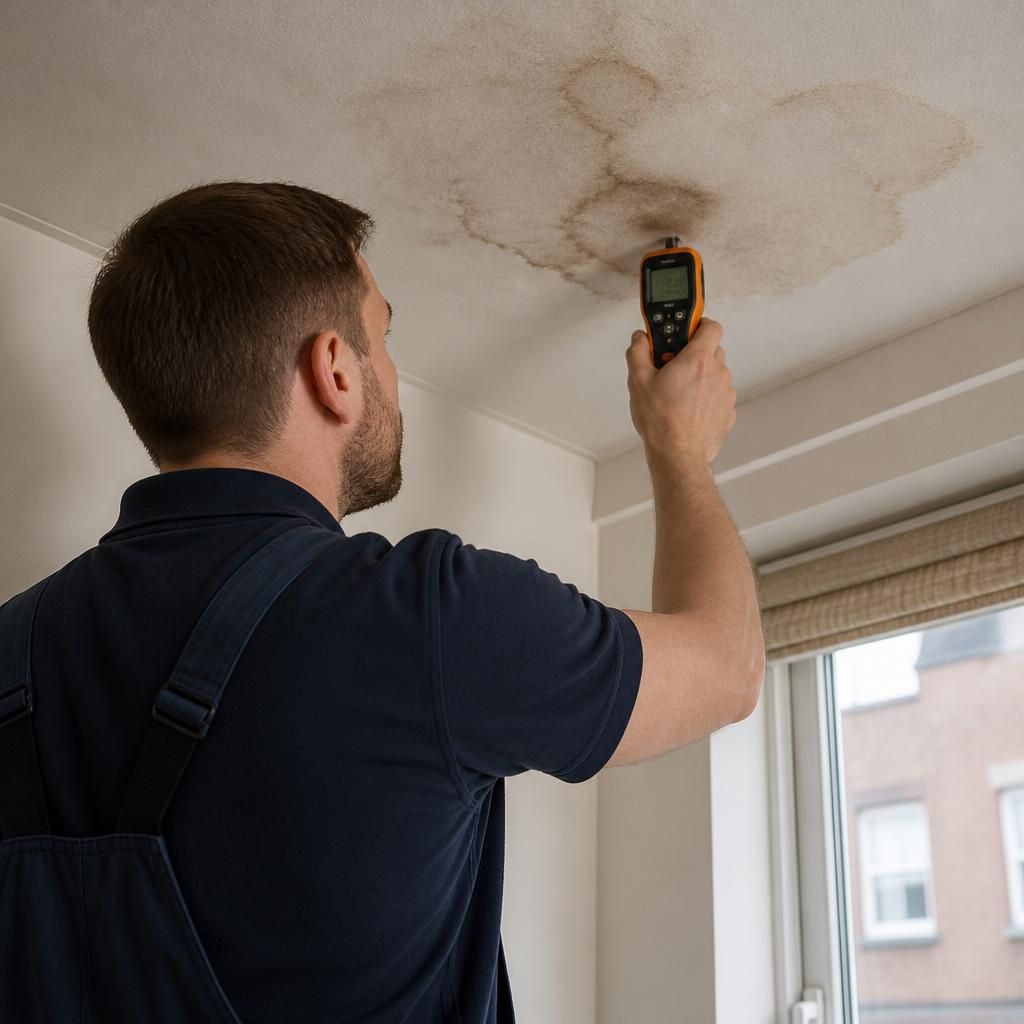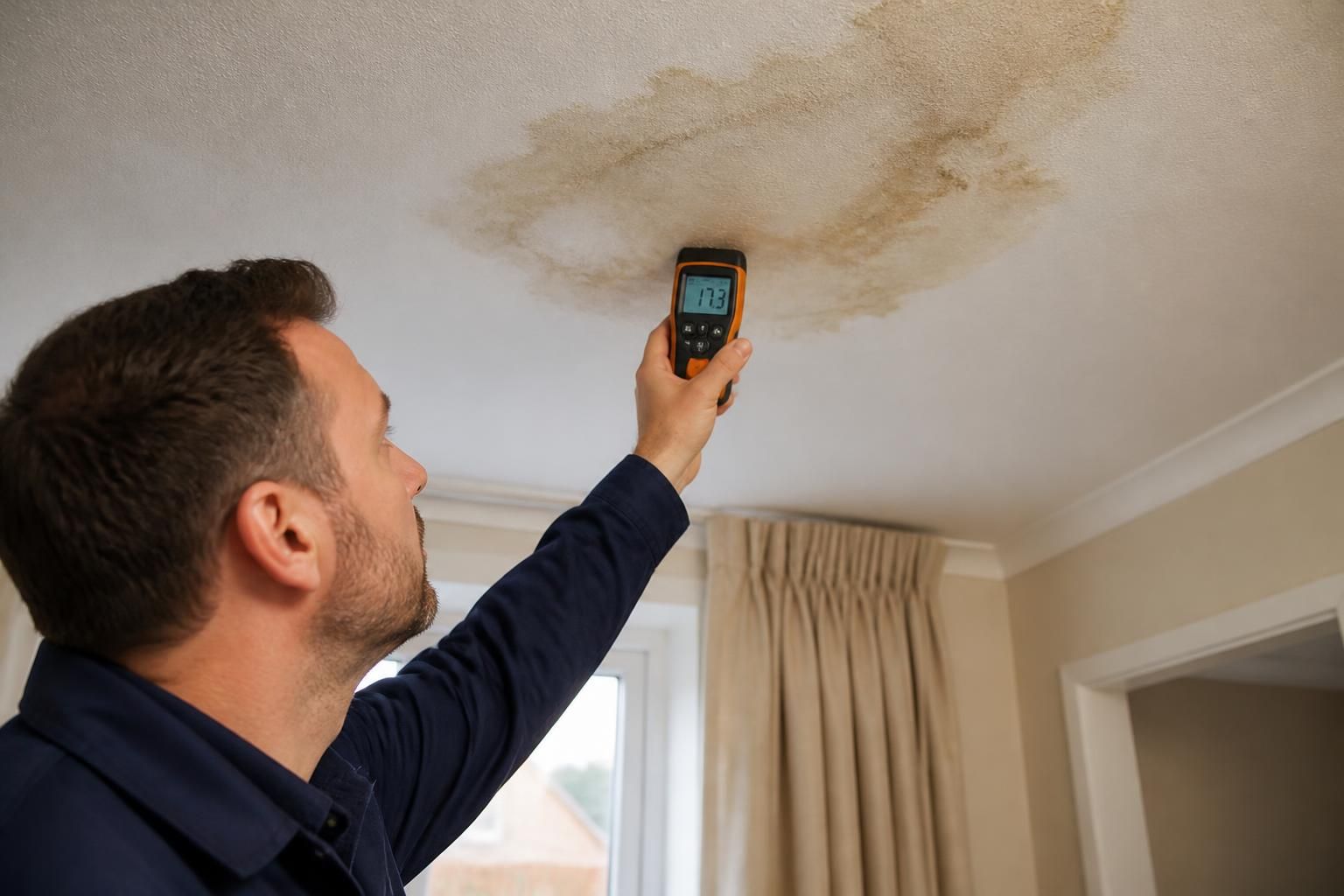
Ceiling leak detection is normally priced according to the time, equipment and access required to identify the source of the water, rather than the visible size of the stain. A basic assessment may involve checking the ceiling, loft space and nearby pipework, while a concealed leak can require more detailed tracing. The cost of locating the leak is generally separate from the cost of repairing the defective pipe, fitting or roof component.
What the detection cost may include
- Inspection of the affected ceiling and the rooms or plumbing installations above it.
- Checks of accessible pipework, bathroom fittings, heating components, tanks and waste connections.
- Use of specialist detection equipment where the source cannot be identified visually.
- Tracing the route of moisture when the visible mark is some distance from the actual leak.
- An explanation of the findings and recommendations for the next stage of work.
The final price can be affected by whether the leak is active, intermittent or has already stopped. Intermittent leaks may require comparison of several possible sources, particularly where water only appears when a bath, shower, toilet, heating system or upstairs appliance is being used. A leak that has travelled through joists, insulation or plasterboard can also be more difficult to trace than one directly below a failed connection.
Factors that influence the quote
- Accessibility: exposed pipework is usually easier to inspect than pipework behind a finished ceiling, wall or fixed furniture.
- Location: flats, converted properties and homes with several bathrooms may have more possible sources to rule out.
- Detection method: the appropriate equipment depends on the material, position and behaviour of the suspected leak.
- Extent of investigation: a single visible fitting may need a limited inspection, whereas an unexplained stain may require checks across connected plumbing.
- Access and making good: removing a small section of ceiling or lifting flooring, where necessary and agreed, can create additional work. Plastering, repainting and decorative repairs may not be included in the detection charge.
- Further repairs: replacing a failed valve, joint, pipe or fitting is normally priced as repair work after the source has been confirmed.
It is worth checking whether the quoted charge covers diagnosis only or includes a written report, moisture readings, photographs and a follow-up quotation. Some providers charge for the investigation and then price repairs separately; others may apply the diagnostic charge to agreed repair work. These arrangements should be explained before work starts.
Why opening the ceiling is not always the first step
Opening a ceiling immediately can create unnecessary damage if the water is coming from a nearby pipe or fitting rather than the area directly above the stain. A structured inspection can help narrow down the source first. Non-invasive checks may be suitable in some cases, although the available method depends on the ceiling construction, the amount of moisture and how clearly the leak can be followed. If access is eventually needed, the plumber should explain why it is necessary and what area may be affected.
Questions to ask before agreeing to detection work
- Is the price for identifying the source, repairing it, or both?
- Which inspection methods are included?
- Will additional equipment or investigation be discussed before it is used?
- Are reports, photographs and moisture readings included?
- Will any ceiling access be agreed with the property owner first?
- Are decorative repairs and drying work included or arranged separately?
- Are there any additional charges that should be understood before the inspection?
For homeowners, landlords and tenants, recording the affected area before work begins can be useful for maintenance records or an insurance enquiry. Keep photographs of the stain, note when it appears and identify whether it follows use of a bathroom, appliance or heating system. This information can help narrow the investigation, but it does not confirm the source.
Ideal Plumbing Services provides ceiling leak detection and related plumbing repairs for residential properties across Birmingham and the West Midlands. The work can be scoped around the suspected source, the level of access available and whether a repair is required after the leak has been located. A clear explanation of the proposed investigation and any separate repair costs makes it easier to compare quotations accurately.