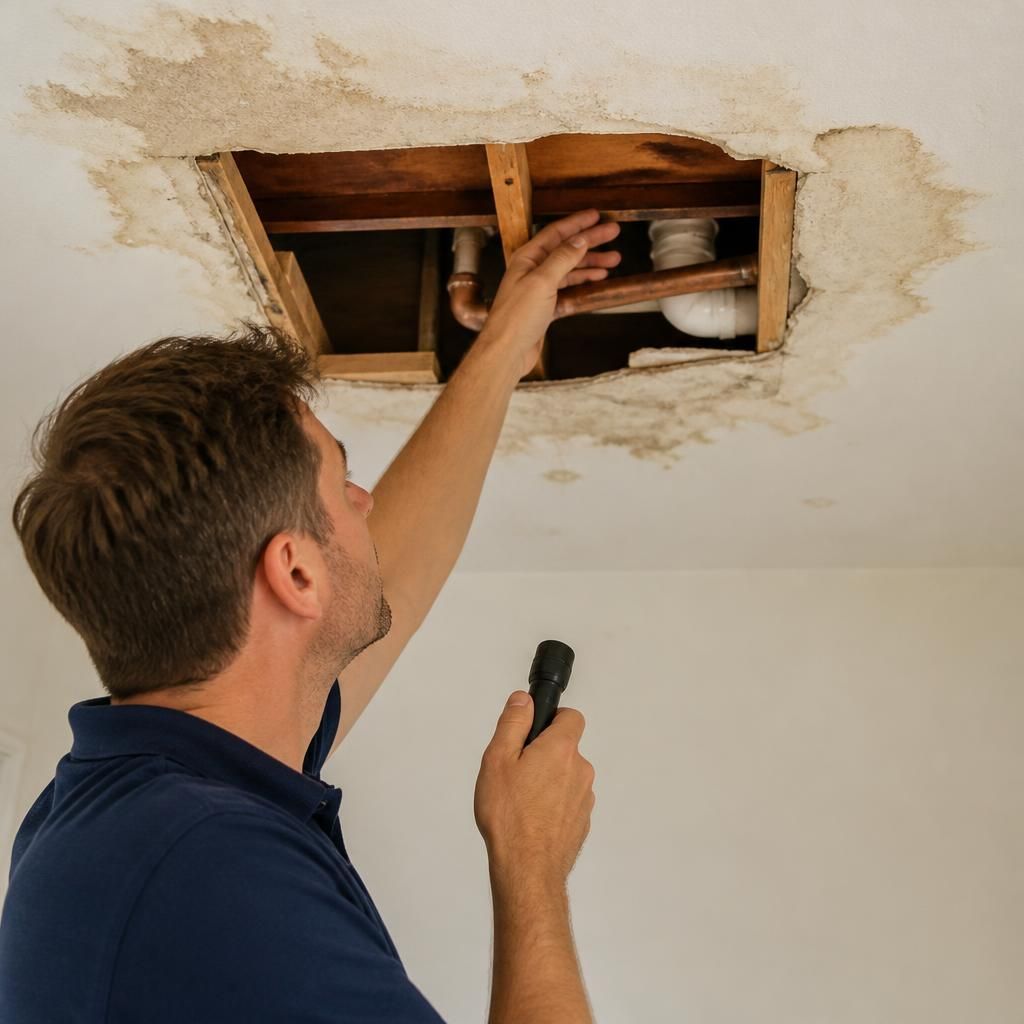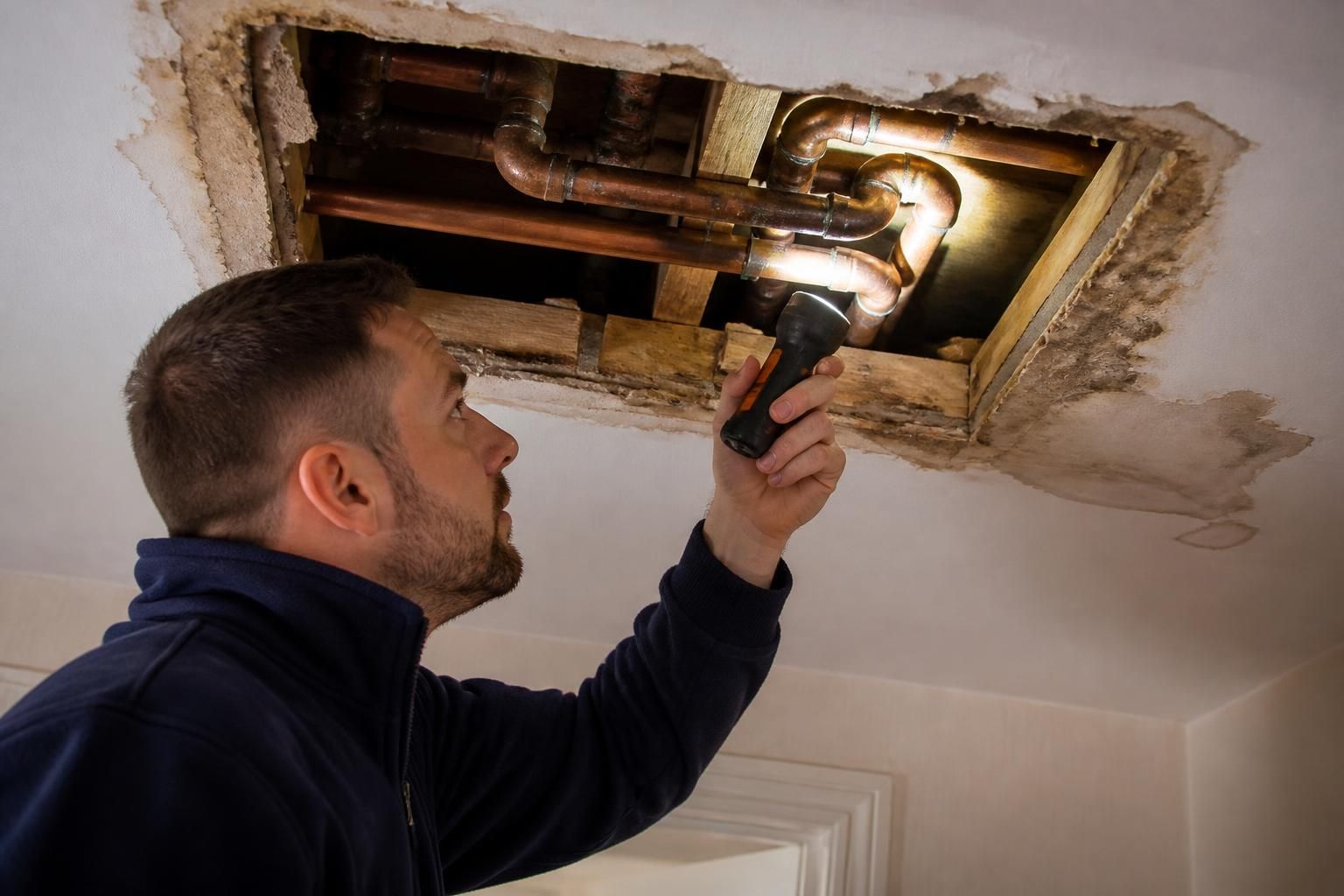
After a ceiling leak has been located, the priority is to control the source, confirm whether moisture is still spreading and plan the repair in the correct order. Finding the visible drip is only part of the process: the underlying fault, the condition of the building materials and any related safety risks must also be considered before the ceiling is reinstated.
- Confirm the source and extent of the fault. The plumber will establish whether the leak came from a supply pipe, waste pipe, heating system, bathroom fitting, roof junction or another property. Moisture can travel along joists, plasterboard and insulation, so the stained area is not always directly below the fault. The surrounding ceiling and nearby walls may therefore need checking.
- Make the area safe. Furniture and belongings should be moved away from the affected zone, and containers can be used to catch any remaining drips. If water has reached light fittings, sockets or electrical wiring, avoid touching the fittings and arrange an assessment by a suitably qualified electrician. A bulging or heavily saturated ceiling should not be stood beneath, as wet plasterboard and plaster can become unstable.
- Choose the least disruptive access point. If the defective pipe or fitting can be reached from an adjacent room, loft space or service void, opening the ceiling may not be necessary. Where access through the ceiling is unavoidable, a controlled inspection opening is normally preferable to removing a large section without first establishing what lies behind it. The access method depends on the construction, pipe layout and condition of the materials.
- Repair the plumbing fault. The remedy may involve replacing a failed connector, repairing a pipe, renewing a seal or correcting an installation issue. The appropriate repair should address the cause rather than simply covering the stained area. Once the work is complete, the repaired section should be checked under normal operating conditions to identify any continuing seepage.
- Allow the structure to dry properly. Surface staining can remain after the leak has stopped, while moisture trapped behind paint, plaster or insulation can create further problems. Ventilation and controlled drying help reduce this risk. Drying should not be rushed with excessive heat, which can damage finishes or cause uneven movement in some materials. The affected area should be checked again before it is sealed or decorated.
- Assess the ceiling finish. Sound plaster may only require preparation, stain blocking and redecoration once it is dry. Saturated, sagging, crumbling or delaminated material may need partial or complete replacement. Insulation that has become wet may also require attention, particularly if it cannot dry fully in place.
- Complete reinstatement and monitor the area. After the plumbing and building materials have been dealt with, the access opening can be repaired and the surface redecorated. A faint mark may take time to disappear, and fresh staining, a musty smell, soft plaster or renewed bubbling paint should be treated as signs that moisture remains or that another source has not been resolved.
For rented homes, tenants should notify the landlord or managing agent and keep photographs of the staining, damaged contents and any access works. Homeowners may also need photographs, invoices and a description of the fault for an insurance enquiry. Recording what was found and repaired can help distinguish an isolated plumbing failure from a recurring problem.
Ideal Plumbing Services can investigate ceiling leaks and carry out the associated plumbing repair for homes across Birmingham and the wider West Midlands. Where the ceiling or electrical installation has been affected, the plumbing work should be coordinated with the appropriate specialist so that reinstatement takes place only after the area is safe and sufficiently dry.