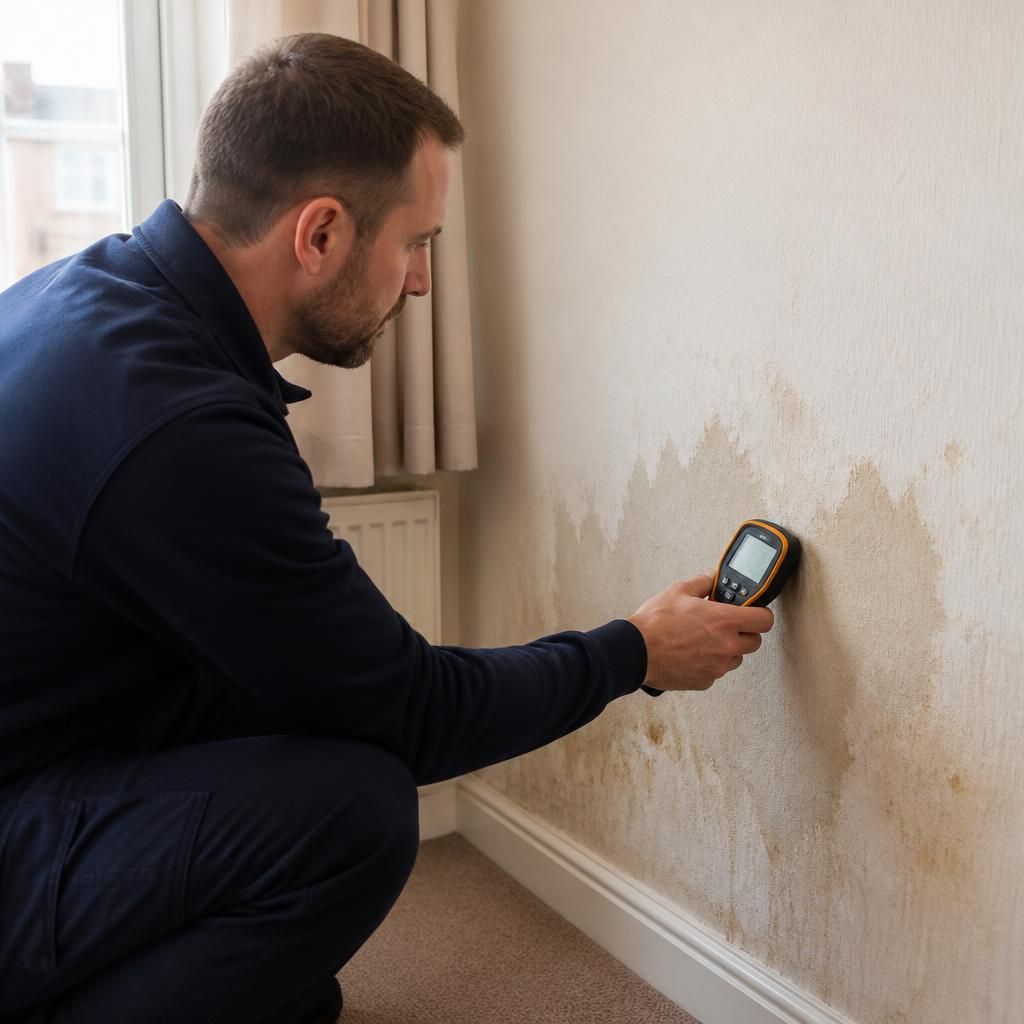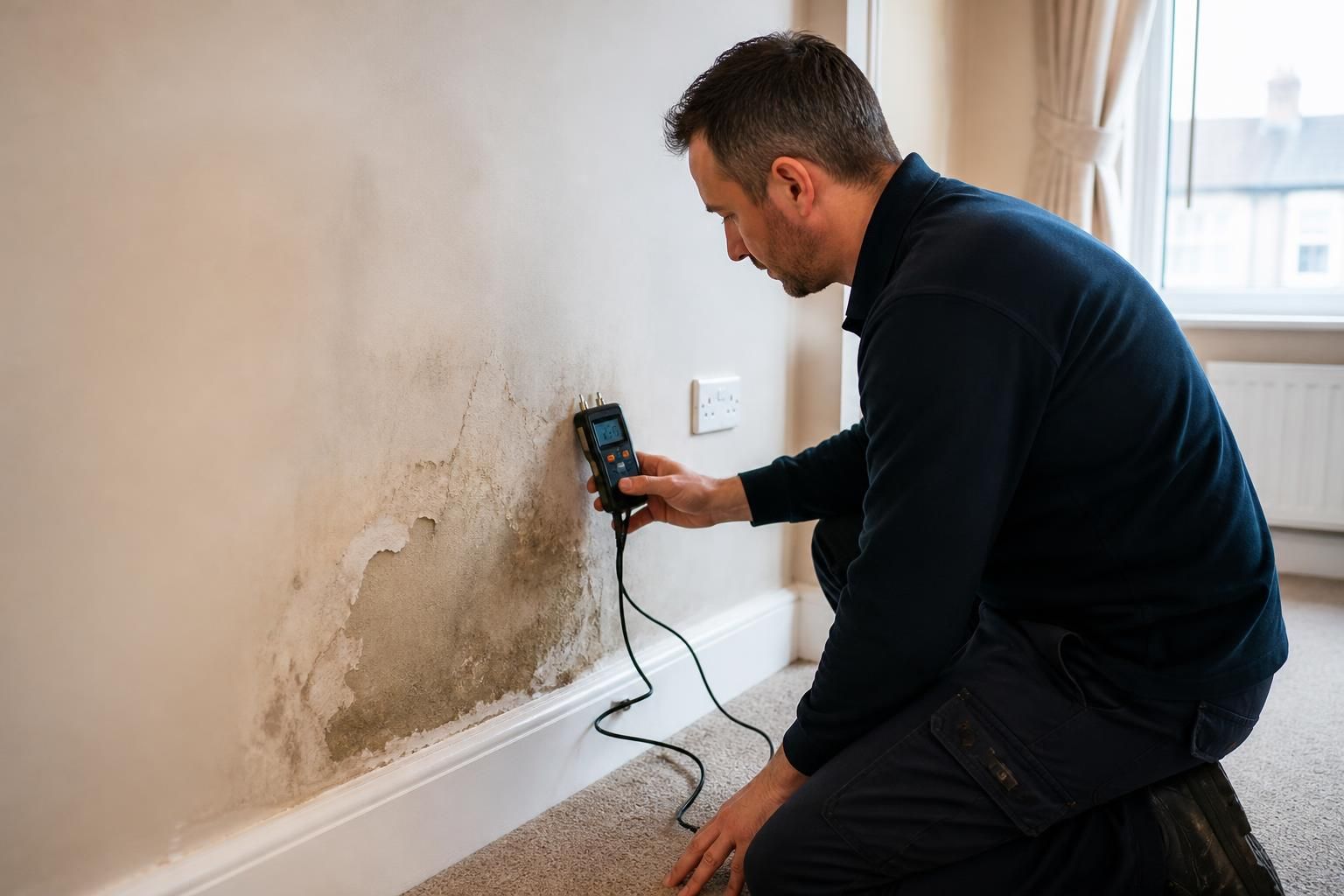
Wall leak detection in a rented property is usually arranged as an inspection before opening up the wall or carrying out repairs. The process is designed to identify the likely source and extent of moisture while limiting unnecessary damage to plaster, paintwork and wall coverings.
Responsibility for arranging the inspection depends on the location and cause of the leak. A landlord will commonly organise investigation where the issue relates to the building, fixed plumbing, heating pipework or a neighbouring property. A tenant should report suspected leaks to the landlord or managing agent promptly, particularly where there is staining, mould growth, dampness or a noticeable increase in water use. Tenants should not commission invasive work or authorise permanent alterations without approval from the person responsible for the property.
Before the appointment, it is useful to provide:
- the rooms or wall areas affected;
- when the staining, dampness or other signs were first noticed;
- whether the problem changes when taps, toilets, showers or heating are used;
- details of any recent plumbing, decorating or building work; and
- photographs showing how the affected area has developed.
Access is normally needed to the affected room and to nearby areas that may help distinguish the source. Depending on the layout, this could include the other side of the wall, an adjoining room, a bathroom, kitchen, airing cupboard or the property above. A tenant may need to obtain permission for access to neighbouring accommodation through the landlord or managing agent. If the suspected source is within a communal area or another flat, the inspection may need to be coordinated with the relevant property manager.
Detection can involve a visual assessment alongside suitable non-destructive checks. These may include moisture readings, tracing the pattern of dampness, checking accessible pipework and comparing conditions around fittings or appliances. The purpose is to separate a plumbing leak from other causes of moisture, such as condensation, penetrating damp or water entering from an adjacent property. A reading indicates moisture in a material, but it does not by itself prove where the water originated.
Where the source cannot be confirmed using accessible areas, further investigation may be recommended. This could involve lifting a small section of flooring, removing a skirting board or creating a limited inspection opening, but such work should be agreed with the landlord or authorised representative beforehand. Detection and repair are separate stages: once the likely source has been identified, the appropriate repair method and the extent of any reinstatement can be considered.
A written record, photographs or moisture readings can help landlords and tenants understand the findings and decide what to do next. This documentation may also be useful when discussing responsibility for repairs or making an insurance claim, although the technician’s findings do not determine the terms of a tenancy agreement or policy.
If water is actively escaping, avoid using nearby fixtures where possible and protect belongings from further damage. Do not remove wall coverings or attempt to chase into the wall without approval, as this can conceal the evidence needed to trace the leak and may create additional repair costs. Ideal Plumbing Services provides wall leak detection for rented homes in Birmingham and across the West Midlands, with the inspection focused on identifying the likely source before repair decisions are made.