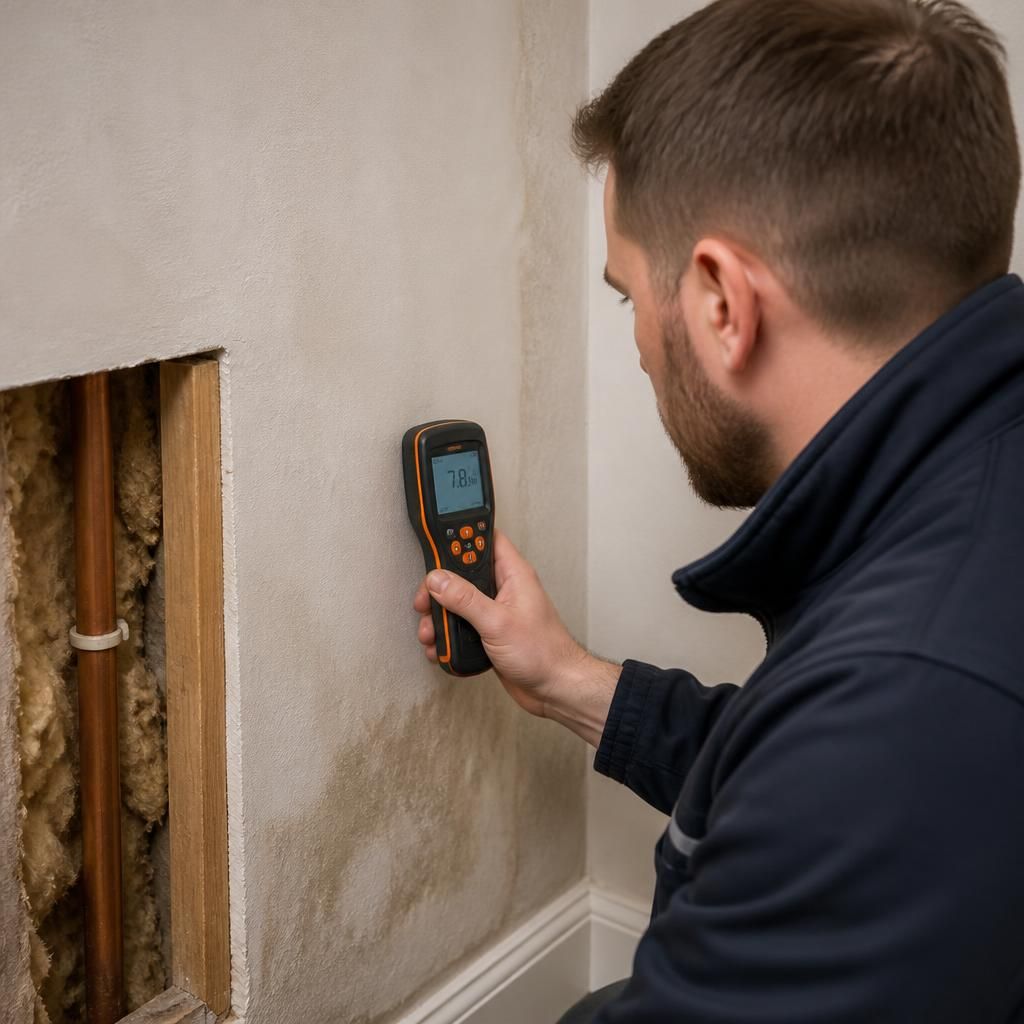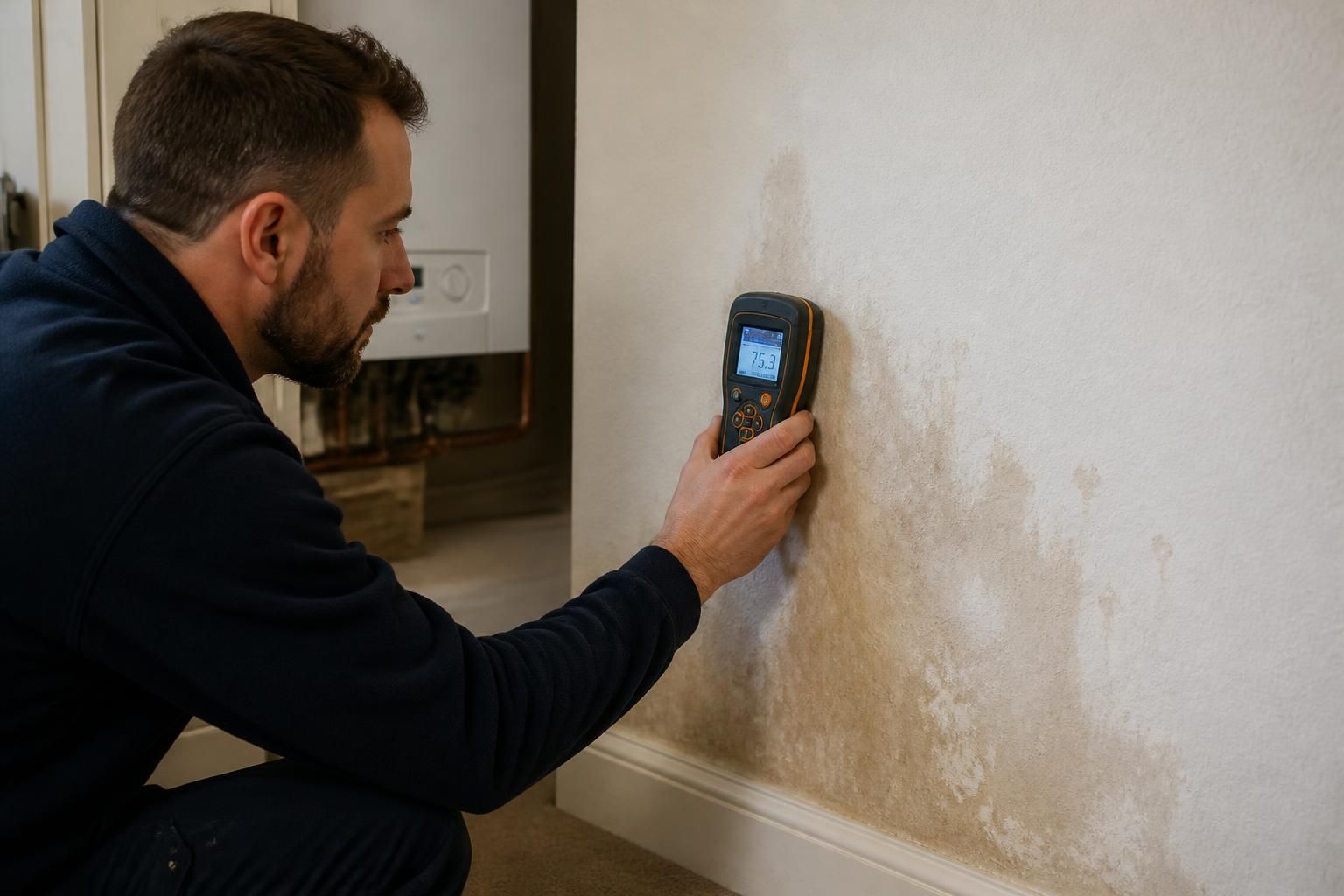
The access required for wall leak detection depends mainly on the wall’s construction, the position of nearby plumbing and how clearly the moisture pattern indicates the source. In many cases, the inspection can be completed from the room where the staining, dampness or damage is visible, together with access to relevant taps, valves, appliances or pipe connections.
Access may include:
- Moving furniture, stored items or coverings away from the affected wall.
- Opening cupboards beneath sinks, basins or boilers where pipework may be concealed.
- Providing access to the adjoining room if the pipe is located within a separating wall.
- Checking the room above or below where water may be travelling through the building.
- Allowing inspection around skirting boards, boxing-in, service panels and removable fixtures.
Wall finishes do not always correspond with the position of the leak itself. Water can travel along plasterboard, masonry, insulation or pipe channels before becoming visible, so the damp patch may be some distance from the failed joint or pipe. This is why access to neighbouring areas can help distinguish the original source from the point where water has emerged.
Where the pipework is behind tiles, plaster, wall panels or other fixed finishes, detection can often establish whether further investigation is justified before any surface is disturbed. If confirmation requires a physical inspection, the opening should be limited to the most informative location rather than removing an unnecessarily large section of wall. The exact method depends on the wall material and whether the suspected pipe carries water, heating water or waste.
Good preparation can reduce disruption. Clear the area around the affected wall, make accessible any removable panels or cupboards, and identify recent changes such as decorating, fitting replacement appliances or alterations to pipework. Do not remove tiles, plaster or fitted units before the source has been assessed, as this can create additional damage without improving access to the relevant pipe.
For rented accommodation, the tenant should arrange permission for the inspection and any opening-up work with the landlord or managing agent beforehand. Ideal Plumbing Services can assess the available access, trace the suspected source and explain whether a further opening is necessary for repair.