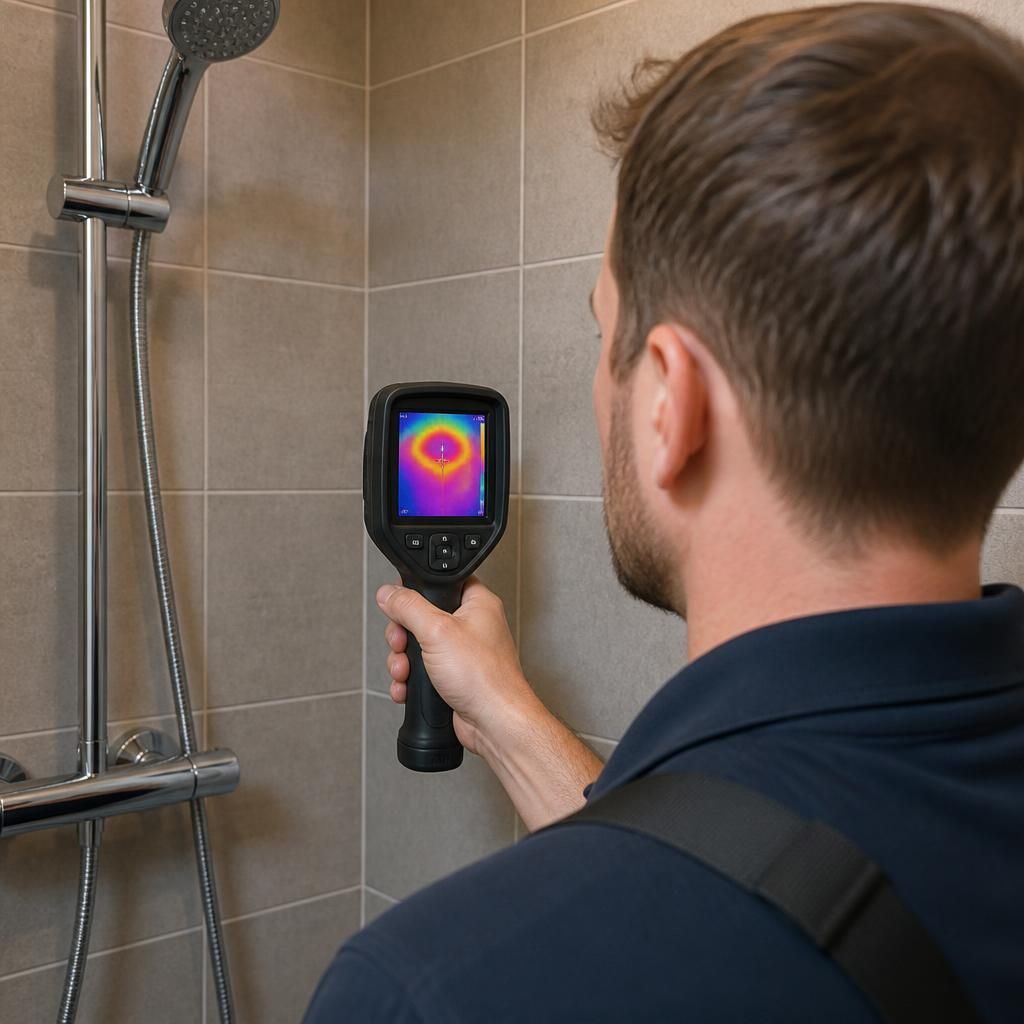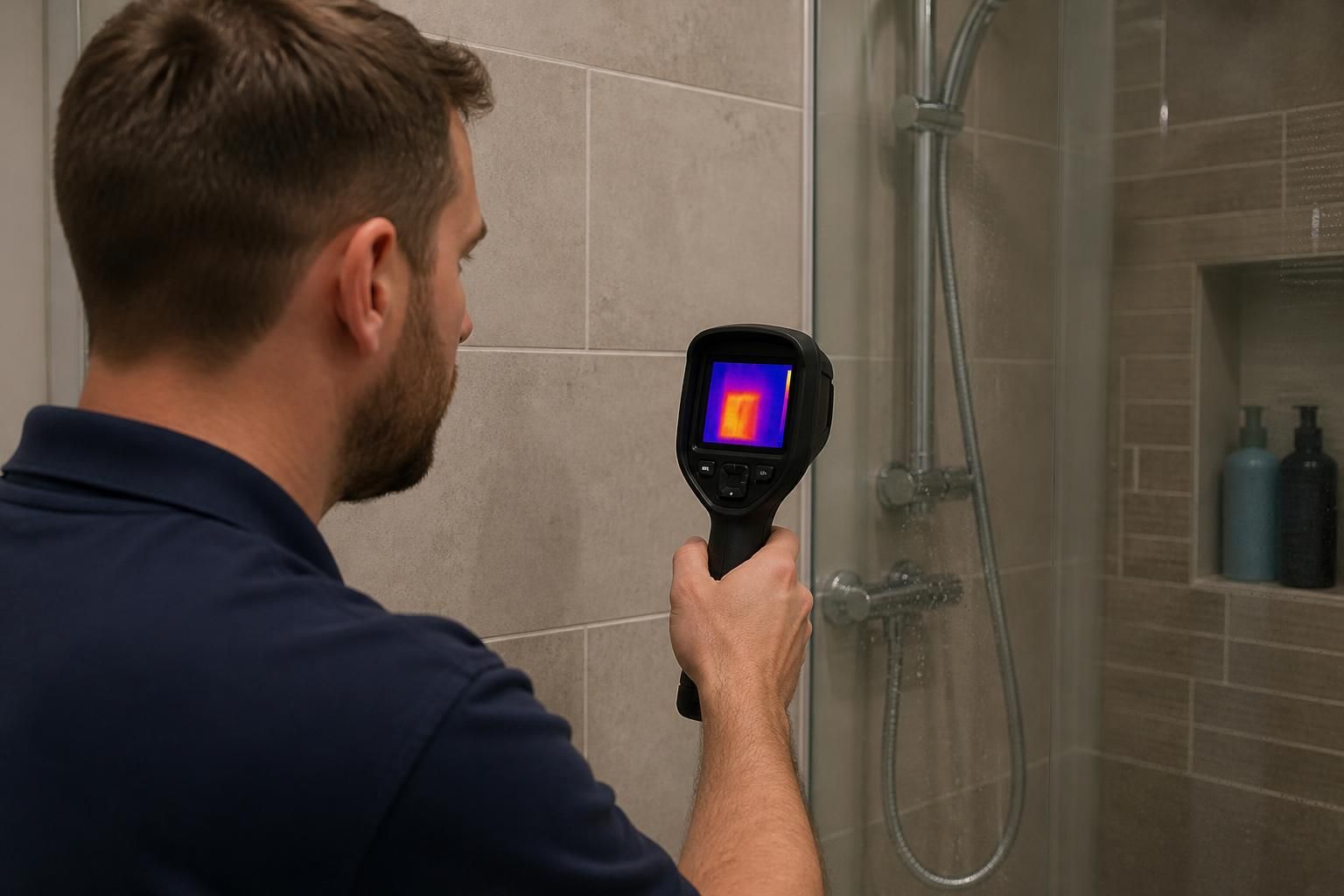
Yes. Wall leak detection can identify whether moisture behind a shower wall is likely to come from a pressurised supply pipe, a shower fitting, a waste connection or water escaping through failed seals. It can also help distinguish a leak within the wall from water that has entered from the shower surface and travelled behind tiles or wall coverings.
Finding the source is important because the visible damp patch is not always directly above the failed component. Water can move along pipework, adhesive, plasterboard or masonry before appearing at a joint, skirting board, ceiling or adjoining room. A damp mark on the opposite side of the wall may therefore relate to the shower, even when the shower fittings themselves look intact.
Common shower-wall leak sources include:
- Connections around a mixer, valve, shower arm or other fitting
- Pipework supplying the shower, particularly around joints and bends
- A poorly sealed shower tray, bath edge or wall penetration
- Cracked or deteriorated silicone around corners, joints and fittings
- Damaged grout or gaps that allow repeated water penetration
- A waste or trap connection concealed beneath or beside the shower area
The investigation usually begins with a visual assessment of the shower enclosure and the affected room. The condition of silicone, grout, wall finishes, pipe access points and nearby flooring can provide useful clues. The timing of the dampness also matters: moisture that appears only while the shower is running may point towards the enclosure, fittings or waste, whereas moisture that remains present when the shower is unused may require checks to the supply pipework or previously absorbed water.
Controlled testing can help narrow down the source. A plumber may compare readings around the shower wall and adjacent surfaces, inspect accessible connections, isolate sections of the plumbing where appropriate and test whether the moisture changes when the shower or waste is used. These checks are designed to separate an active leak from residual dampness left after an earlier escape of water.
It is also necessary to consider causes that can resemble a concealed shower leak. Condensation, water splashing beyond the enclosure, a blocked waste, a leaking radiator pipe on the other side of the wall or moisture rising from a floor can all create similar marks. A diagnosis should therefore be based on the pattern and behaviour of the moisture rather than on one damp patch alone.
Detection can usually establish three separate points:
- Where moisture is present and how far it has spread
- Which part of the shower or plumbing system is most likely to be responsible
- Whether further access is needed to confirm the exact failed component
Detection does not always identify the precise defect without any further investigation. If moisture has spread widely, if several components are close together or if the leak is intermittent, the findings may indicate the most likely area rather than prove the exact joint or seal at first inspection. In some cases, a small, carefully selected access point is needed to inspect a pipe or connection and plan the repair accurately. This is different from removing large areas of wall or stripping the entire shower.
The construction of the wall affects the investigation. Tiled plasterboard can retain moisture around its backing, while solid masonry may allow water to travel through joints and cavities. In a wet-room style installation, the waterproofing layer and floor-to-wall junction also need consideration. A shower that appears sound on the surface may still have a failure at a concealed junction or penetration.
Once the likely source has been located, the appropriate repair may involve renewing a connection, replacing a section of pipe, resealing a fitting or correcting a waste connection. Replacing surface sealant alone will not resolve a pressurised pipe leak, and repainting a damp wall before it has dried can conceal continuing damage. The cause should be addressed first, followed by suitable drying and reinstatement of affected finishes.
If you notice persistent dampness, staining, a musty smell, lifting paint or damage on the wall beside a shower, avoid relying on fresh sealant as a diagnosis. Stop using the shower if doing so appears to increase the moisture, keep the area under observation and arrange an assessment from Ideal Plumbing Services. For rented homes, recording the affected areas and informing the landlord or managing agent can help coordinate access and any necessary repair.