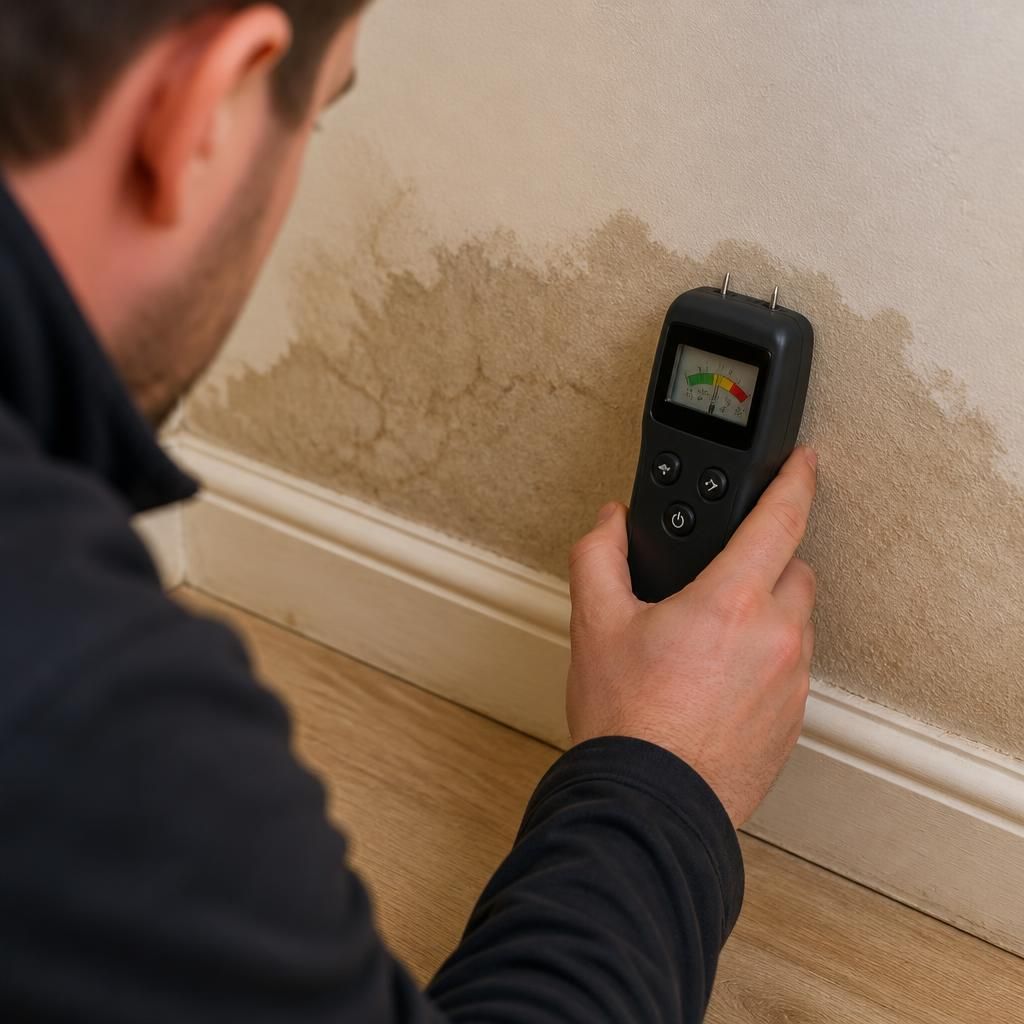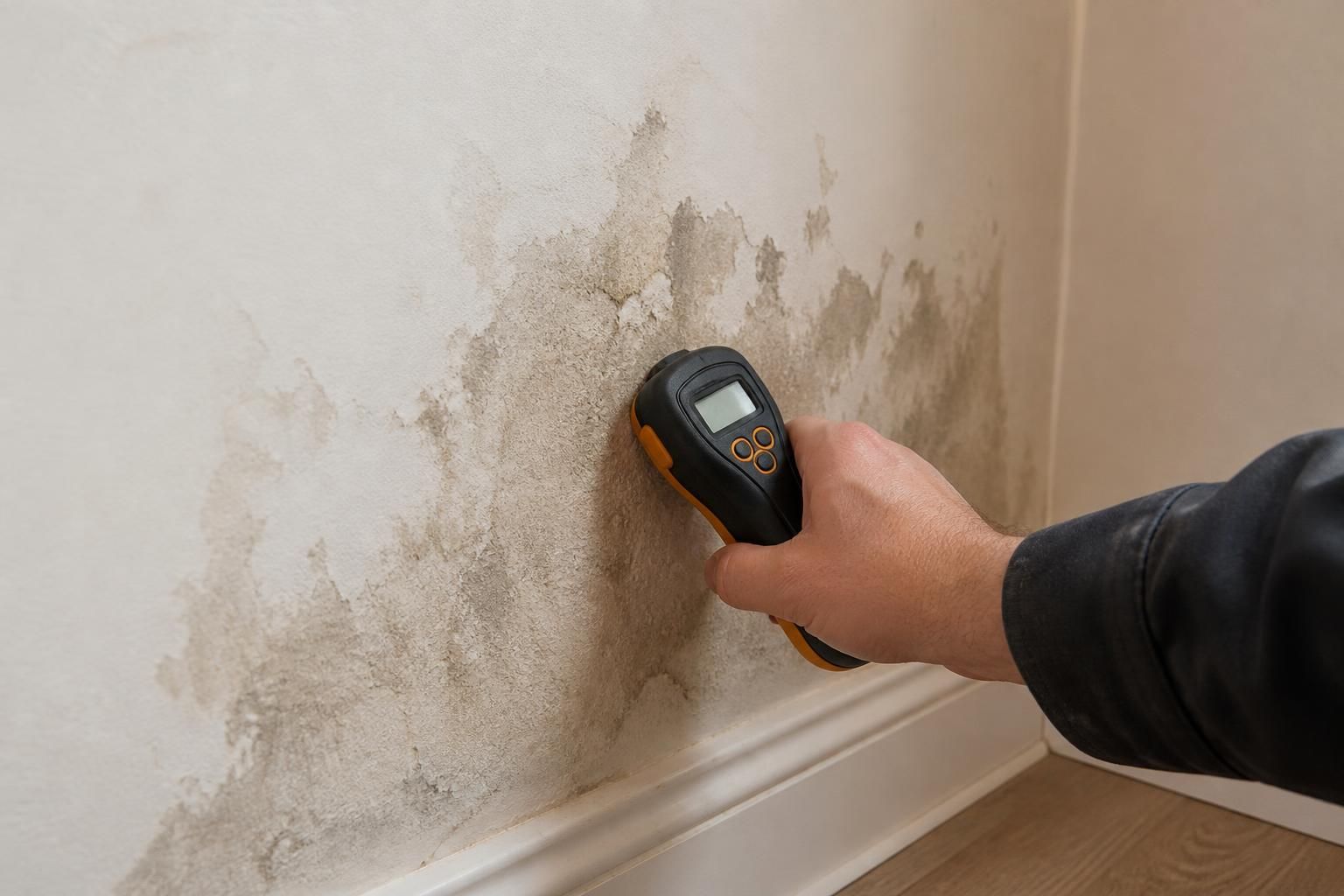
A concealed leak is more likely when damage follows a clear pattern, returns after the surface has dried, or appears close to plumbing rather than across the wall evenly. The most useful clues are changes to adjoining materials, repeated deterioration in one location and evidence that water is travelling from a concealed pipe or connection.
Look beyond the wall surface
- Lifted or distorted flooring: laminate, vinyl, carpet underlay and timber boards may buckle, swell or feel unstable near the affected wall. Water can travel down inside a partition and emerge at floor level, so the visible damage may not be directly beside the failed pipe.
- Swollen skirting boards and door frames: timber can expand, separate at its joints or become difficult to open and close. This is particularly significant where the skirting is against a bathroom, kitchen, utility room or wall containing heating pipework.
- Salt-like deposits: white, powdery marks on masonry or plaster can form as water carries soluble materials to the surface and evaporates. They may return after cleaning if the source has not been dealt with.
- Changes in wall shape: bubbling, bulging or a soft area beneath the surface can indicate that plasterboard, plaster or insulation has absorbed water. Do not press hard into a bulge, as damaged material may be weaker than it appears.
- Damage that follows a route: a narrow vertical or horizontal line, or deterioration around a pipe box, valve or fitting, can show how water is moving through the wall rather than where it began.
Consider what is on the other side
A concealed leak is more suspicious when the affected area backs onto a bathroom, kitchen sink, dishwasher, washing machine, radiator or boiler pipework. Damage that becomes more noticeable after using one particular fixture may point towards its supply, waste or connection. A problem near a shower can also come from failed seals or joints, allowing water into the wall during use rather than from a pressurised supply pipe.
Damage in an adjacent room does not necessarily mean the pipe is located there. Water can move sideways along floor voids, insulation or wall cavities. For this reason, cutting open the most obvious area may create unnecessary damage without exposing the source.
Separate a leak from condensation or surface water
Condensation usually affects colder surfaces and may be widespread, particularly around windows or corners. A plumbing leak tends to produce a more localised pattern, may correspond with pipework or a sanitary fitting, and can continue even when the room is adequately ventilated. Rain penetration is more likely to vary with weather and to affect external-facing walls, window reveals or roof junctions. These patterns are useful clues, but they do not prove the source.
Check for changes over time
Record when the affected area appears worse, which appliances or taps have been used, and whether the problem changes when the central heating is running. Compare photographs taken from the same position and note any changes to flooring, skirting or plaster. A recurring mark after repainting or drying suggests that the underlying cause remains active.
Do not rely on a wall looking dry as proof that the leak has stopped. Water may be intermittent, hidden behind a protective lining or escaping into a floor void. Conversely, retained moisture from an old incident can leave damage after the original fault has been repaired. Moisture meters, thermal imaging and acoustic or tracer-based techniques can help establish the extent and likely route without immediately removing large sections of wall.
What to do if you suspect a concealed leak
- Stop using nearby taps, showers or appliances if one appears to trigger the problem.
- Check accessible pipe connections for active dripping, without removing panels or disturbing sealed fittings.
- Move furniture and belongings away from the affected area.
- Keep electrical sockets, switches and appliances away from any suspected water. If water is close to electrics, avoid contact and seek appropriate assistance.
- Do not drill, nail or chase into the wall until the pipe route has been assessed.
- Arrange a professional inspection if the cause is not clear, the damage is spreading or the issue returns after drying.
Ideal Plumbing Services provides water leak detection and repair for residential properties in Birmingham and the wider West Midlands. A structured inspection can help distinguish a supply-pipe failure from a heating, waste or shower-related problem, identify the likely source and determine the least disruptive repair approach.