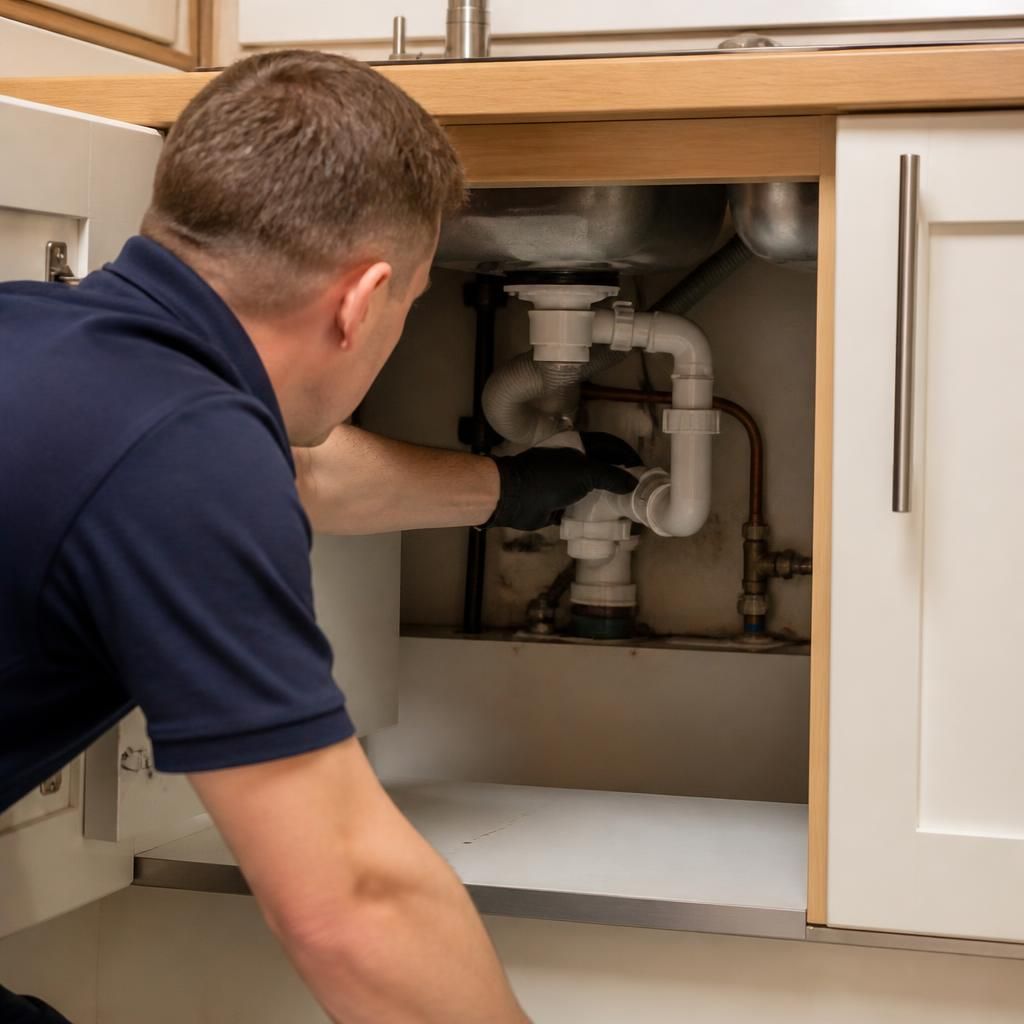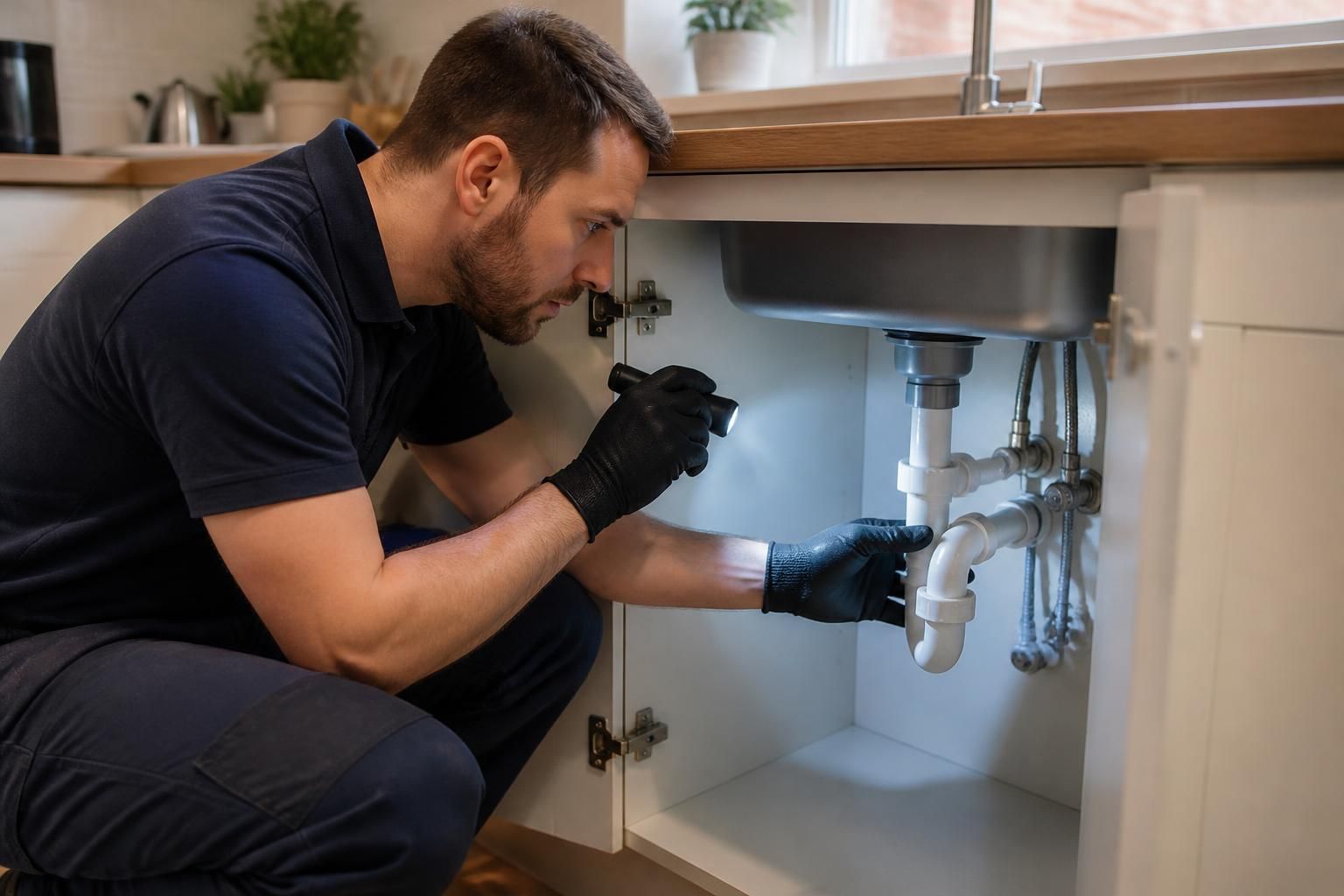
The deciding factor is whether the leaking or damaged component can be reached and worked on safely. Kitchen plumbing repairs are often possible through existing access points, but a plumber must also have enough room to isolate the water supply, remove the faulty part, test the repair and check for further leakage.
Repairs that commonly need limited access
- Replacing a trap, waste connection or accessible section of pipework beneath the sink.
- Repairing or replacing isolation valves and flexible supply hoses.
- Reconnecting a loose waste fitting or tightening a leaking compression joint.
- Replacing a tap when the connections can be reached from inside the sink unit.
- Repairing pipework exposed behind a removable plinth or service panel.
These jobs can usually be assessed and completed through the cupboard opening, provided the pipework is not fixed tightly against the rear wall and there is sufficient working space.
When cabinet removal may be necessary
Cabinetry may need to be partly dismantled if the faulty pipe is behind a fixed back panel, beneath a built-in unit or within the wall or floor behind the cupboards. Access may also be restricted where pipework has been boxed in, flooring has been fitted over a joint, or a previous repair has left connections difficult to reach.
Removal does not necessarily mean taking out the entire kitchen. A plumber may only need to remove a plinth, detach a back panel, take out a shelf or release one cabinet from its neighbouring unit. The least disruptive access method depends on how the kitchen was installed and where the pipework runs.
How the access requirement is assessed
- The water supply is identified and isolated where necessary.
- The visible pipework, joints, valves and surrounding surfaces are inspected for signs of moisture, staining, corrosion or mould.
- The likely source is compared with the point where water is appearing, as leaks can travel along cabinets, flooring and pipework.
- Access panels, plinths and cupboard interiors are checked before any fixed cabinetry is considered for removal.
- The repair method is assessed, including whether the component can be removed and refitted without damaging surrounding units.
Finding the source accurately is important. Drying the visible water or sealing an accessible joint may not resolve the problem if the actual leak is further along a concealed supply or waste pipe.
What affects the condition of the cabinets
Water exposure can swell chipboard, weaken cabinet bases and damage decorative coverings. If a cabinet has already absorbed water, carefully controlled access may be preferable to leaving the leak concealed. A plumber should protect the surrounding area and avoid forcing fittings through a restricted opening, since this can damage both the plumbing connection and the cabinet.
Cabinet panels that were designed to be removable are generally easier to access than glued, nailed or integrated sections. The condition of fixings, sealant and adjacent worktops also affects whether a panel can be removed and reinstated cleanly.
What to do before the repair
- Remove stored items from the affected cupboard and clear the area around the sink.
- Keep towels or a container available for residual water after the supply is isolated.
- Do not apply permanent sealant over a leaking joint, as this can hide the source and make later repairs harder.
- Tell the plumber about any previous leaks, alterations or areas of flooring and cabinetry that have become swollen.
If access is limited, the repair should be explained before work begins. This includes identifying which panel or section may need to be removed, whether it is likely to be reusable and what further work could be required if the pipework extends behind the units. Ideal Plumbing Services can assess kitchen leaks and damaged fittings, then recommend the least disruptive suitable repair for the installation.