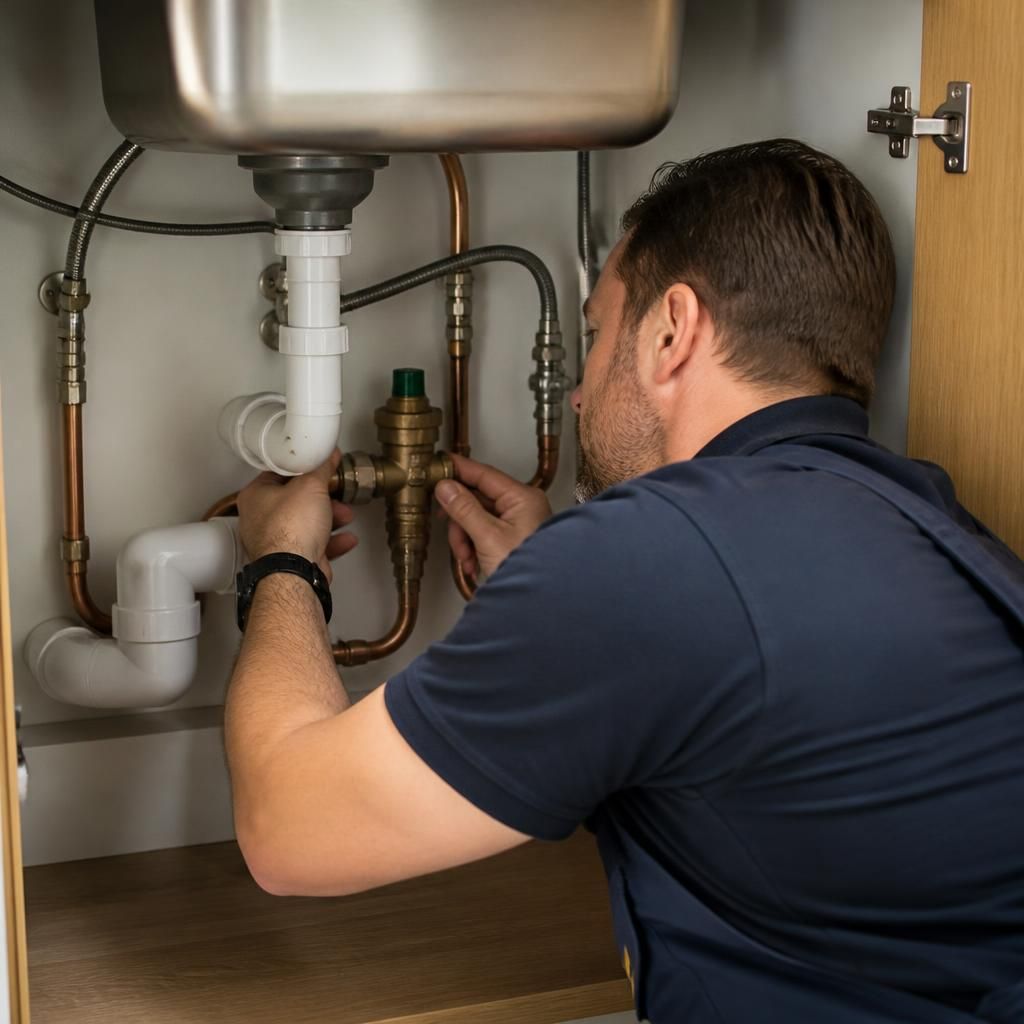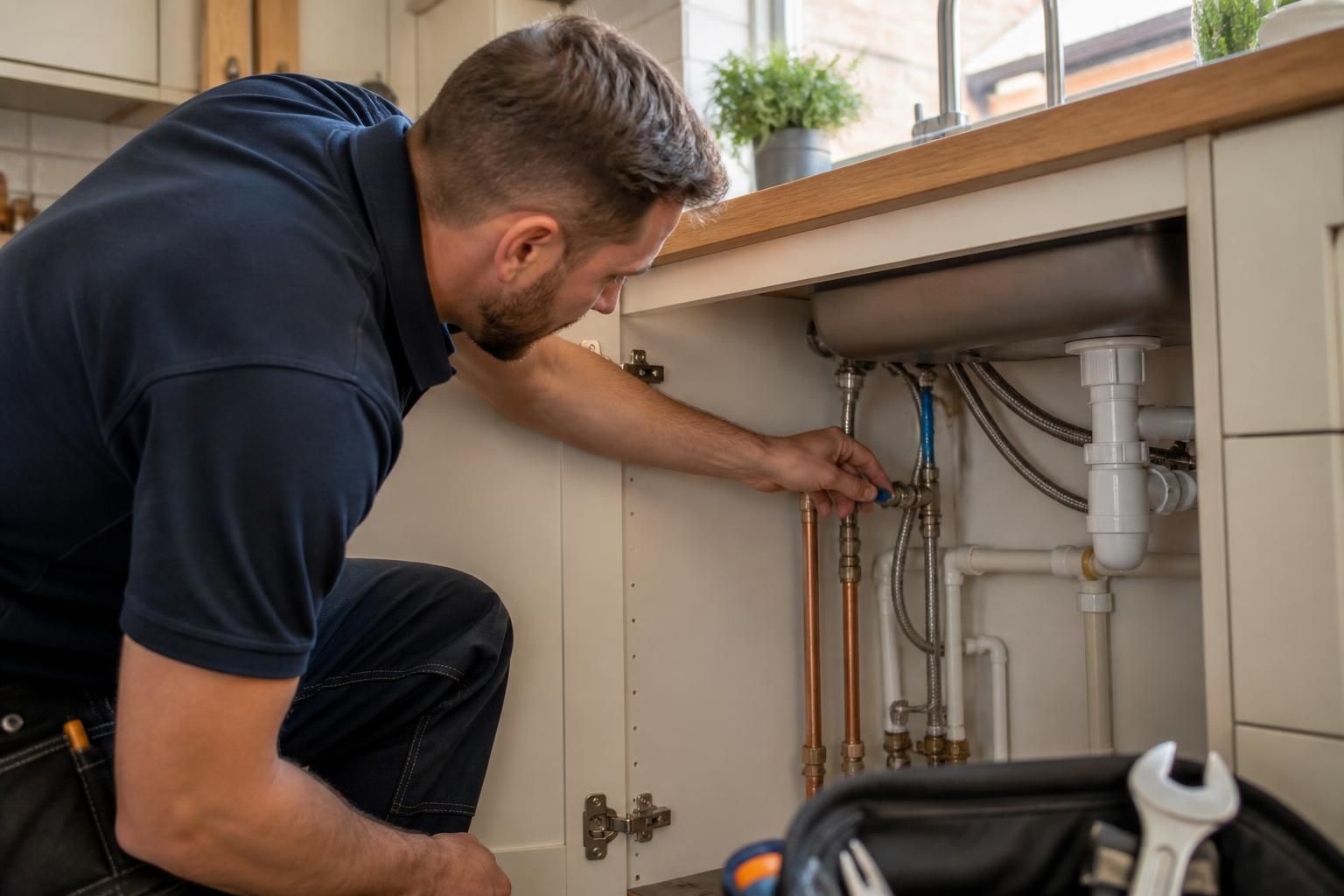
Low water pressure at a kitchen sink means the tap is receiving less force than expected, resulting in a weak or slow stream. The cause may be local to the sink, such as a restricted connection or unsuitable tap component, or it may affect the property’s wider cold-water system. Identifying whether the problem affects one outlet or several is the most useful first step.
Check whether the fault is isolated. Run the kitchen tap, bathroom taps and any other cold-water outlets separately. If only the kitchen sink is affected, the likely fault is beneath the sink, within the tap assembly or in the connection serving that outlet. If several outlets have weakened, the issue is more likely to involve the incoming service, internal distribution or a pressure-control component.
Inspect the flexible supply hoses. Modern kitchen taps are often connected using braided or reinforced flexible hoses. A hose that has been sharply bent, crushed against the back of a cabinet or twisted during previous work can restrict the amount of water reaching the tap. The connection may also contain a small internal screen or flow-control insert that has become obstructed. These parts should be examined carefully rather than pulled or disconnected unnecessarily, particularly if the surrounding fittings are old.
Consider under-sink filters and treatment equipment. Drinking-water filters, inline cartridges, water softeners and other accessories can reduce flow when their cartridges become saturated or their internal passages become restricted. Temporarily comparing the filtered and unfiltered supply, where the installation allows this safely, can help identify whether the additional equipment is involved. A filter cartridge should be replaced according to its instructions, and any alteration to drinking-water connections should be carried out hygienically.
Tap design can affect the flow. Some modern mixer taps include flow regulators, spray functions or separate internal channels that limit delivery compared with a conventional tap. A recently installed tap may therefore appear weaker than the previous fitting even though the incoming supply has not changed. A fault in the mixer mechanism, a damaged internal seal or an incorrectly fitted component can also reduce flow on either the hot side, the cold side or both.
Compare hot and cold water. Weak cold flow only points towards the cold-water connection or cold-water distribution. Weak hot flow only may indicate a restriction in the hot-water pipe, a problem with the hot-water appliance or an issue affecting the hot-water outlet. If both sides are equally poor at the kitchen sink but other taps work normally, the restriction is more likely to be close to the tap.
Look for signs of a concealed leak. A sudden reduction in flow accompanied by damp cabinet panels, staining, a sound of running water or unexplained moisture should be investigated promptly. A leak can divert water before it reaches the tap and may damage cupboards, flooring or nearby electrical components. Do not place hands near electrical equipment in a wet cabinet; isolate the water supply if it can be done safely and arrange an inspection.
Pressure and flow are not identical. Pressure is the force pushing water through the system, while flow is the volume delivered through the outlet. A tap may have adequate pressure but poor flow because of a restriction, narrow connection or flow-control device. Conversely, a property can have low incoming pressure affecting multiple outlets. This distinction helps prevent an unsuitable repair, such as replacing a tap when the underlying issue is within the supply system.
Before investigating, note whether the change was gradual or sudden, whether it affects hot water, cold water or both, and whether other outlets have changed. Check the cabinet for dampness and make sure any visible hose is not kinked. Avoid dismantling pressurised fittings or forcing old connections, as this can create a leak and make the fault more difficult to isolate.
A plumber will normally assess the affected outlet, inspect accessible connections, compare flow at other points and test the relevant supply sections. Where necessary, they can determine whether the restriction is within the tap, an accessory, the property’s internal plumbing or the incoming service. The remedy may involve cleaning or replacing a component, correcting a connection, renewing a tap or carrying out a more detailed plumbing investigation.
Ideal Plumbing Services provides residential plumbing assistance in Birmingham and across the West Midlands, including investigation of kitchen water-supply faults. Professional assessment is particularly appropriate when the loss of flow is sudden, several outlets are affected, there is evidence of a leak, or basic visual checks have not identified the cause.