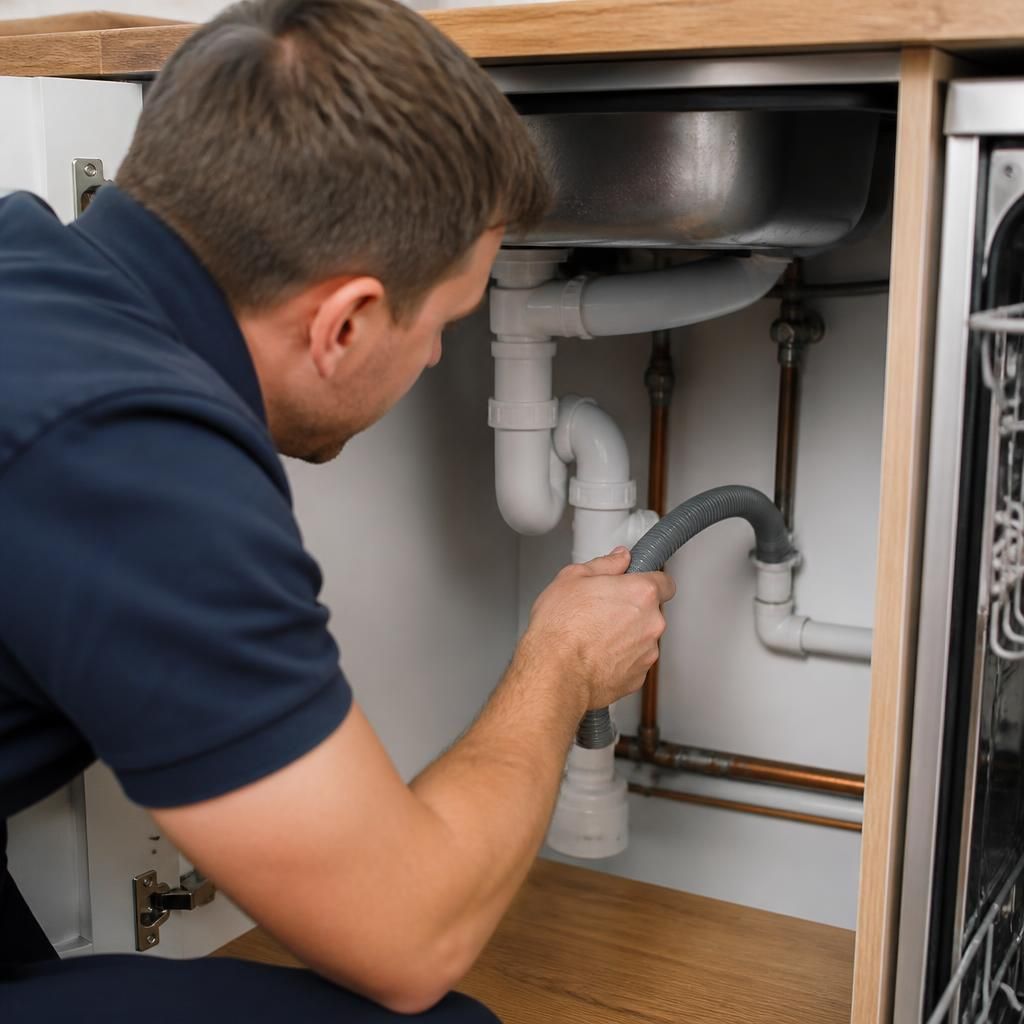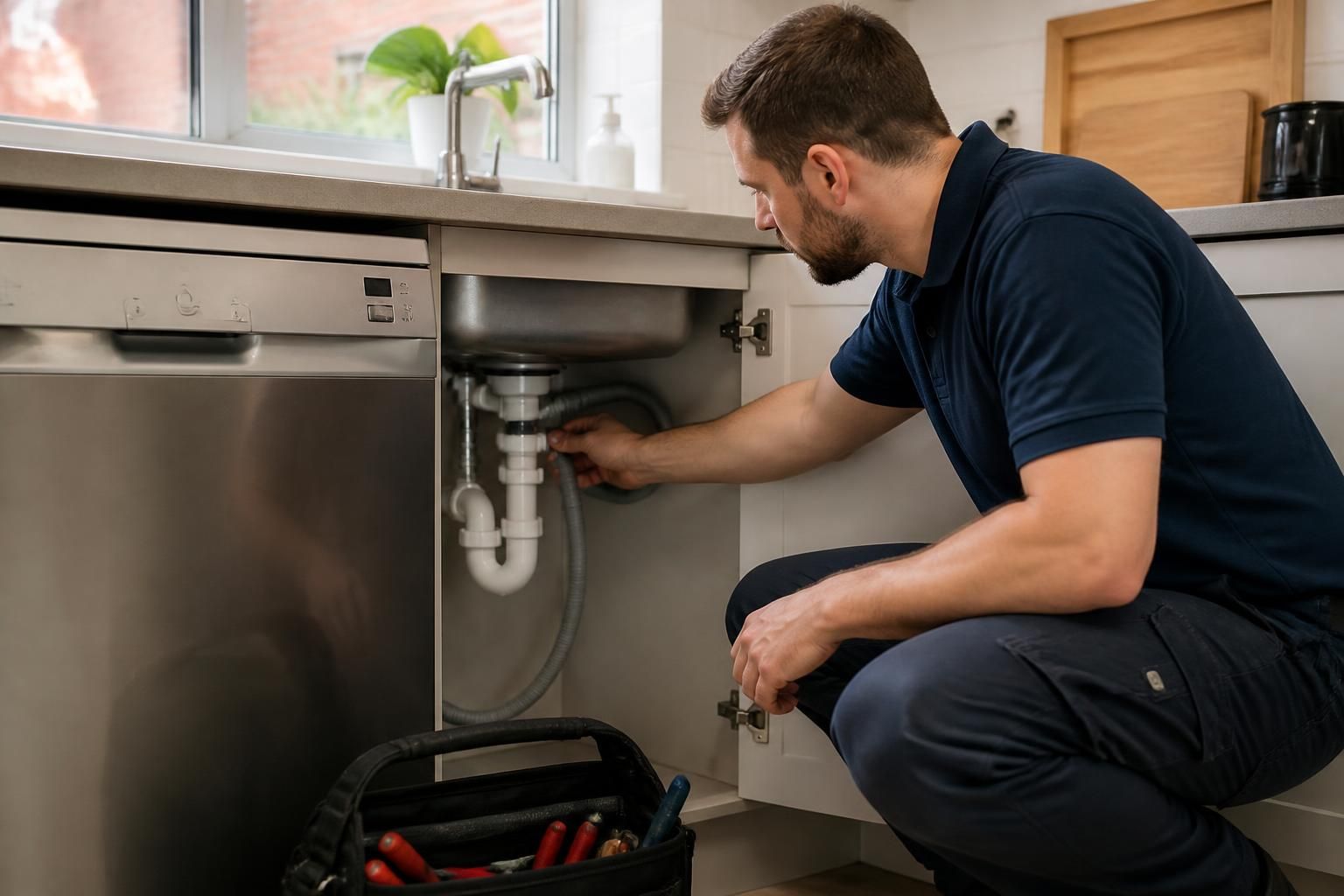
The key distinction is between an appliance involved in the plumbing fault and one that is simply located in the kitchen. A dishwasher, washing machine, boiling-water tap, water filter or appliance connected to the sink waste may need to remain unused until the plumbing connection has been inspected. An appliance with no connection to the affected pipework will not usually be relevant to the visit.
Before the plumber arrives, identify exactly what has happened and note:
- Which appliance or fitting was being used when the problem appeared
- Whether the issue involves a supply hose, waste hose, trap, tap, valve or drain
- Where water has appeared, such as beneath a sink, behind an appliance or inside a cabinet
- Whether there is reduced drainage, an unusual noise, a smell or a change in water pressure
- Whether the problem is constant or only occurs when the appliance runs
These details help distinguish a supply-side leak from a waste connection or drainage problem. If it is safe to do so, photographs of visible water damage, pipe connections and the appliance position can also provide useful information. Do not run a cycle simply to reproduce the fault, as this can release more water into the cabinet, flooring or adjoining units.
Make the affected area accessible before the visit. Remove cleaning products, pans and stored items from beneath the sink, and clear the floor around the appliance where possible. If a dishwasher or washing machine is tightly fitted between units, the plumber may need to inspect the hose connections, isolation valve or waste connection at the rear. Do not pull out a built-in appliance or disconnect pipework yourself unless this can be done without creating a further leak or damaging the unit.
Keep towels or a suitable container available for minor residual drips, but do not use cloths to conceal an active leak or block access to the connection. If water has reached flooring, cabinets or stored goods, move removable items away from the area and ventilate the space where practical to limit further damage.
Some visits involve checking more than the appliance itself. A dishwasher that is not draining may have a blocked waste hose, sink trap or branch connection, while water beneath a washing machine may come from the inlet hose, valve or waste outlet. A leak that appears only when the appliance empties points towards the waste route; a leak present while it is filling points more towards the supply connection. The plumber can confirm the cause rather than relying on the location where water first becomes visible.
If you rent the property, check whether the landlord or managing agent needs to be informed before repair work or appliance movement is authorised. For homeowners, check whether the appliance has its own isolation valve and keep any installation information available, although the plumbing connection should be assessed by a qualified professional if the cause is unclear.
Ideal Plumbing Services provides kitchen plumbing inspections and repairs for homeowners, landlords and tenants in Birmingham and across the West Midlands. Clear information about the appliance, the symptoms and any previous repair can help the plumber assess the fault efficiently and determine whether the issue is with the appliance connection, the kitchen plumbing or the drainage system.