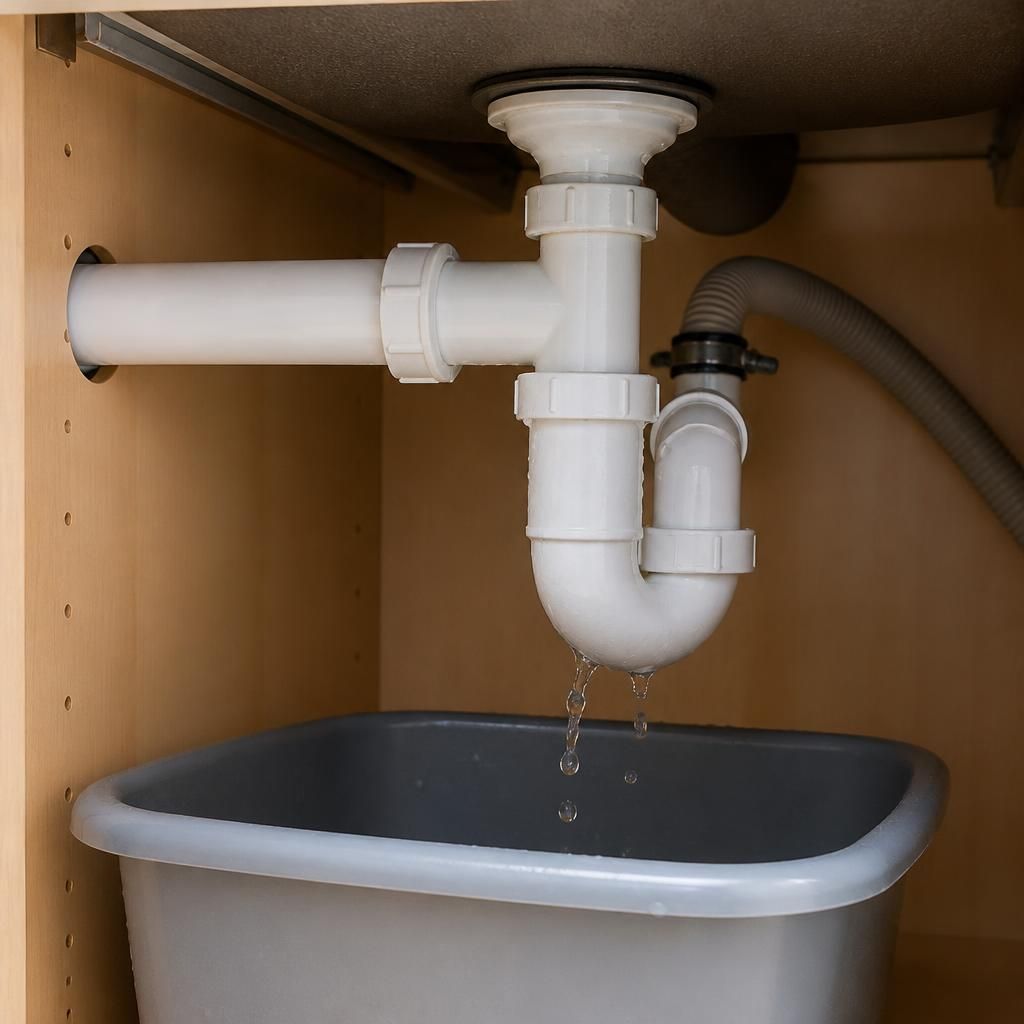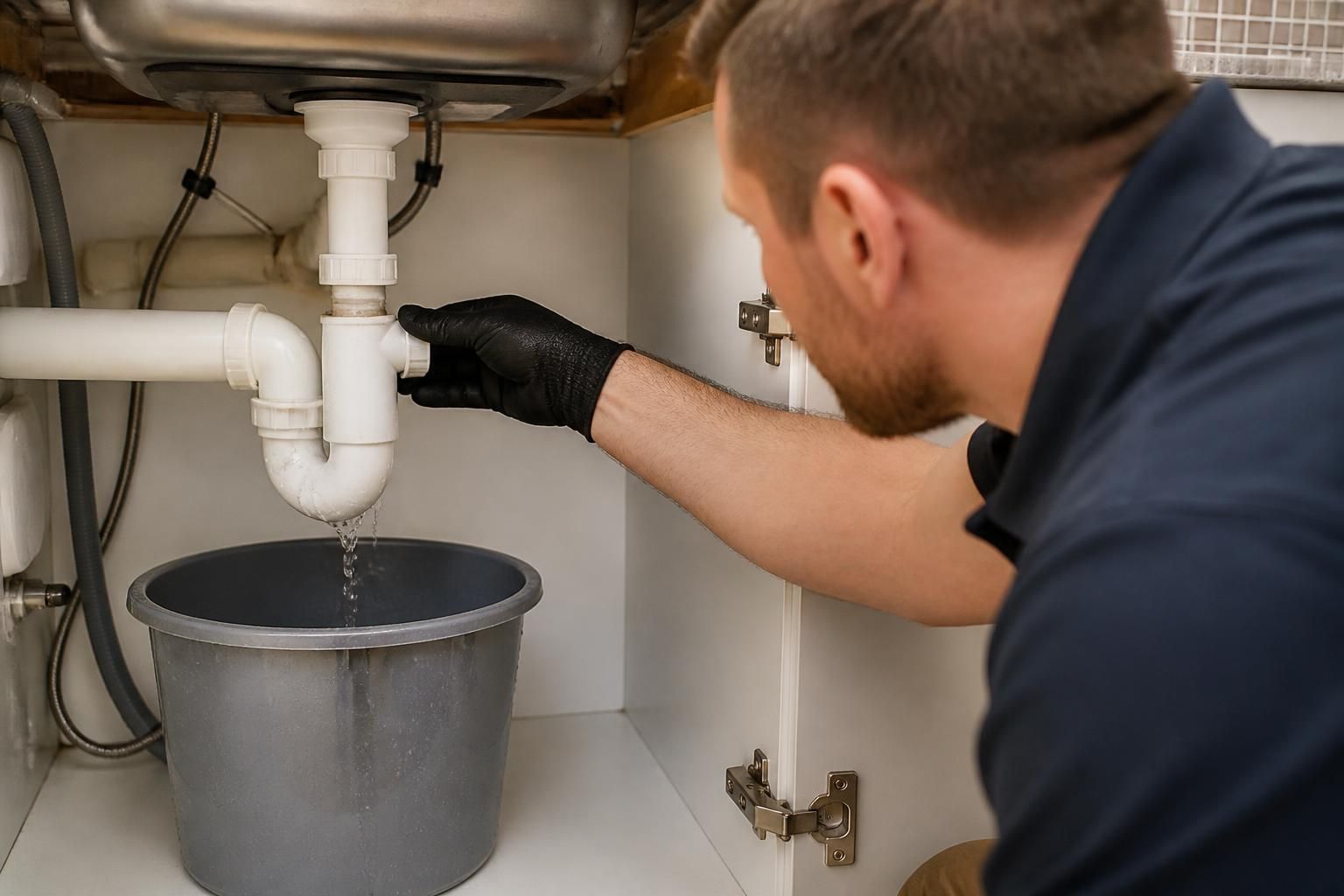
A leaking kitchen sink waste pipe is a fault in the pipework that carries used water from the sink or waste disposal connection to the household drainage system. The leak usually occurs at a removable joint, trap, seal or section of pipe beneath the sink, and it should be dealt with before moisture damages the cabinet, plinth, flooring or adjacent fittings.
First, identify precisely where the water is escaping. Dry the outside of the pipework, then watch the joints while a small amount of water is released from the sink. Check whether the leak appears:
- around the sink waste fitting, where the waste connects to the basin;
- at the trap, which is the curved section designed to retain water and block drain odours;
- at a compression nut or slip joint;
- where the dishwasher or washing machine waste hose joins the pipework; or
- from a crack, split or poorly aligned length of waste pipe.
Water may travel along the underside of a pipe before dripping, so the lowest visible point is not always the source. If the leak only appears when the sink drains, the problem is likely to be within the waste system rather than the incoming water supply.
Common causes include a perished rubber washer, a displaced seal, a loose or cross-threaded compression fitting, movement in the pipework, a partial blockage creating pressure at a joint, and impact damage. Plastic components can also become brittle over time. A waste pipe that has been forced into position or supported inadequately may pull against its joints whenever the sink or connected appliance discharges.
Do not apply excessive force to plastic compression fittings. Over-tightening can distort the seal or split the nut, turning a minor joint leak into a replacement job. Sealants and tape applied externally may conceal the symptom without repairing the failed washer or damaged component. If a joint will not align correctly, or if the pipe is cracked, the affected part normally needs to be dismantled and replaced.
Where water has reached the cabinet or flooring, remove stored items and inspect the surrounding materials. Swollen chipboard, lifting flooring, staining, mould-like odours and persistent dampness indicate that moisture has been present for more than a single drip. Drying the area and correcting the leak are both important; drying alone will not prevent further damage if the pipe continues to discharge.
A qualified plumber will usually inspect the complete waste route rather than replacing only the point where water is visible. The assessment may include checking the sink waste seal, trap, appliance connections, pipe gradient, supports and connection to the branch drain. The appropriate repair might be a new washer, replacement trap, renewed compression joint or replacement section of waste pipe. If a blockage is contributing to the leak, that cause also needs to be addressed.
Professional help is particularly advisable when the leak is inside a fitted cabinet, close to electrical connections, beneath flooring, connected to an appliance, or accompanied by foul odours or repeated drainage problems. Tenants should also report the issue to their landlord or managing agent in line with their tenancy arrangements, while avoiding alterations that could affect responsibility for the repair.
Ideal Plumbing Services provides kitchen plumbing inspections and repairs for homeowners, landlords and tenants in Birmingham and across the West Midlands. The work can cover diagnosis of the leaking waste pipe, replacement of failed components and checks for related drainage faults, with clear advice on the repair required.