A leaking kitchen tap should be repaired when the tap body and mounting remain sound and the fault can be isolated to a serviceable component. Replacement is usually the better option when the tap is reaching the end of its useful life, is difficult to maintain, or would need several related components to restore reliable operation. The correct choice depends on where the water is escaping, the tap’s construction and condition, and whether compatible parts can be fitted securely.
First identify where the leak is coming from. A drip from the spout is different from water around the handle, tap base or connections beneath the sink. Water appearing in the cupboard may be coming from a flexible hose, isolation valve or compression connection rather than the tap itself. Misdiagnosing the source can lead to an unnecessary tap replacement while the actual plumbing fault remains.
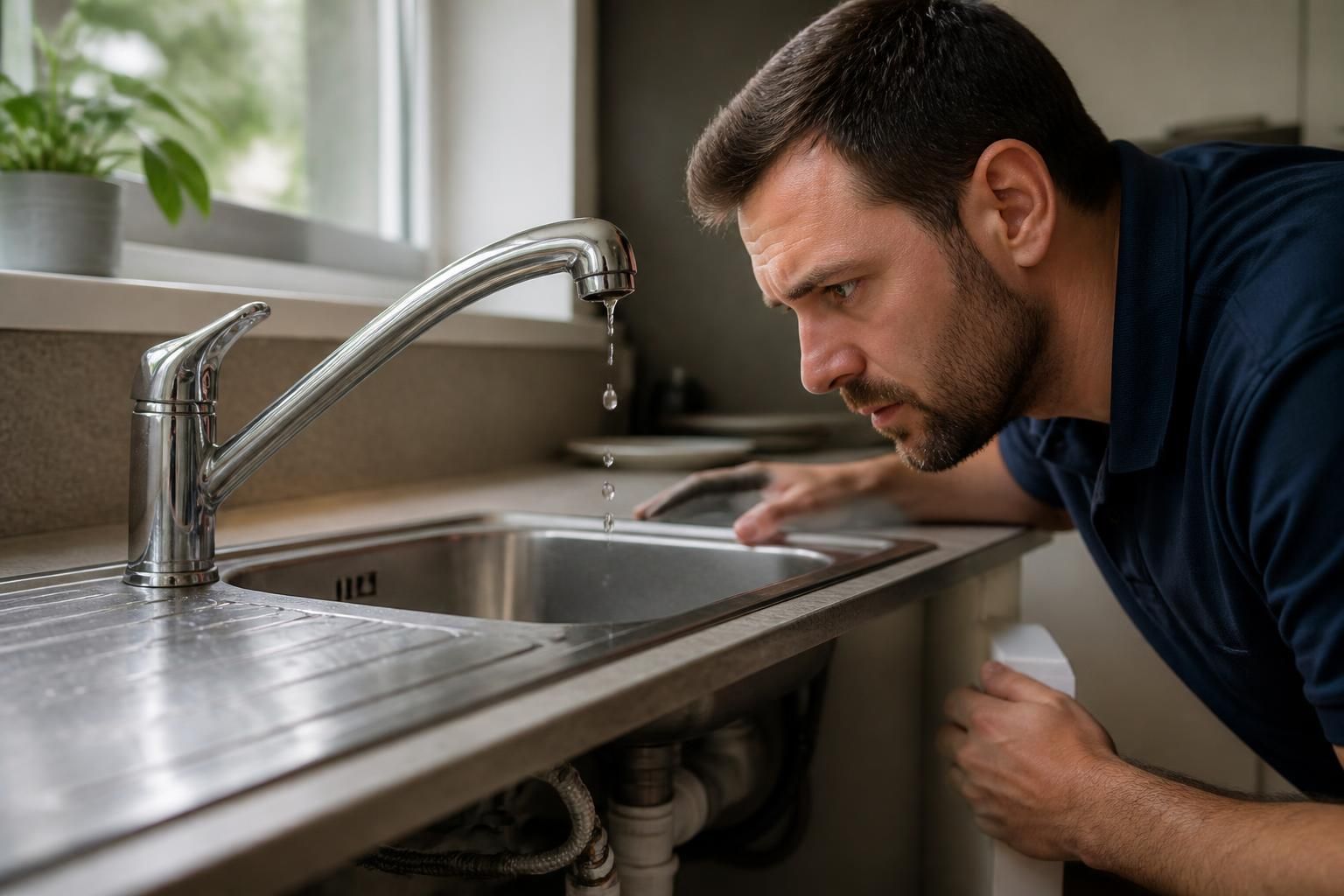
- Spout leakage: water continues to drip after the tap is closed, indicating a problem within the valve assembly.
- Handle leakage: water appears around the control, often when the tap is operated, which may indicate a worn internal seal or a problem with the handle assembly.
- Base leakage: water gathers around the point where the tap meets the sink. This can be caused by a failed seal, movement in the mounting or water running down the tap during use.
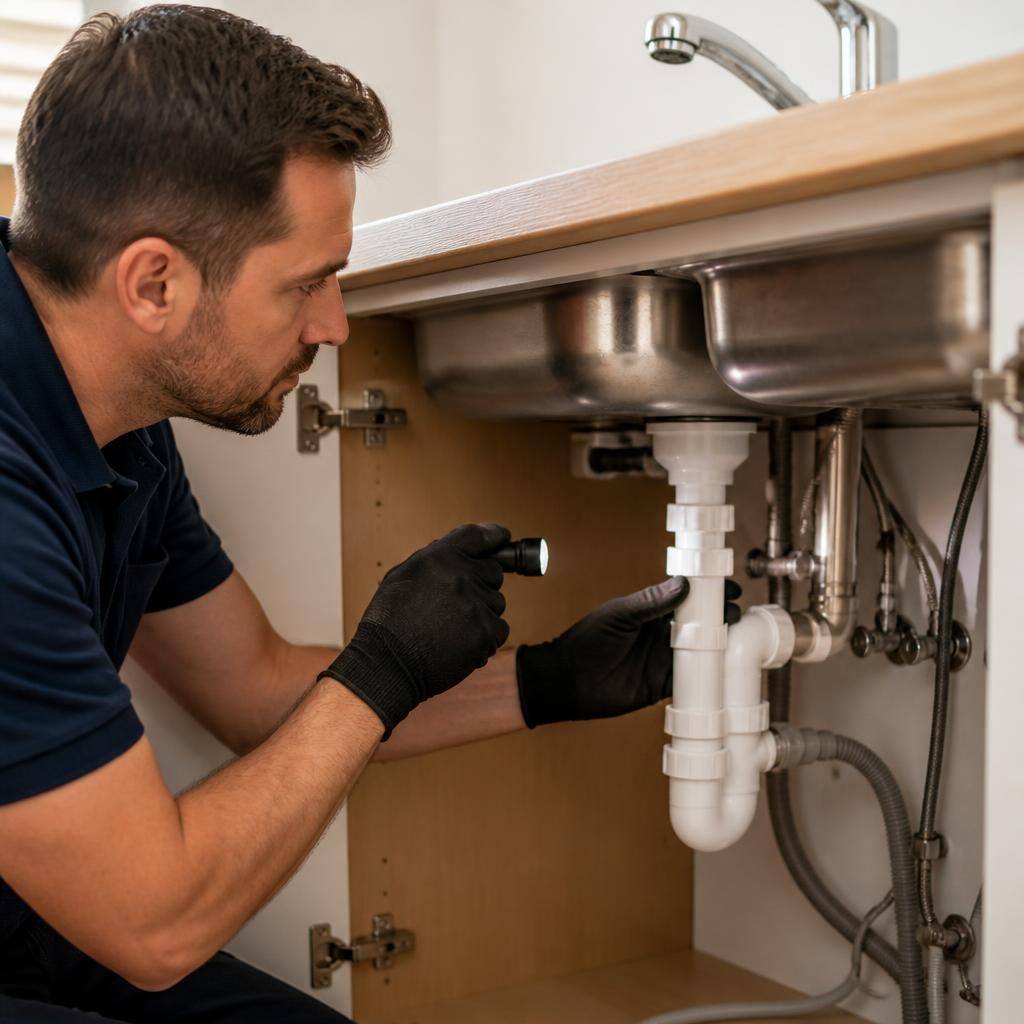
- Under-sink leakage: inspect the supply tails, joining nuts and isolation valves before assuming the tap itself is defective.
Repair is generally sensible when the tap is otherwise in good condition. A repair can retain the existing design, avoid changes to the sink opening and reduce the amount of work beneath the worktop. It may also be appropriate where the tap has a distinctive finish or a specialist configuration that would be difficult to match. The plumber should check that the body is stable, the connections are sound and the internal assembly can be removed without causing further damage.
Replacement can be more suitable when repair is uncertain or uneconomical. Consider replacing the tap if its construction makes servicing difficult, several areas are showing wear, the mounting no longer holds it firmly, or previous work has left the connections unreliable. A new tap can also be preferable when the existing model no longer suits the sink, the household’s needs or the available water pressure. The cost of parts and labour should be compared with the expected service life of the existing tap, rather than judged solely by the price of one replacement component.
Before choosing a replacement, check the sink’s number and position of tap holes, the available space below the worktop and the thickness of the mounting surface. The new tap must also have suitable connection sizes and flexible tails, and there must be enough room to tighten and service the fittings. Pull-out and spray models require additional hose clearance, while some specialist taps need particular pressure or plumbing arrangements. A replacement that fits the sink but cannot be connected or operated comfortably is not a practical solution.
Access is another important consideration. Items stored in the cupboard may need to be removed, and a seized fixing nut or restricted pipework can make removal more involved than expected. If the isolation valves do not close properly, the water supply may need to be controlled elsewhere before work begins. For this reason, forcing a stiff handle, connection or mounting nut can turn a manageable repair into a larger plumbing problem.
Until the fault is assessed, place a container or towel beneath the affected area and keep the cupboard contents away from water. If there is a local isolation valve, closing it can reduce further leakage, but do not force a valve that is stuck. Wipe the area dry so that the source can be identified accurately. Where water is close to electrical equipment or appears to be escaping under pressure, avoid using the tap and arrange a professional inspection.
A proper assessment should include isolating the supply, checking the tap body and mount, examining the connections, identifying the internal mechanism and testing the installation after any work. The plumber can then explain whether a component repair is appropriate or whether replacement offers the more dependable result. Ideal Plumbing Services carries out kitchen plumbing repairs and tap replacements for homeowners, landlords and tenants in Birmingham and across the West Midlands, with the recommended option based on the condition of the installation rather than a standard one-size-fits-all approach.