Pipe leak detection is most useful during the early stage of a leak, when water loss is occurring but the surrounding building materials have not yet shown obvious symptoms. Its purpose is to establish whether a pipe is losing water, narrow down the affected section and identify the likely source without relying solely on visible moisture.
Why early detection matters: Water can travel along joists, behind wall finishes or beneath flooring before appearing at a point far from the failed pipe. The first outward sign may therefore be unrelated to the exact location of the fault. A concealed leak can also affect insulation, timber, plasterboard, flooring or electrical components gradually, making the underlying problem more difficult to assess if investigation is delayed.
Several clues can justify arranging an inspection even when no obvious leak is present:
- An unexplained increase in water use or movement on the water meter when appliances and taps are not being used.
- A water pressure change, recurring need to repressurise a sealed heating system or a boiler pressure problem that has no clear cause.
- A musty odour, mould growth, warped flooring or a localised warm or cool area.
- The sound of running or hissing water when the property is quiet and all outlets are closed.
- Moisture appearing after using a particular bathroom, kitchen appliance or heating circuit.
These signs do not prove that a supply pipe is leaking. Condensation, a drainage fault, a faulty valve or water entering from outside can create similar symptoms. A proper assessment compares the symptoms with test results rather than treating one clue as conclusive.
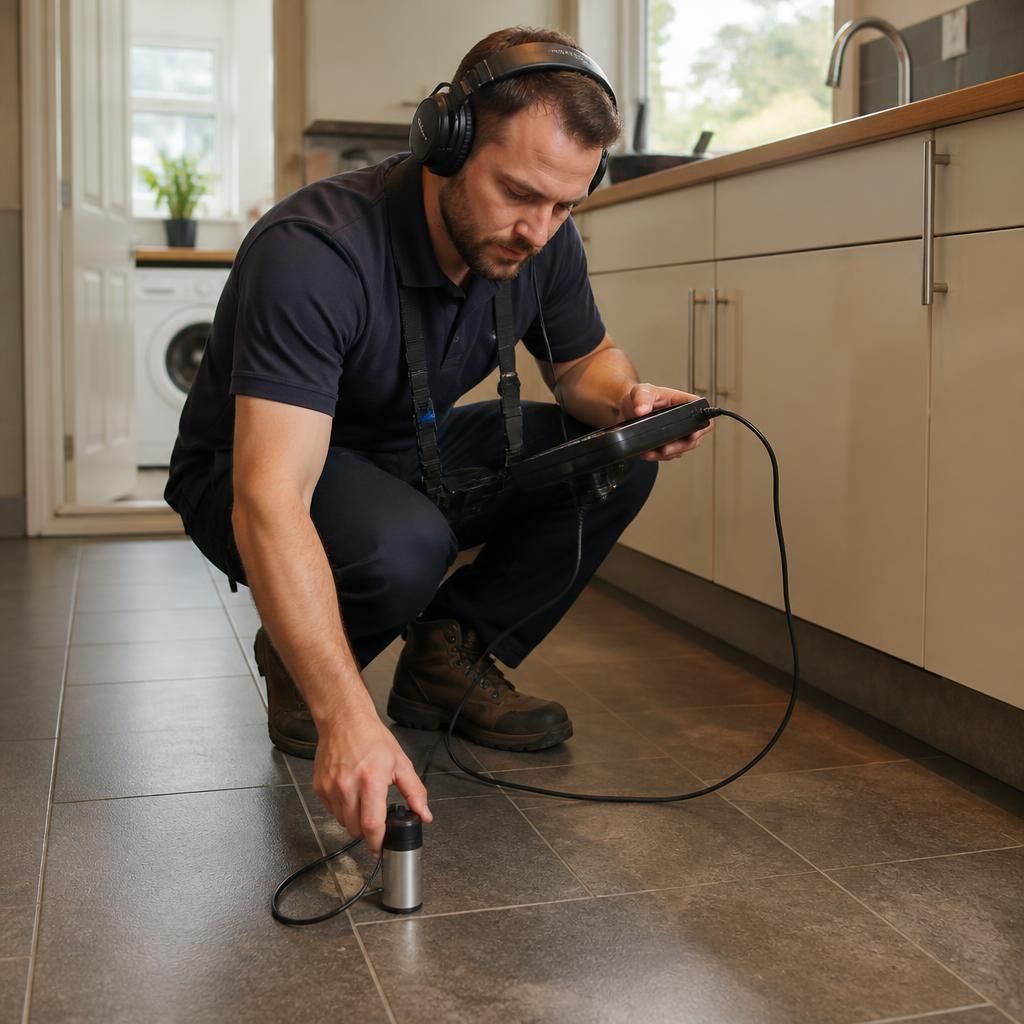
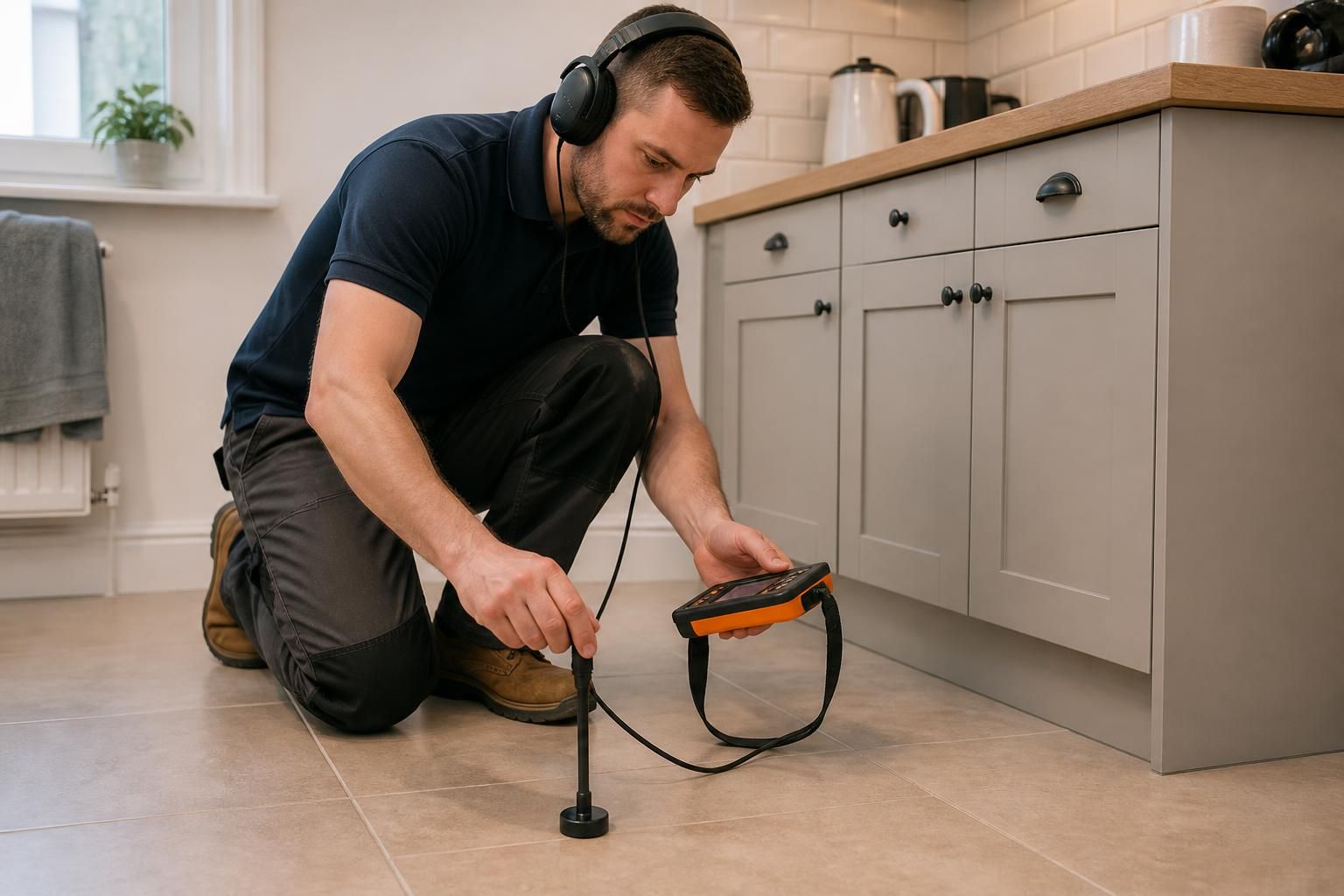
How the results are interpreted: A pressure test can show that water is escaping from a closed section, but pressure loss alone may not identify the precise point of failure. Acoustic assessment may help trace the sound of escaping water, although insulation, pipe material, background noise and the size of the leak can affect the signal. Thermal assessment can highlight a temperature difference linked to warm or cold water, but it needs suitable conditions and should be treated as supporting evidence. Using more than one form of assessment helps distinguish a genuine pipe leak from an unrelated damp problem.
The inspection normally begins by establishing which fixtures, appliances and pipe runs are connected to the suspected section. The plumbing system can then be isolated and tested in stages. This process helps separate a leak on a supply pipe from a faulty fitting, appliance connection or heating circuit. Once an area has been narrowed down, the findings can be checked against the building layout and any available access points before repair work is considered.
Detection and repair are separate stages. Locating the likely source does not automatically determine whether the best remedy is a joint repair, a replacement section, a reroute or further investigation. Confirming the position first can help avoid opening an unnecessarily large area or repairing the wrong pipe. It also gives the property owner a clearer basis for deciding how to address any affected finishes.
If a leak is suspected, avoid using the affected fixture or appliance and, where it is safe to do so, isolate the relevant water supply. Keep electrical equipment away from wet areas and arrange a professional assessment if the source cannot be identified safely. Ideal Plumbing Services provides pipe leak detection and related plumbing support for homeowners, landlords and tenants across Birmingham and the wider West Midlands.