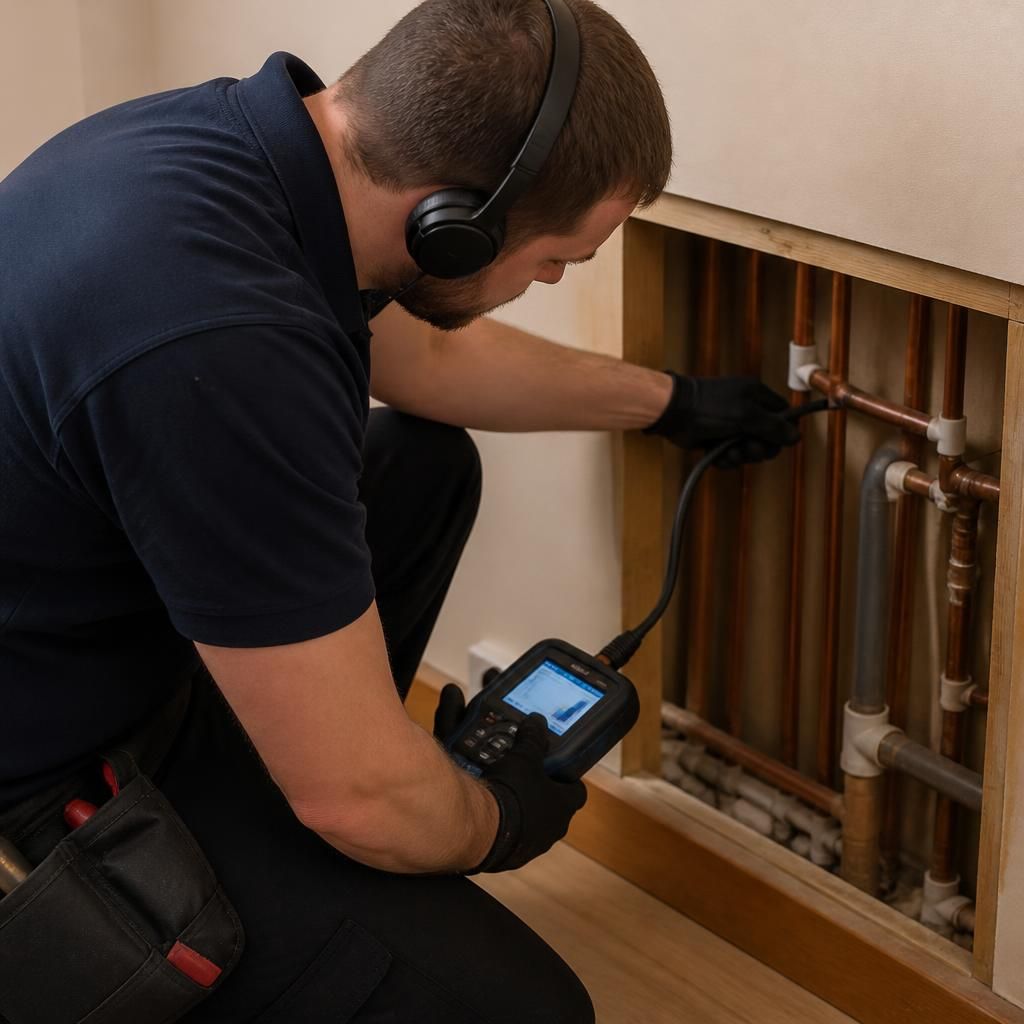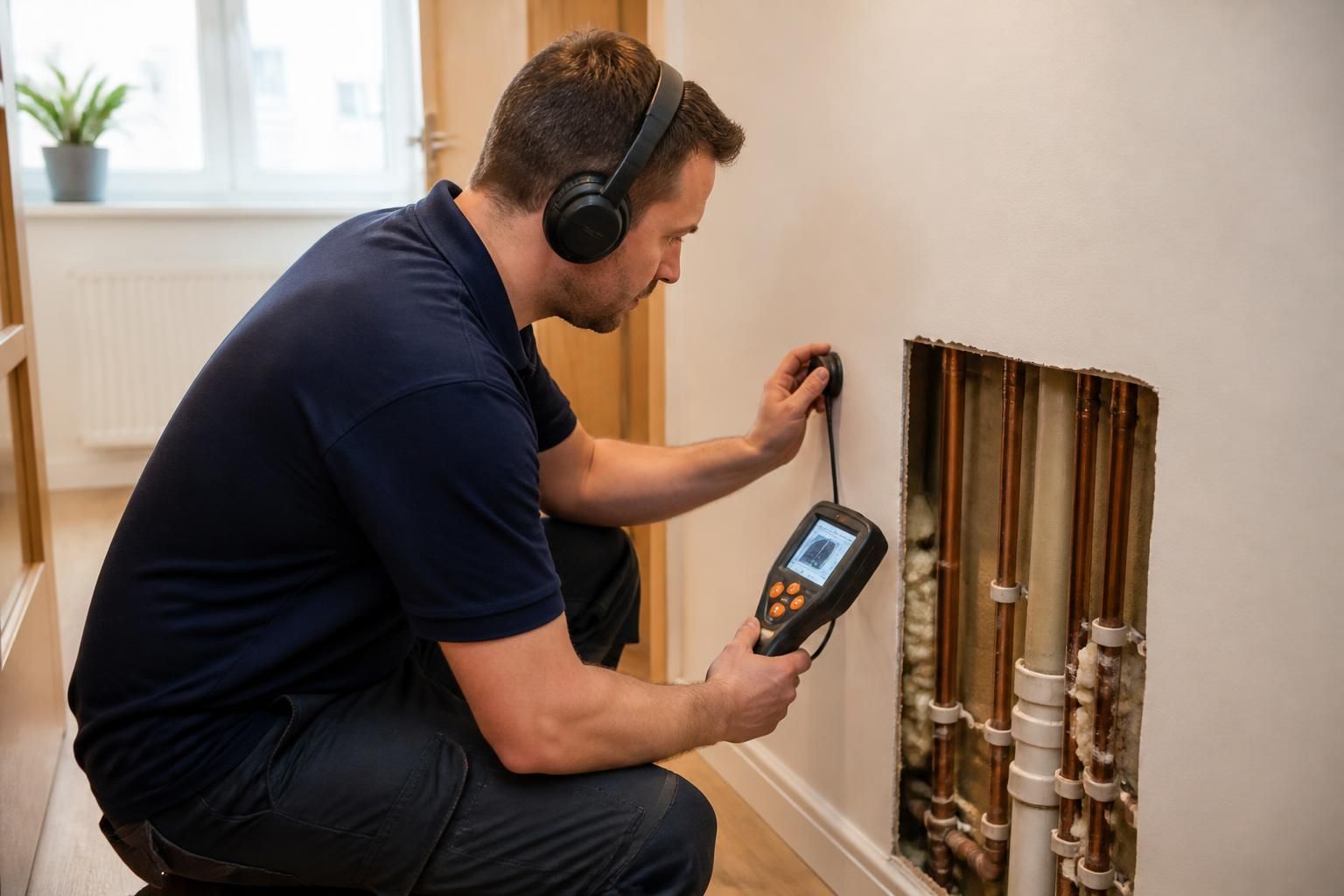
Arrange pipe leak detection as soon as there is a credible reason to suspect a leak, particularly where the pipe is concealed or the source of the water is uncertain. Early detection can establish whether a leak is present, identify its location and help determine the appropriate repair before moisture affects surrounding materials.
Arrange an inspection immediately after a plumbing incident
A professional inspection is sensible after events that may have damaged pipework, such as accidental impact, drilling into a wall or floor, a failed joint, a burst connection or freezing conditions. Even if only a small amount of water was noticed, pipework can continue leaking behind finishes once it has been disturbed. Detection helps confirm whether the system is dry and intact rather than relying on visible evidence alone.
If water is actively escaping, turn off the relevant isolation valve or the main water supply if it is safe to do so. Keep clear of electrical equipment or wiring that may have become wet, and arrange qualified assistance to assess the pipework. Do not remove flooring, plasterboard or fitted units unnecessarily before the leak location has been established.
Arrange detection when the source cannot be identified
Water does not always appear directly below the failed pipe. It can travel along joists, behind walls, beneath flooring or through insulation before becoming visible. This makes trial-and-error opening of surfaces unreliable and can create unnecessary damage. Pipe leak detection is appropriate when the point where water appears does not clearly match the location of the suspected pipe.
This is particularly important where pipework runs beneath a solid floor, inside a wall, below a bathroom or kitchen, or within a ceiling void. A professional can assess the plumbing layout, consider the pattern of moisture and select suitable non-invasive or minimally invasive methods to narrow down the location.
Arrange it before carrying out building work
Detection should be considered before replacing flooring, replastering, decorating or repairing a ceiling where there has been unexplained moisture. Covering the affected area can conceal continuing water loss and may lead to newly installed materials being damaged again. Establishing the condition of the pipework first provides a more reliable basis for deciding whether drying, repair or further investigation is needed.
It can also be useful before drilling, installing cabinets or altering walls and floors in areas containing plumbing. Knowing where concealed pipes are located reduces the risk of damaging them during later work.
Arrange a check when a problem keeps returning
Recurring staining, damp patches or deterioration after a previous plumbing repair should not be treated as a cosmetic issue. The original repair may not have addressed the full fault, another section of pipe may be leaking, or water may be entering from a different part of the system. Detection can help distinguish between a continuing pipe leak and moisture left from an earlier incident.
The same applies when a joint, fitting or appliance connection has required repeated attention. A wider inspection may identify whether the problem is isolated or connected to ageing, movement or corrosion elsewhere in the pipework.
Arrange detection for concealed or difficult-to-access pipework
Hidden pipework deserves particular attention because damage can progress without being easy to inspect. A leak beneath a floor or within a wall may affect plaster, flooring, insulation, timber and decorative finishes before the pipe itself can be reached. Detection is appropriate when access would involve lifting substantial areas or removing fixed units, as locating the likely point first can help keep any opening-up more targeted.
The suitable approach depends on the construction of the property, the pipe material, the location of the suspected leak and whether the system is pressurised. Detection is not the same as repair: it establishes where investigation or repair should be focused, while the repair method depends on the condition and accessibility of the pipe.
When planned detection is appropriate
Not every inspection is prompted by an active escape of water. A planned assessment may be worthwhile before refurbishing a property, after a history of unexplained plumbing faults, or where concealed pipework is difficult to access and its condition is uncertain. Landlords and homeowners may also arrange an inspection when investigating damage between occupancies or before committing to extensive remedial work.
In each case, the purpose is to replace assumptions with evidence. Arrange pipe leak detection when the possible cost of disturbing surfaces, continuing moisture or repairing the wrong area is greater than the cost of establishing the leak location accurately. A qualified plumbing professional can then explain the findings and advise whether repair, monitoring or additional investigation is appropriate.